
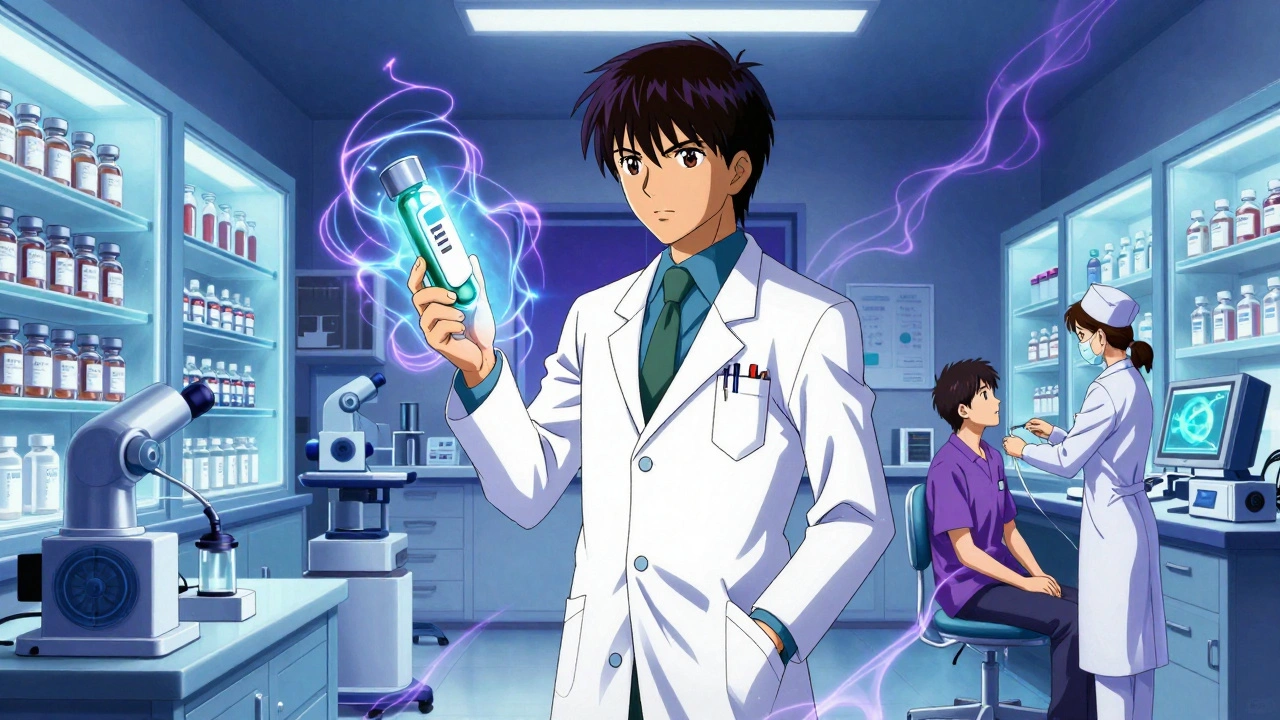
When a patient gets a prescription for a generic specialty drug, it doesn’t go to the corner pharmacy. It doesn’t even go to a regular mail-order service. It goes through a specialty pharmacy - and that’s by design. Even when the drug is no longer branded, the process stays complex. Providers don’t just write a prescription and move on. They’re deeply involved in making sure the right drug gets to the right patient, with the right support, at the right time.
Why Generic Specialty Drugs Still Need Specialty Pharmacies
Many assume that once a drug becomes generic, it’s simple. You swap the brand name for a cheaper version, and it’s business as usual. But that’s not true for specialty medications. Even generic versions of drugs like methotrexate, cyclosporine, or certain oral oncology agents still require special handling, patient education, and monitoring. Why? Because they’re not your typical pills. These drugs often come with strict storage needs - refrigeration between 2°C and 8°C. Some need precise dosing schedules. Others carry serious side effects that demand close tracking. And even if the chemical formula is identical to the brand-name version, the manufacturer may still require distribution only through specialty pharmacies. That’s called a Restricted Distribution Network. It doesn’t matter if it’s brand or generic - if the manufacturer says only specialty pharmacies can dispense it, that’s the law.The Provider’s Role: More Than Just Writing a Prescription
Providers - doctors, nurse practitioners, physician assistants - are the starting point. But their job doesn’t end with signing the script. They have to understand the patient’s insurance, the drug’s REMS program (Risk Evaluation and Mitigation Strategy), and whether the patient qualifies for financial assistance. For example, if a patient is switching from a branded biologic to a biosimilar, the provider must confirm the switch is medically appropriate and document it properly. They also need to communicate clearly with the specialty pharmacy. A quick note like “patient has history of liver enzyme elevation” or “patient unable to self-inject” can make all the difference. Specialty pharmacists rely on this clinical context to tailor counseling and avoid errors. Without it, a generic drug can still cause harm if given to the wrong patient or without proper training.How the Dispensing Process Actually Works
Here’s what happens after the provider sends the prescription:- Prescription intake - The specialty pharmacy receives the e-prescription or fax and checks for completeness. Missing info? They call the provider’s office. This step alone can add 1-3 days to the process.
- Prior authorization - Insurance companies often require proof that the patient tried cheaper alternatives or met specific criteria. This step is just as long for generics as it is for brands. In 2023, the average wait time was 7.2 days across all specialty drugs.
- Financial assistance coordination - Many specialty drugs, even generics, cost hundreds or thousands per month. Providers help patients apply for manufacturer copay cards or nonprofit aid programs. Some specialty pharmacies have dedicated financial counselors.
- Patient education - A pharmacist or care coordinator calls the patient to explain how to take the drug, what side effects to watch for, and when to call for help. For injectables, they may even arrange in-home nursing.
- Dispensing and delivery - The drug is packed in temperature-controlled packaging and shipped directly to the patient’s door. No pickup required.
- Follow-up - Within 7-14 days, the pharmacy checks in. Did the patient get the drug? Are they having side effects? Are labs due? This isn’t optional. It’s part of the service.
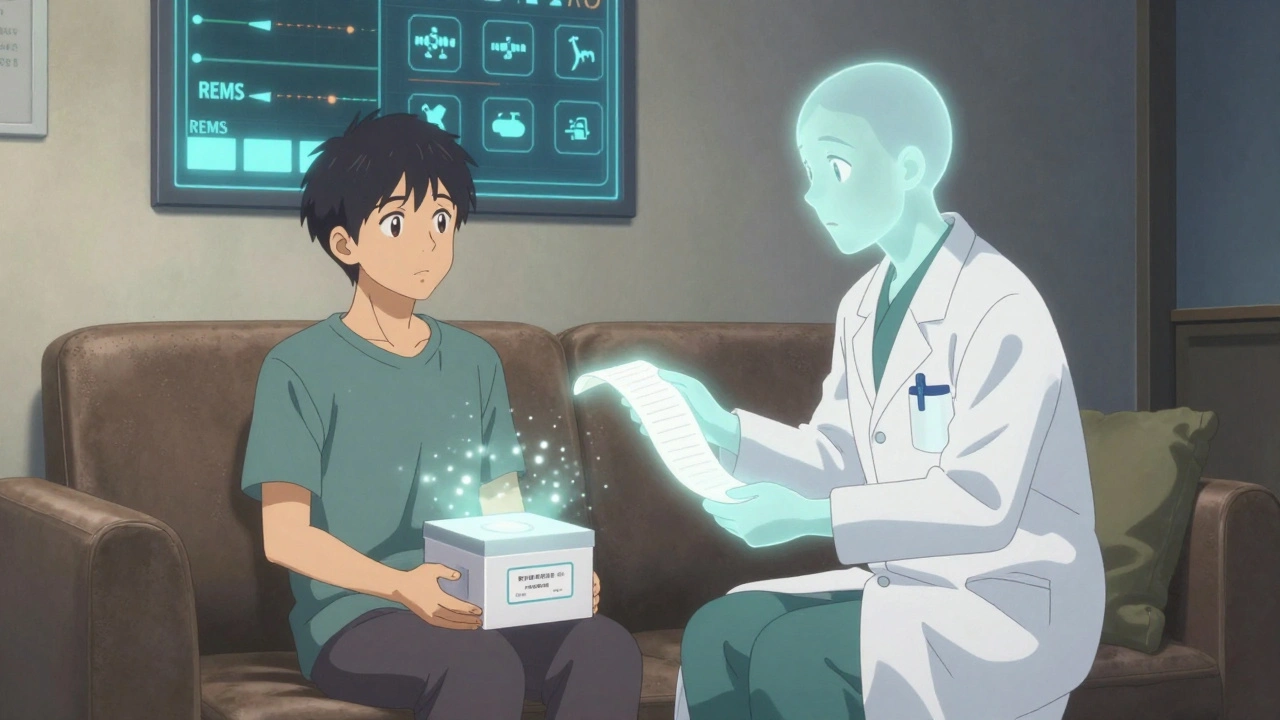
Why the Same Pharmacy Stays With the Patient - Even After Switching to Generic
Patients often don’t realize that when their drug switches from brand to generic, they’re still using the same specialty pharmacy. And that’s intentional. Studies show 68% of patients prefer to stay with the same pharmacy team when transitioning to a generic version. Why? Because the person who taught them how to inject their drug, answered their 2 a.m. panic call, and helped them get financial aid knows their history. One patient on Reddit wrote: “My generic version of Xeljanz still comes through the same specialty pharmacy with the same nurse follow-ups, which I actually appreciate because she knows my case history.” That’s the value. It’s not about the label on the bottle. It’s about continuity of care.The Hidden Costs and Frustrations
But it’s not perfect. Some patients see a switch to generic as a cost win - only to find their copay jumps from $15 at Walgreens to $75 through the specialty pharmacy. Delivery times can stretch to two weeks, especially for oncology drugs. And if the provider’s office doesn’t submit the right paperwork, the whole process stalls. Specialty pharmacies average 3.8 out of 5 stars on review sites. High marks for clinical support. Low marks for speed. Patients don’t mind waiting if they feel cared for. But if they’re left in the dark for days, frustration builds.
The Bigger Picture: Biosimilars and the Future
The biggest shift coming isn’t just about small-molecule generics. It’s about biosimilars - drugs that mimic complex biologic therapies like Humira or Enbrel. These aren’t generics. They’re not exact copies. But they’re cheaper, FDA-approved alternatives. By 2026, biosimilars are expected to make up 40% of all specialty pharmacy volume. Providers need to understand the difference. A biosimilar isn’t a generic. It’s a different kind of complex drug - and it still needs the same specialty pharmacy infrastructure. The same storage. The same education. The same follow-up. The same provider coordination.What’s Changing in 2025
New Medicare rules now require Part D plans to cover all FDA-approved biosimilars. That means more prescriptions will flow through specialty pharmacies. At the same time, big health systems like Kaiser and Mayo Clinic are building their own in-house specialty pharmacies. They want to control the entire process - from prescribing to dispensing. That’s a threat to traditional specialty pharmacies. But it’s also a signal: the real value isn’t in dispensing pills. It’s in managing complex care. If a provider’s office can’t offer that, they’ll be left behind.What Providers Can Do Today
If you’re a provider, here’s what works:- Always confirm the drug’s distribution network before prescribing - even for generics.
- Include clinical notes that help the pharmacy tailor care: allergies, comorbidities, injection ability, home support.
- Use real-time prescription benefit tools to check patient costs before writing the script.
- Build relationships with 1-2 trusted specialty pharmacies. Know their turnaround times and who to call when things stall.
- Don’t assume patients understand why they’re using a specialty pharmacy. Explain it simply: “This drug needs special handling, so your pharmacy will call you, send it to your door, and check in to make sure you’re okay.”
The bottom line? Generic doesn’t mean simple. Specialty drugs - whether branded, generic, or biosimilar - require a system built for complexity. Providers aren’t just prescribers. They’re gatekeepers of safe, effective care. And in this system, their role isn’t optional. It’s essential.
Why can’t I get my generic specialty drug at my local pharmacy?
Even if a drug is generic, the manufacturer may require it to be dispensed only through specialty pharmacies. This is called a Restricted Distribution Network. It’s not about the price - it’s about safety. These drugs often need special storage, patient training, or monitoring, and only specialty pharmacies are equipped to handle that.
Are biosimilars the same as generic drugs?
No. Generic drugs are exact copies of small-molecule drugs. Biosimilars are highly similar versions of complex biologic drugs, but they’re not identical. Because biologics are made from living cells, even tiny changes in production can affect how they work. That’s why biosimilars still need specialty pharmacy handling - just like their brand-name counterparts.
Do I still get patient support if I switch to a generic version?
Yes. Specialty pharmacies keep the same care team, same education materials, and same follow-up schedule whether the drug is brand or generic. Many patients report better outcomes when they stay with the same pharmacy because the staff already knows their history, side effects, and preferences.
Why does it take so long to get a specialty drug?
The delay usually comes from prior authorization and insurance approvals. Even generic drugs require the same paperwork as branded ones. Specialty pharmacies also need to verify patient eligibility, coordinate financial aid, and ensure proper storage. The average turnaround is 7.2 days, compared to under 2 days at retail pharmacies.
Can I switch from a specialty pharmacy to a regular pharmacy if my drug becomes generic?
Only if the manufacturer allows it. Most specialty drugs - even generics - are locked into distribution networks controlled by the drugmaker. If the label says “Specialty Pharmacy Only,” you can’t get it anywhere else, no matter how simple the drug seems.
Pavan Kankala
December 5, 2025 AT 19:23This whole system is just Big Pharma’s way of keeping you hooked-generic doesn’t mean cheap, it means they found a new way to charge you more through middlemen. Specialty pharmacies? More like profit pipelines disguised as care. They drag their feet on approvals, charge you $75 for a pill that costs $2 to make, and then act like saints for calling you back. Wake up. This isn’t healthcare-it’s a rigged game.
Martyn Stuart
December 6, 2025 AT 11:04Actually, Pavan-while your cynicism is understandable-the system exists for very real safety reasons. Generic specialty drugs like methotrexate or cyclosporine aren’t aspirin; they’re high-risk, narrow-therapeutic-index medications. Refrigeration? Mandatory. Dosing errors? Potentially fatal. Patient education? Non-negotiable. Specialty pharmacies aren’t profiteers-they’re the only ones trained, licensed, and equipped to handle this. The 7.2-day wait? That’s insurance bureaucracy, not the pharmacy’s fault. The real villain is the payer system.
Jessica Baydowicz
December 7, 2025 AT 16:35Y’all are overthinking this! 🌟 I switched from brand to generic for my rheumatoid arthritis med, and my pharmacy nurse literally texted me every day for two weeks to check if I was feeling okay. She helped me get a copay card, sent me a little care package with ice packs and a journal, and even called my husband to explain the side effects. I cried. Not because I was sick-because someone cared. That’s the magic. It’s not about the pill. It’s about the person who remembers your name.
Shofner Lehto
December 8, 2025 AT 05:41Let’s be clear: if your provider doesn’t include clinical notes like 'patient has severe neuropathy' or 'cannot self-inject due to tremors,' the specialty pharmacy is flying blind. That’s not their fault. That’s the provider’s failure. I’ve seen patients wait weeks because the prescriber just sent a bare script. It’s not the pharmacy’s job to guess. It’s their job to follow the clinical trail. Providers: write more. Assume less. It saves lives.
Yasmine Hajar
December 9, 2025 AT 07:02As someone who’s been on three different specialty drugs over the last five years, I can say this: the pharmacy team is the only thing keeping me alive. When I switched from Humira to its biosimilar, I thought I’d be stuck with a random mail-order place. Nope. Same nurse. Same care coordinator. Same 3 a.m. emergency line. They didn’t just dispense a drug-they kept my whole care ecosystem intact. And yes, it took two weeks. But when your life depends on it, waiting for someone who knows your history? Worth every second. We need to stop treating this like a transaction and start honoring it as a relationship.
Karl Barrett
December 9, 2025 AT 13:04The structural asymmetry here is fascinating. The pharmaceutical-industrial complex has engineered a feedback loop wherein regulatory compliance (REMS, restricted distribution) is weaponized to maintain market control under the guise of patient safety. The genericization of molecular structure does not equate to genericization of access architecture. The infrastructure-cold chain logistics, clinical coordination, financial navigation-is not scalable via retail channels because it is intentionally non-commoditized. What we’re witnessing isn’t a logistical bottleneck-it’s a deliberate institutional lock-in mechanism, disguised as clinical necessity. The biosimilar wave will only intensify this. The provider’s role as gatekeeper is not merely administrative-it’s ontological. We are not managing drugs; we are managing vulnerability.
Jake Deeds
December 10, 2025 AT 00:58Of course you're all pretending this is about 'patient care.' Please. The real reason specialty pharmacies exist is because drugmakers can’t compete on price, so they force you into a system where they get paid more, the pharmacy gets paid more, and you get stuck with a $500 copay for a pill that costs $1.50 to produce. And now they want you to feel grateful for the 'personalized care'? Please. I’ve been on this drug for three years. I’ve never met the 'care coordinator.' I’ve gotten three automated voicemails and one email that said 'We’re here for you!'-signed 'Your Friends at ABC Specialty.' I don’t want friends. I want my medication delivered without a 14-day wait and a third-degree interrogation about my mental health. This system is a scam dressed in scrubs.
Rachel Bonaparte
December 10, 2025 AT 18:07You think this is about drugs? Think bigger. The entire specialty pharmacy model is a Trojan horse. The real goal? To collect your health data-every lab result, every side effect report, every time you call for help-and sell it to data brokers who then sell it to insurers who then raise your premiums based on your 'risk profile.' That’s why they keep you on the same pharmacy for years. That’s why they 'care' so much. They’re not saving your life-they’re building a behavioral profile so detailed, they can predict when you’ll die… and charge your employer more for your insurance. And the providers? They’re complicit. They know. They just don’t want to admit it. Wake up. This isn’t medicine. It’s surveillance capitalism with a stethoscope.