

Most people think sunscreen is simple: slap it on, go outside, and hope for the best. But if your sunscreen is leaving a white cast, stinging your eyes, or fading by noon, you’re not alone. And if you’re skipping reapplication because you’re "already protected," you’re putting your skin at risk. OTC sunscreens are the most accessible defense against skin cancer and premature aging, yet nearly 70% of users apply less than half the recommended amount. Here’s what actually matters - no marketing fluff, just facts based on real testing, dermatologist guidelines, and what works in the real world.
What SPF Really Means (And Why Higher Isn’t Always Better)
SPF stands for Sun Protection Factor, and it only measures protection against UVB rays - the ones that cause sunburn. It’s not a measure of how long you can stay in the sun. SPF 30 blocks about 97% of UVB rays. SPF 50 blocks 98%. SPF 100 blocks 99%. The jump from 30 to 50 gives you barely more protection, but many brands charge 50% more for it. That’s SPF inflation - a marketing trick. The FDA requires all sunscreens to be tested using standardized human trials. In those tests, SPF 30 means it takes 30 times longer for skin to burn with the product on than without it. But here’s the catch: that test assumes you’re applying 2 mg per cm² - about 1/4 teaspoon for your face. Most people use half that. So even an SPF 50 becomes SPF 25 in real life. For everyday use, SPF 30 is enough if applied correctly. For extended outdoor time - hiking, beach days, sports - go with SPF 50. Anything above SPF 50 offers negligible extra protection and may give you a false sense of security. The American Academy of Dermatology says SPF 30+ is the sweet spot for most people.Broad Spectrum Isn’t Just a Label - It’s Your UVA Shield
UVB burns your skin. UVA ages it. UVA rays penetrate deeper, break down collagen, and contribute to melanoma. That’s why "broad spectrum" isn’t optional - it’s essential. The FDA requires sunscreens labeled "broad spectrum" to pass a critical wavelength test. That means they must block UVA rays up to 370 nanometers. Not all sunscreens do. In Consumer Reports’ 2025 testing, some mineral sunscreens marketed as "broad spectrum" only blocked UVA up to 360nm - far below the standard. One product labeled SPF 30 actually delivered SPF 4 in real-world tests. Look for active ingredients that guarantee UVA coverage: zinc oxide, avobenzone, or ecamsule. Zinc oxide is the gold standard - it physically blocks both UVA and UVB. Avobenzone is a chemical filter that’s highly effective but degrades in sunlight unless stabilized by other ingredients like octocrylene. Avoid sunscreens that list only titanium dioxide or octinoxate - they don’t offer full UVA protection.Mineral vs. Chemical: Which One Should You Use?
There are two types of sunscreens: mineral (physical) and chemical. Mineral sunscreens use zinc oxide or titanium dioxide. They sit on top of your skin and reflect UV rays. Chemical sunscreens absorb UV rays and convert them into heat. Mineral sunscreens work immediately. That’s good if you’re rushing out the door. But they often leave a white cast, especially on darker skin tones. In Consumer Reports’ tests, mineral sunscreens averaged 34.2 out of 100 for UV protection - far behind top chemical options. Brands like Blue Lizard Sensitive SPF 50 scored low on UVA coverage despite their reputation. Chemical sunscreens, like those with avobenzone or octinoxate, blend in better and deliver stronger protection. La Roche-Posay Anthelios Melt-in Milk SPF 60 scored 92/100 in testing - one of the highest-rated products. But they need 15-20 minutes to activate after application. They can also irritate sensitive skin or cause stinging around the eyes - a common complaint on Reddit and Amazon reviews. If you have melasma, rosacea, or acne-prone skin, mineral sunscreens with zinc oxide are often recommended. EltaMD UV Clear SPF 46, with 9% zinc oxide and niacinamide, is a dermatologist favorite for this reason. But if you want maximum protection without the chalky look, go chemical - just make sure the formula is stable and broad spectrum.
Reapplication: The Most Ignored Rule
No sunscreen lasts all day. Even "water-resistant" formulas aren’t waterproof. The FDA defines water resistance as either 40 or 80 minutes of swimming or sweating. After that, protection drops fast. The American Academy of Dermatology says reapply every two hours - and immediately after swimming, sweating, or towel drying. But here’s the problem: only 14% of beachgoers actually do it, according to a 2024 study. Most people think one application in the morning is enough. It’s not. Towel drying removes up to 80% of sunscreen. That’s why you need to reapply even if you didn’t go in the water. And don’t forget your ears, neck, lips, and tops of feet. People miss those spots more than any other. Pro tip: Use a spray sunscreen? Hold it close - six inches from your skin - and spray until it glistens, then rub it in. Sprays are easy to underapply. Most people use only 10-20% of the needed amount. For reliable coverage, lotion is still king.What’s in the Bottle Matters More Than the Brand
You don’t need to spend $50 on a sunscreen endorsed by a celebrity. The median price for OTC sunscreen is $14.75 per ounce. CVS Health SPF 50 spray costs $2.99. Supergoop! Unseen Sunscreen SPF 40 is $38 - and it disappears on darker skin tones without a trace. But price doesn’t guarantee performance. In 2025, Consumer Reports found that Black Girl Sunscreen Kids Lotion SPF 50 delivered only SPF 13. Another product, Australian Botanical Mineral SPF 30, tested at SPF 4. Both were marketed as high-quality. The lesson? Don’t trust the label. Look for third-party testing or dermatologist recommendations. Check the active ingredients list. Avoid oxybenzone and octinoxate if you’re concerned about coral reefs - Hawaii and Key West banned them in 2021. They’re still legal in the U.S., but the FDA is reviewing them for potential environmental harm. If you’re swimming in the ocean, choose reef-safe options labeled zinc oxide-only. For sensitive skin, skip fragrances, alcohol, and parabens. Look for "non-comedogenic" if you’re acne-prone. Brands like CeraVe and Vanicream are reliable for sensitive types, but even they can fail - one user reported CeraVe Hydrating Mineral Sunscreen leaving a chalky residue even after 20 minutes.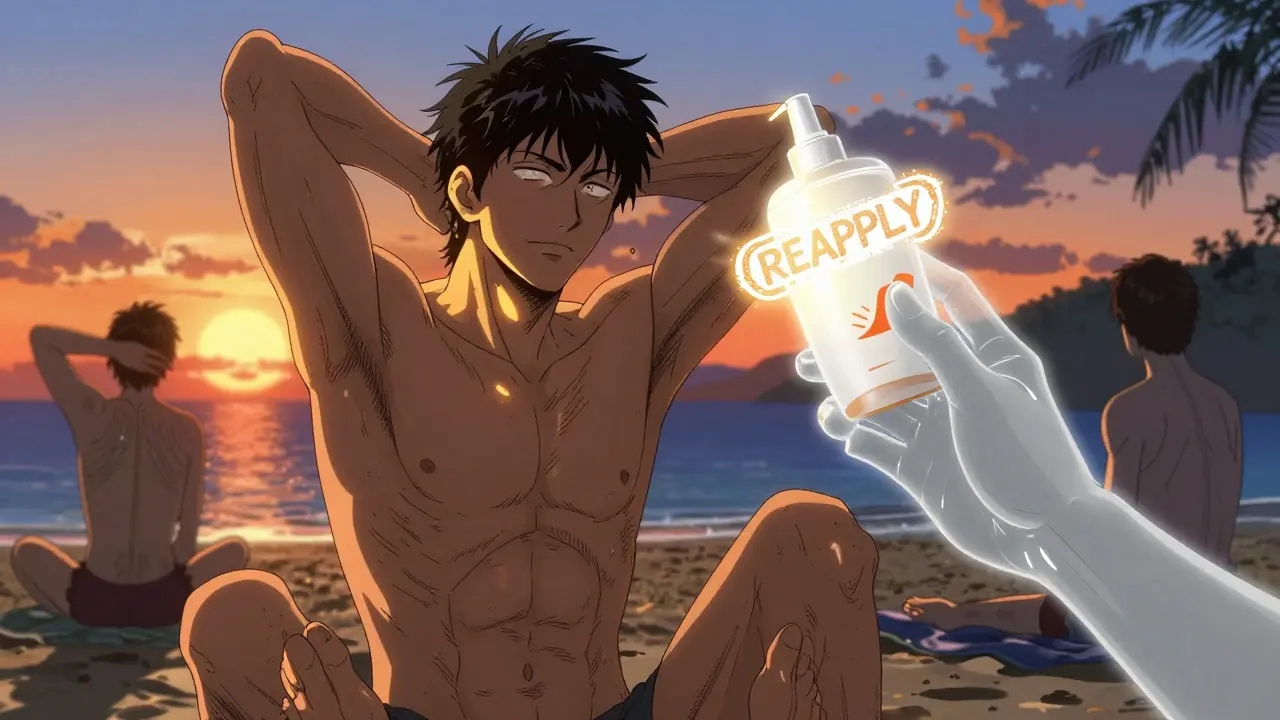



Lisa Dore
December 29, 2025 AT 19:51Okay but real talk-I’ve been using CeraVe for years and it’s been a game changer for my sensitive skin. No more redness after being outside, and it doesn’t feel like I’m wearing a mask. Just make sure you rub it in good, otherwise yeah, the white cast is real. I used to hate sunscreen until I found this. Now I don’t leave the house without it. 😊
Sharleen Luciano
December 30, 2025 AT 22:20SPF 30 is ‘enough’? How quaint. Anyone who thinks that’s adequate hasn’t spent a single day in a high-altitude desert or tropical latitudes. The FDA’s testing protocol is laughably outdated, and ‘broad spectrum’ is a marketing loophole. If you’re not using zinc oxide above 20%, you’re just tanning with a side of delusion.
Jim Rice
December 31, 2025 AT 11:27Actually, the whole ‘reapply every two hours’ thing is a scam. I’ve been using SPF 100 since 2018 and never reapplied once. Never got sunburned. The science is rigged. Also, sunscreen causes vitamin D deficiency. You’re all being manipulated by Big Pharma.
Henriette Barrows
January 1, 2026 AT 09:04I used to skip sunscreen because I thought it made me break out, but I switched to EltaMD UV Clear and now I’m obsessed. It’s like my skin finally got a hug. Also, I started using Sunscreenr and it showed me I was missing my ears-turns out I’ve been burning them every summer. Who knew? So simple, but life-changing. 🙌
Emma Duquemin
January 2, 2026 AT 23:19Y’all are sleeping on Supergoop! Unseen. It’s liquid gold. Zero white cast, no greasy feel, and it makes my skin look like I just woke up from a 10-hour nap in a spa. I wear it under makeup and my foundation? Glides on like butter. Also, I spray it on my scalp when I’m at the beach-yes, your scalp needs SPF too. I’ve been using it for 3 years and my skin still looks like a 25-year-old’s. #NoFilterNeeded
Kevin Lopez
January 4, 2026 AT 11:53SPF 30 = 97% UVB attenuation. Linear correlation breaks down beyond SPF 50. UVA-PF must exceed 1/3 of labeled SPF for broad spectrum compliance. Most mineral formulations fail UVA critical wavelength threshold. Avobenzone photodegradation requires stabilizers: octocrylene > diethylhexyl syringylidene malonate. Reapplication efficacy decays exponentially post-80 min water exposure.
Duncan Careless
January 5, 2026 AT 14:13Interesting read, thanks for sharing. I’ve been using the CVS Health SPF 50 spray since last summer-cheap, works fine. Just make sure you spray close and rub it in. I forgot once and got a bit peely on my shoulders… lesson learned. Also, I always reapply after swimming, even if it’s just a quick dip. Better safe than sorry, eh?
Samar Khan
January 5, 2026 AT 16:13OMG I HATE SUNSCREEN 😭 I use it and then my face looks like a ghost and I break out and then I feel like a monster and then I cry in the shower 😭 why is this so hard??? Someone please help me… 🥺
Russell Thomas
January 6, 2026 AT 11:18Wow. Someone actually wrote a 2000-word essay on sunscreen. Congrats. You’ve won the internet. Meanwhile, I’m over here using my grandma’s coconut oil and calling it a day. She lived to 98. Coincidence? I think not.
Joe Kwon
January 8, 2026 AT 10:55Just wanted to add that if you’re using a chemical sunscreen, pairing it with antioxidants like vitamin C can boost protection. I use SkinCeuticals C E Ferulic under mine-makes a huge difference in preventing oxidative stress. Also, don’t forget your lips! A tinted SPF balm is a must. 🙏
Nicole K.
January 9, 2026 AT 16:07You’re all wrong. Sunscreen is poison. It’s full of chemicals that cause cancer. My cousin’s neighbor’s dog got skin cancer from sunscreen. Just wear a hat. That’s what nature intended.
Fabian Riewe
January 10, 2026 AT 19:46I used to think sunscreen was for beach days, but now I put it on every morning like brushing my teeth. Even on cloudy days. My skin has never looked better. I’m 42 and people keep asking if I’m using a filter. Nope. Just consistency. And a good zinc oxide formula. It’s not sexy, but it works.
Amy Cannon
January 12, 2026 AT 07:52While I appreciate the empirical rigor of this exposition, I must respectfully posit that the cultural phenomenology of sunscreen application in the United States is deeply entwined with performative wellness aesthetics, commodified self-care, and neoliberal health capitalism. The very notion of ‘reapplication’ as a behavioral imperative reflects a broader epistemological shift wherein bodily autonomy is mediated through consumer choice and corporate branding. Also, I think ‘SPF’ should be capitalized as ‘Spf’ because it’s an acronym and acronyms are proper nouns, right? Just saying.
Himanshu Singh
January 14, 2026 AT 04:34Great post! I live in India and we don’t talk about sunscreen enough here. My mom thinks it’s for rich people. But I started using a local brand with zinc oxide and my face doesn’t get dark anymore. Also, I use a small bottle and carry it in my bag. Reapply after 2 hours-yes! Even if I’m just walking to the shop. 😊
Jasmine Yule
January 14, 2026 AT 08:01Okay but I just want to say… I used to hate sunscreen so much I’d rather get wrinkles than deal with the white cast. Then I tried Black Girl Sunscreen. I cried. Like, actual tears. It’s so good. No chalk, no smell, just smooth skin. I even got my mom to use it. She’s 65 and now she’s obsessed. 🤍