
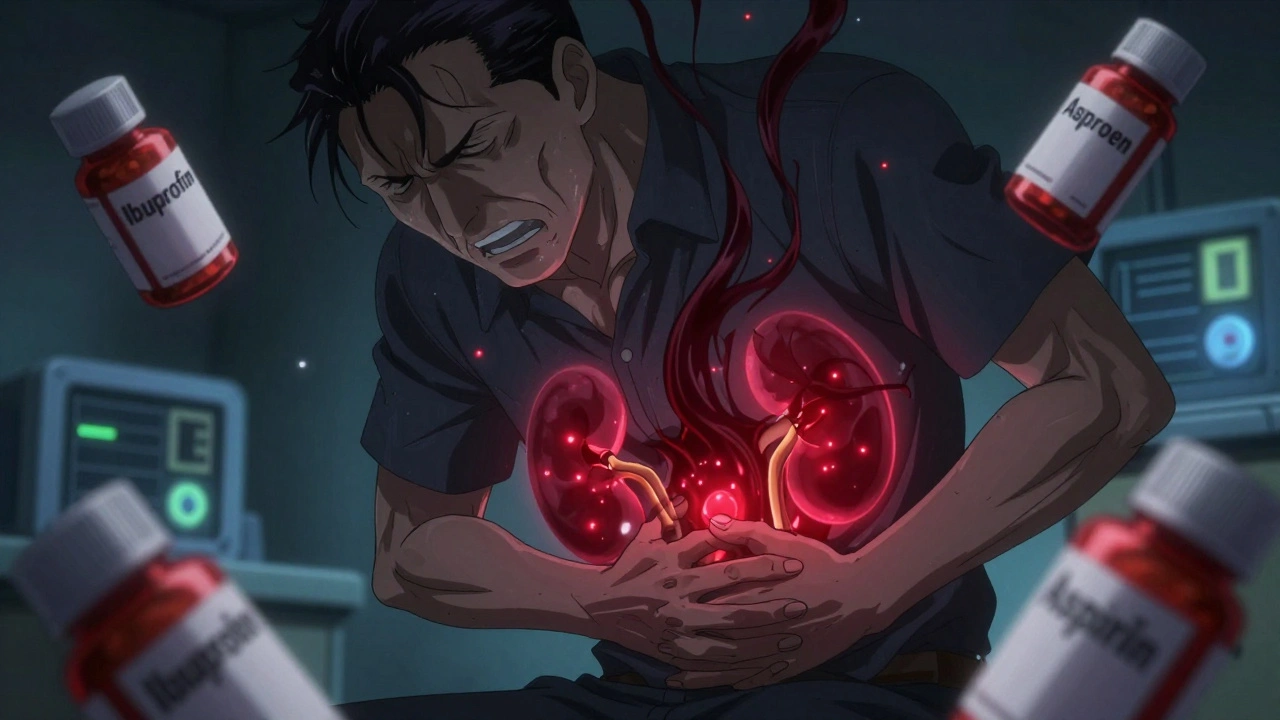
Every year, tens of thousands of people end up in the hospital not because of a heart attack or stroke, but because of something most people think is completely safe: an over-the-counter painkiller. NSAIDs-like ibuprofen, naproxen, and aspirin-are in almost every medicine cabinet. You take them for a headache, a sore back, or swollen knees. But if you have kidney disease-or even just a little reduced kidney function-you could be setting yourself up for a sudden, serious injury you never saw coming.
How NSAIDs Hurt Your Kidneys
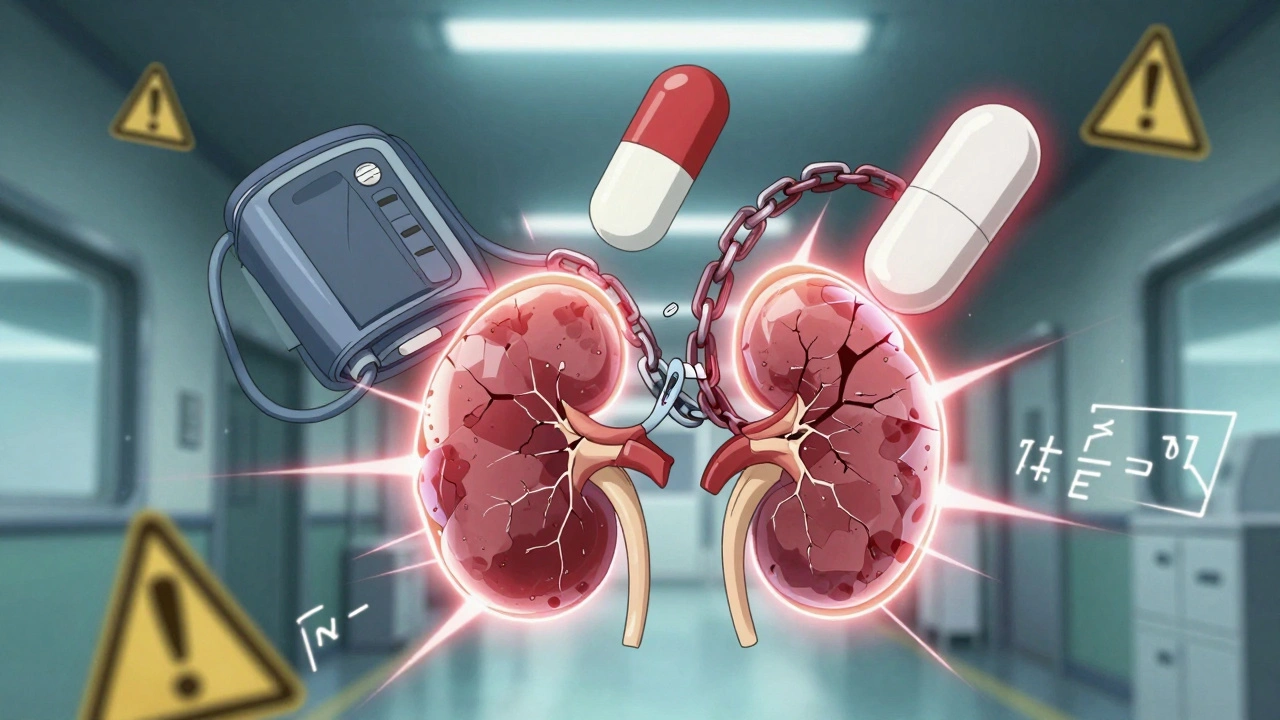
NSAIDs don’t just block pain signals. They shut down a key system your kidneys rely on to stay healthy: prostaglandins. These tiny molecules help keep blood flowing into your kidneys, especially when your body is under stress-like when you’re dehydrated, sick, or taking blood pressure meds. When NSAIDs block prostaglandins, your kidneys don’t get enough blood. That’s when your kidney function can drop fast.
This isn’t just a theory. Studies show that NSAIDs cause 1 to 5% of all acute kidney injury (AKI) cases in hospitals. In people with existing kidney problems, the risk jumps even higher. A 2023 review found that chronic NSAID users have a 24% higher chance of developing chronic kidney disease and a 50% higher chance of their existing kidney disease getting worse.
The damage can happen in two ways. The most common (70-80% of cases) is hemodynamic AKI-your kidneys just don’t get enough blood. The other way is acute interstitial nephritis (AIN), where your immune system reacts to the drug like an allergen. That one can cause fever, rashes, and high protein in your urine. Both can lead to hospitalization.
The Triple Whammy: A Dangerous Mix
One of the most dangerous combinations in medicine is NSAIDs + ACE inhibitors or ARBs + diuretics. This trio is called the “triple whammy.” It’s common in older adults with high blood pressure and swelling in their legs. Each drug affects kidney function in a different way. Together, they can slash blood flow to the kidneys by 40% or more.
Research shows this combo increases the risk of AKI by 31% overall-and by 82% in the first 30 days. That’s not a small risk. It’s a red flag. If you’re on any of these three drugs, you need to talk to your doctor before taking even one dose of ibuprofen.
Who’s Most at Risk?
Not everyone who takes NSAIDs gets kidney damage. But some people are far more vulnerable:
- People over 65
- Those with diabetes or high blood pressure
- Anyone with an estimated glomerular filtration rate (eGFR) below 60 mL/min/1.73m²
- People taking diuretics (water pills)
- Those who are dehydrated-especially after exercise, heat exposure, or illness
Here’s a hard truth: many people don’t even know they have reduced kidney function. A 2022 study found that nearly 40% of patients with eGFR between 45 and 59 had no idea their kidneys were impaired. They were taking ibuprofen daily for arthritis, thinking it was harmless.
What Symptoms Should You Watch For?
NSAID-induced kidney injury often has no warning signs-until it’s too late. But some red flags do appear:
- Less urine than usual (or no urine for a full day)
- Swelling in your ankles, feet, or hands
- Unexplained fatigue or nausea
- Sudden weight gain (from fluid retention)
- Confusion or dizziness
And here’s something many doctors don’t tell you: your creatinine level-a standard blood test for kidney function-can stay normal in up to 30% of early cases. That means a “normal” blood test doesn’t mean your kidneys are safe.
NSAID Alternatives: Safer Pain Relief
If you have kidney disease or are at risk, you need alternatives. Acetaminophen (Tylenol) is the most common replacement. It doesn’t affect kidney blood flow like NSAIDs do. Studies show it carries 40-50% less risk of AKI. But it’s not perfect-it can harm your liver if you take too much, especially if you drink alcohol.
For joint pain, topical NSAIDs (gels or patches) are a better choice. They deliver the drug right where it’s needed, with 70-80% less going into your bloodstream. A 2024 JAMA trial showed they cut kidney injury risk by half compared to pills.
For chronic pain, consider non-drug options: physical therapy, heat/cold therapy, acupuncture, or low-impact exercise. These don’t carry any kidney risk at all.
When NSAIDs Might Still Be Okay
It’s not all doom and gloom. If you’re young, healthy, well-hydrated, and have normal kidney function, a single dose of ibuprofen for a bad headache is unlikely to hurt you. Even short-term use (3-5 days) is generally safe for most people without risk factors.
The problem comes from daily use-especially over-the-counter use without medical supervision. Many people take 800 mg of ibuprofen three times a day for weeks, thinking it’s fine because it’s “just” an OTC drug. That’s when the damage adds up.

How to Protect Your Kidneys
Here’s what you can do right now to lower your risk:
- Get your kidney function checked. Ask your doctor for an eGFR and urine albumin-to-creatinine ratio. If your eGFR is below 60, NSAIDs should be avoided unless absolutely necessary.
- Avoid the triple whammy. Never combine NSAIDs with ACE inhibitors, ARBs, or diuretics unless your doctor says it’s safe-and even then, monitor closely.
- Use the lowest dose for the shortest time. If you need NSAIDs, take the smallest amount for the fewest days possible. Don’t use them daily unless under medical supervision.
- Stay hydrated. Drink water before, during, and after exercise. Aim for at least 5-10 mL per kg of body weight 2-4 hours before activity. Keep your urine light yellow.
- Choose topical over oral. For localized pain (knees, shoulders, back), use creams or patches instead of pills.
- Track your symptoms. If you notice less urine, swelling, or fatigue after taking NSAIDs, stop and call your doctor.
What’s Changing in 2025?
Things are starting to shift. The American Society of Nephrology launched the NSAID-RF Risk Calculator in 2023. It uses 12 factors-like age, blood pressure, and medication use-to predict your personal risk of kidney injury with 87% accuracy.
Researchers are also testing new drugs that combine ibuprofen with antioxidants like acetylcysteine to protect the kidneys while still relieving pain. Early results are promising.
And in 2025, a new blood test for urinary NGAL (neutrophil gelatinase-associated lipocalin) is becoming available. It can detect kidney damage within hours-long before creatinine rises. This could change how we monitor people on long-term NSAIDs.
Final Thought
NSAIDs aren’t evil. They help millions of people live with less pain. But calling them “safe” because they’re sold over the counter is dangerous. Your kidneys don’t care if the bottle says “non-prescription.” They only care if they’re getting enough blood-and whether you’re giving them a break.
If you have kidney disease-or even suspect you might-talk to your doctor before taking another NSAID. Ask about your eGFR. Ask about alternatives. Ask if your other meds might be making NSAIDs riskier. Don’t wait until you’re in the hospital to find out you could have prevented it.
Can I take ibuprofen if I have kidney disease?
If you have kidney disease, especially with an eGFR below 60, you should avoid ibuprofen and other NSAIDs unless your doctor specifically says it’s safe. Even then, use the lowest dose for the shortest time possible. For people with eGFR below 30, NSAIDs are generally not recommended at all.
Is acetaminophen safer for kidneys than NSAIDs?
Yes. Acetaminophen (Tylenol) doesn’t affect kidney blood flow like NSAIDs do. Studies show it carries 40-50% less risk of causing acute kidney injury. But it’s not risk-free-high doses or mixing with alcohol can damage your liver. Stick to the recommended dose: no more than 3,000 mg per day.
What’s the triple whammy and why is it dangerous?
The triple whammy is when you take NSAIDs along with ACE inhibitors or ARBs (blood pressure meds) and diuretics (water pills). Each drug reduces kidney blood flow in a different way. Together, they can cause a sharp drop in kidney function-sometimes within days. This combo increases AKI risk by 31%, and by up to 82% in the first month. Avoid this combination unless your doctor closely monitors you.
Can NSAIDs cause permanent kidney damage?
Yes. While many cases of NSAID-induced kidney injury are reversible if caught early, repeated or long-term use can lead to chronic kidney disease. Studies show chronic NSAID users have a 50% higher risk of their kidney disease worsening. Once scarring happens, it can’t be undone.
Are topical NSAIDs safer for the kidneys?
Yes. Topical NSAIDs (gels, creams, patches) deliver the drug directly to the skin over the painful area, with 70-80% less entering your bloodstream. A 2024 study found they cut the risk of acute kidney injury by about half compared to oral NSAIDs. They’re a much safer choice for localized pain like arthritis in the knee or shoulder.
Should I get my kidney function tested before taking NSAIDs?
If you’re over 60, have high blood pressure, diabetes, or are on blood pressure or water pills, yes. Even if you feel fine, your kidneys might already be working at reduced capacity. A simple blood test for eGFR and a urine test for albumin can tell you your risk level. Don’t wait until you feel sick to find out.
Can exercise increase the risk of NSAID-related kidney injury?
Yes. During prolonged exercise-especially in heat-your body loses fluids and your kidneys rely on prostaglandins to maintain blood flow. Taking NSAIDs during this time can cut kidney blood flow by 30-50% more than exercise alone. Marathon runners who take NSAIDs are at higher risk of acute kidney injury. Stay hydrated and avoid NSAIDs before or during long workouts.



Katie Harrison
December 9, 2025 AT 05:53I’ve been on lisinopril for years, and last winter I took ibuprofen for a bad back-ended up in ER with AKI. No warning. No symptoms. Just a weird feeling I couldn’t shake. My doctor said I was lucky it was caught early. Now I keep Tylenol in my drawer and throw out the NSAIDs. Don’t wait until it’s too late.
Mona Schmidt
December 11, 2025 AT 03:41The triple whammy is one of the most under-discussed dangers in primary care. I’m a nurse practitioner, and I’ve seen it happen three times in the last year alone-elderly patients on BP meds, diuretics, and daily ibuprofen for arthritis. They all thought they were being careful. The kidney damage isn’t always obvious on labs, either. Always check eGFR and UACR before prescribing or recommending NSAIDs. Prevention > reaction.
Guylaine Lapointe
December 11, 2025 AT 03:48Oh please. This is fear-mongering. I’ve been taking 800mg ibuprofen every day for 15 years. My kidneys are fine. My creatinine is normal. You people act like OTC meds are poison. If you’re worried about your kidneys, maybe stop eating sugar and start exercising instead of blaming a painkiller. This article reads like a pharmaceutical ad for Tylenol.
Michael Robinson
December 11, 2025 AT 08:38It’s not about the drug. It’s about the body. The body doesn’t care if it’s prescription or not. It cares if it’s getting the right signals. NSAIDs trick the kidneys into thinking they’re safe when they’re not. It’s like turning off a smoke alarm because you don’t like the noise. Eventually, the house burns down.
Andrea Petrov
December 12, 2025 AT 05:51Did you know the FDA has known about this since 2005? But they didn’t force warning labels because Big Pharma lobbied hard. The same companies that sell NSAIDs also sell the blood tests to check your kidneys. It’s a cycle. They profit when you get sick, then profit again when you pay for the fix. Read between the lines. This isn’t medicine-it’s business.
Suzanne Johnston
December 13, 2025 AT 09:32There’s a quiet tragedy here: people who don’t know they’re at risk. I had an eGFR of 58 last year and thought I was fine. No symptoms. No red flags. Just a number on a paper. If this article saves even one person from daily ibuprofen, it’s done its job. We need more public awareness-not just for the elderly, but for anyone with hypertension, diabetes, or just a family history. Kidneys don’t scream. They whisper. And we’re too busy to listen.
Graham Abbas
December 14, 2025 AT 18:56My dad took NSAIDs for his knee pain for a decade. One day he stopped peeing. They put him on dialysis for six weeks. He’s okay now, but his kidneys are permanently scarred. He didn’t know he had CKD. He thought he was just getting older. This isn’t just medical advice-it’s a life-or-death conversation we need to have with our families. Don’t wait for the hospital to start it.
Haley P Law
December 14, 2025 AT 21:43STOP TAKING IBUPROFEN. JUST STOP. 😭 I thought I was being smart by taking it for my migraines. Now I’m on a renal diet. I cry every time I see a bottle of Advil. It’s not worth it. I wish I’d known sooner. Please, for the love of all things holy, get your eGFR checked. I’m not even 40. 😫
Andrea DeWinter
December 15, 2025 AT 14:22Topical NSAIDs are a game changer for arthritis. I’ve been using diclofenac gel for my hips for two years. No GI issues. No kidney spikes. My eGFR stayed at 65. If you have localized pain, skip the pills. Gels work better anyway. Also, hydration is non-negotiable. Drink water like it’s your job. Especially if you’re active. I’ve seen too many runners crash their kidneys after a marathon with ibuprofen in their system. It’s preventable.
Steve Sullivan
December 15, 2025 AT 15:55bro i just took 2 ibuprofen for my headache and now i’m paranoid 😅 but seriously this post scared me. i’m 32, have high bp, and take a water pill. i didn’t even know about the triple whammy. gonna ask my doc for an eGFR next week. maybe i’ll switch to tylenol. also topicals for my back pain? that sounds legit. thanks for the heads up 🙏