Every year, 60,000 young children end up in emergency rooms because they accidentally swallowed medicine they found at home. Dogs and cats are just as vulnerable - nearly 12% of all pet emergency visits involve medication poisoning. These aren’t rare accidents. They’re preventable. And the biggest mistake most households make? Leaving medicine where it’s easy to reach.
Why Your Medicine Cabinet Isn’t Safe
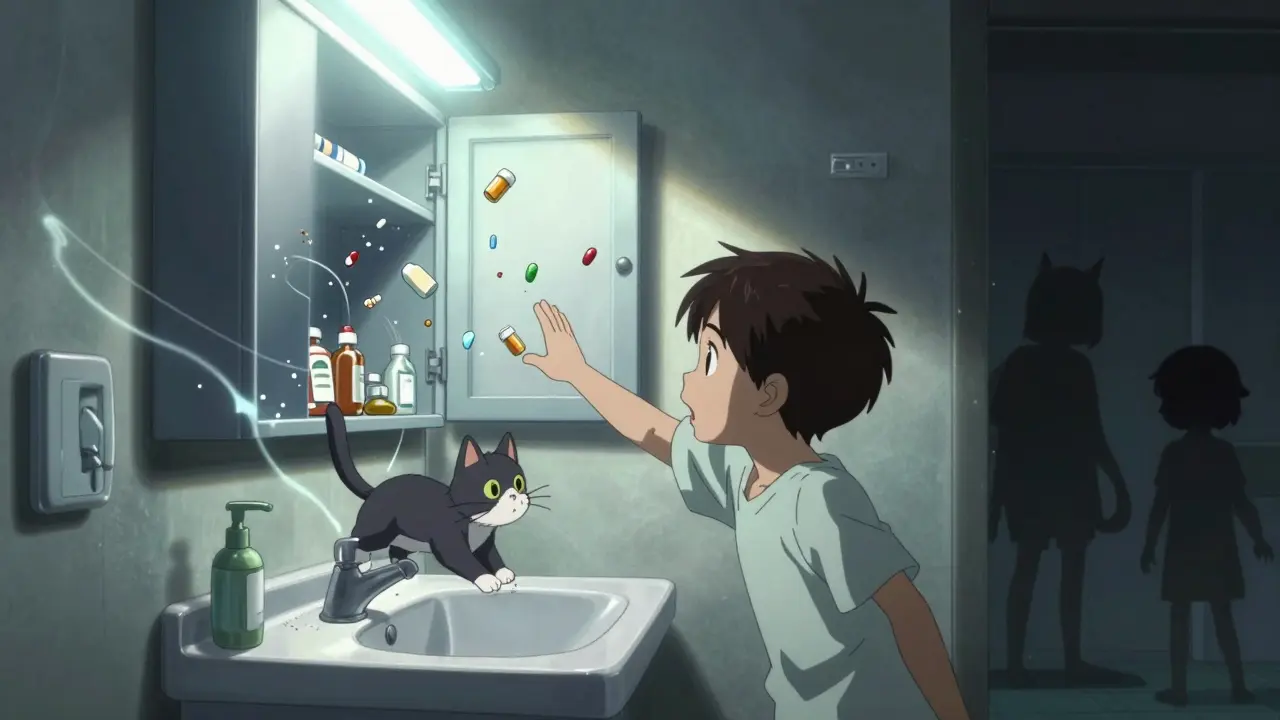
You might think, "My cabinet is childproof." But child-resistant packaging isn’t foolproof. Kids as young as two can figure out how to open those caps. A study from Children’s Mercy Hospital found that 65% of childhood medication incidents happen because pills were left in purses, backpacks, or unlocked cabinets - even for just a few minutes. And bathrooms? Don’t do it. The humidity in bathrooms - often 60-80% - can break down pills and liquids, making them less effective. Plus, mirrors and sinks make it easy for kids to climb up and grab bottles. Pets, especially dogs, are drawn to the smell of medications. A dog can sniff out a single pill hidden under a couch cushion. Cats, though quieter, are just as curious - and just as deadly at risk.Where to Store Medicine: The 5-Foot Rule
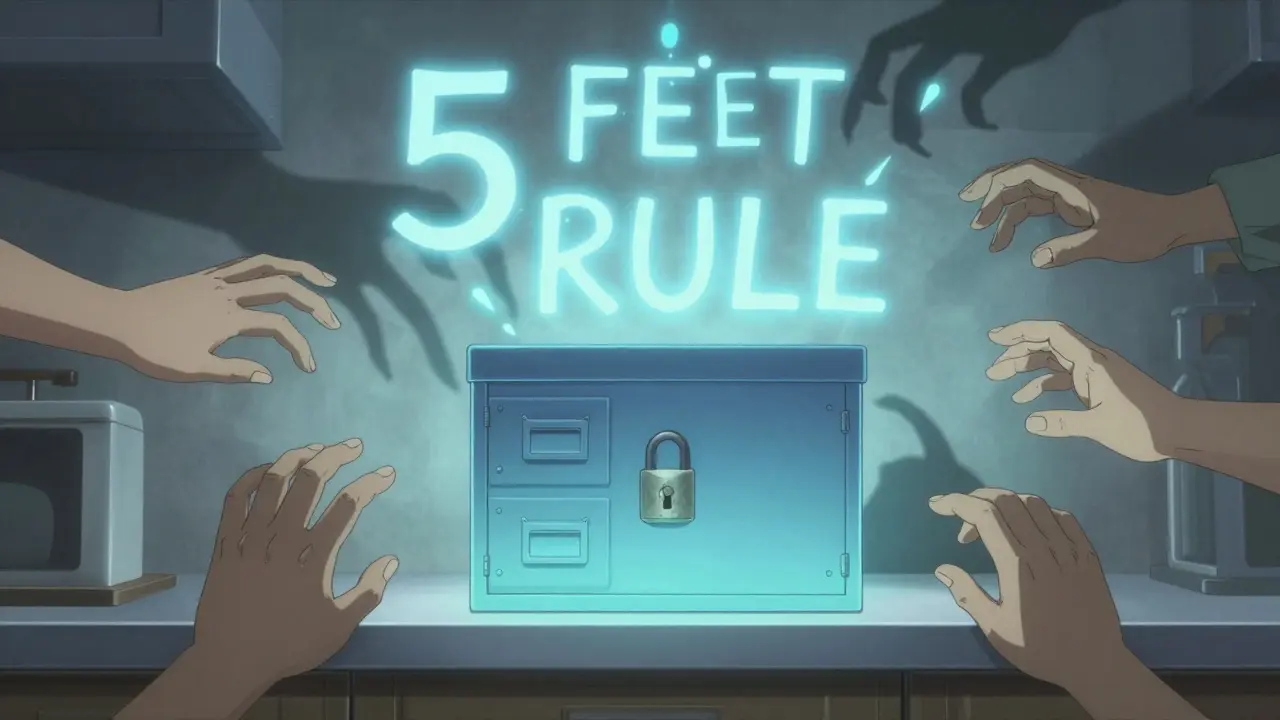
The CDC and Up & Away campaign recommend one simple rule: keep all medications at least 5 feet above the floor and out of sight. Why 5 feet? Most children under five can’t reach higher than that. But height alone isn’t enough. Clear cabinets? Bad idea. Kids learn fast. If they see a bottle on the top shelf, they’ll figure out how to get it. The best spots are:- High kitchen cabinets with child locks
- Bedroom closets with combination locks
- Drawers in dressers that are locked or latched
Separate Human and Pet Medications
This is critical - and often ignored. Human medications can be deadly for pets. A single ibuprofen pill can cause kidney failure in a cat. A dog that eats a heart medication meant for a human can go into cardiac arrest. And the reverse? Pet meds can be dangerous for people too. A 2023 FDA report found that 25% of accidental pet medication ingestions involve adults who thought they were taking their own pills. VCA Animal Hospitals recommends a three-zone system:- Zone 1 (Immediate Use): Only the current dose, placed on a flat surface like a counter while giving it - never on a couch or bed.
- Zone 2 (Short-Term Storage): Locked container, at least 5 feet high, for daily or weekly meds.
- Zone 3 (Long-Term Storage): Separate locked boxes for human meds, dog meds, and cat meds. Label them clearly.
Locks, Safes, and Tech Solutions
A childproof cap isn’t enough. You need a lock. There are affordable, simple options:- Combination lock boxes: Like the VADIC Safe Storage Bag (11" x 6"), used by state health departments. Costs under $20.
- Biometric safes: Fingerprint locks. One parent on Reddit said it added 10 seconds to their routine - but stopped their 3-year-old from opening a "childproof" cabinet.
- Bluetooth-enabled safes: New in 2023. Send alerts to your phone if someone opens the box. Adoption is still low - only 18% of high-risk homes use them - but they’re growing fast.
What to Do After You Give a Dose
The biggest mistake? Leaving medicine out after giving it. Children’s Mercy Hospital calls it the "two-minute rule": Put the medicine away within two minutes of use - no exceptions. Half of all childhood poisonings happen because a parent set a pill down to answer the door, check a text, or get a glass of water. Use a weekly pill organizer? Great. But if it’s on the counter, it’s still dangerous. Lock it in the same place as your other meds. Some organizers come with locks - they’re worth the extra cost.How to Dispose of Old or Expired Medicine
Never flush pills. Never throw them in the trash loose. The EPA found that 92% of discarded pills in open trash can be retrieved and reused - by kids, pets, or even strangers. The right way:- Take pills out of their original bottles.
- Mix them with something unappetizing - used coffee grounds, cat litter, or dirt. Use at least a 1:1 ratio.
- Put the mix in a sealed plastic bag.
- Throw it in the trash.
What to Do If Someone Ingests Medicine
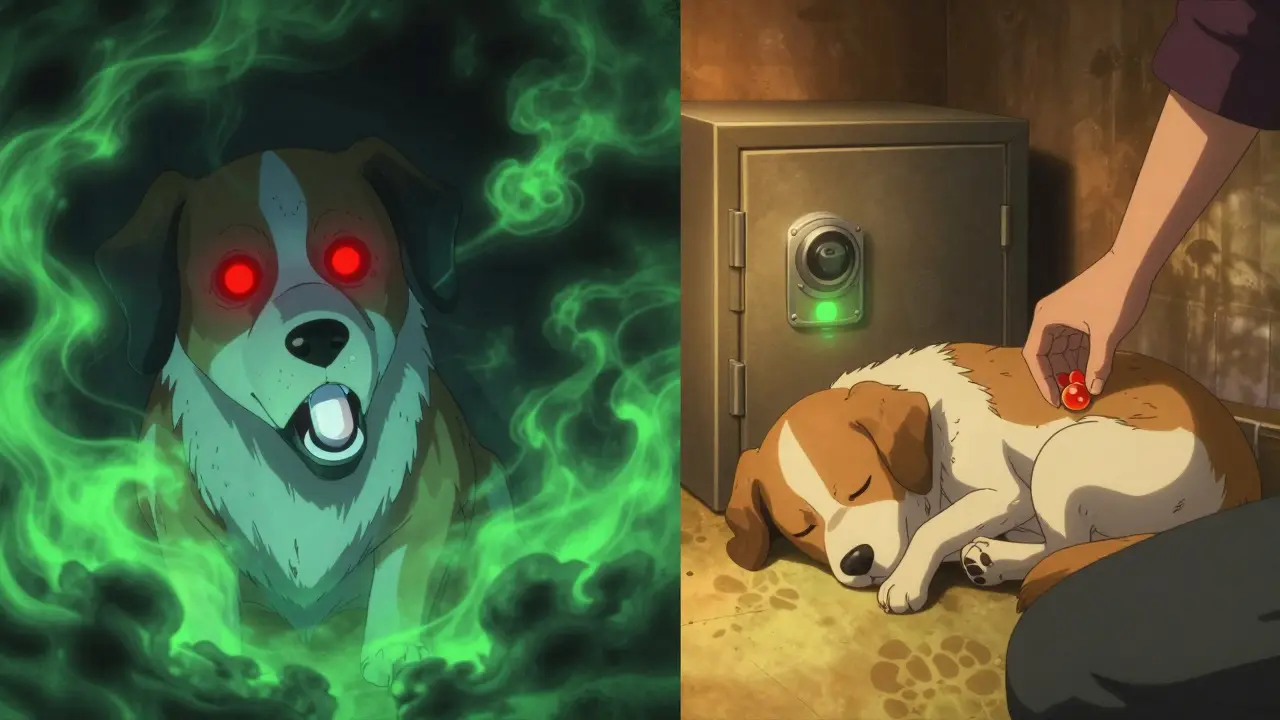
If a child or pet swallows medicine you didn’t give them:- Don’t wait. Call Poison Control immediately: 1-800-222-1222 (U.S.).
- Have the container ready. Keep the bottle or packaging nearby - it has dosage info and ingredients.
- Don’t induce vomiting. Unless Poison Control tells you to.
- For pets, call your vet or the ASPCA Animal Poison Control Center: 1-888-426-4435.
Why This Isn’t Just About Kids
You might think, "My kids are older now." But teens still sneak pills. Grandparents with dementia can get confused. Visitors might leave meds in a purse. Pets don’t care who lives here - they just smell something tasty. A 2023 survey by Banfield Pet Hospital found that 55% of pet owners store meds in kitchen cabinets because it’s "convenient." Convenience kills. A dog that eats a single dose of a human anti-inflammatory drug can need $3,000 in emergency care. The good news? The Up & Away campaign showed that households that learn about layered storage - locks, height, separation - reduce incidents by 74%. That’s not luck. That’s strategy.Start Today: One Week, One Change
You don’t need to overhaul your whole house overnight. Pick one thing to fix this week:- Move all meds out of the bathroom.
- Buy a $15 lockbox and put your daily pills in it.
- Separate your pet meds into their own locked container.
- Set a phone reminder: "Put meds away after use."
Can I store medicine in the fridge?
Only if the label says "refrigerate." Even then, keep it in a locked container inside the fridge - away from food. Pets and kids can open fridge doors. A sealed, labeled container on the top shelf is safest.
Are childproof caps enough?
No. Child-resistant caps are designed to slow down kids aged 42-51 months - not stop them. Many children figure them out in minutes. Locked storage is the only reliable method.
What if my pet eats a human pill?
Call the ASPCA Animal Poison Control Center at 1-888-426-4435 immediately. Even small amounts of common meds like ibuprofen, acetaminophen, or ADHD drugs can be fatal to pets. Don’t wait for symptoms.
How do I store gummy vitamins safely?
Treat them like prescription drugs. Keep them locked up, even if they’re labeled "vitamins." They’re designed to taste like candy - and kids and pets will treat them that way. Store them with your other meds, not in the cereal cupboard.
Is it safe to keep medicine in a purse or backpack?
Only if it’s locked. A purse left on a chair or a backpack on the floor is a magnet for curious kids and pets. If you must carry meds, use a small lockbox that fits inside. Never leave it unattended.