
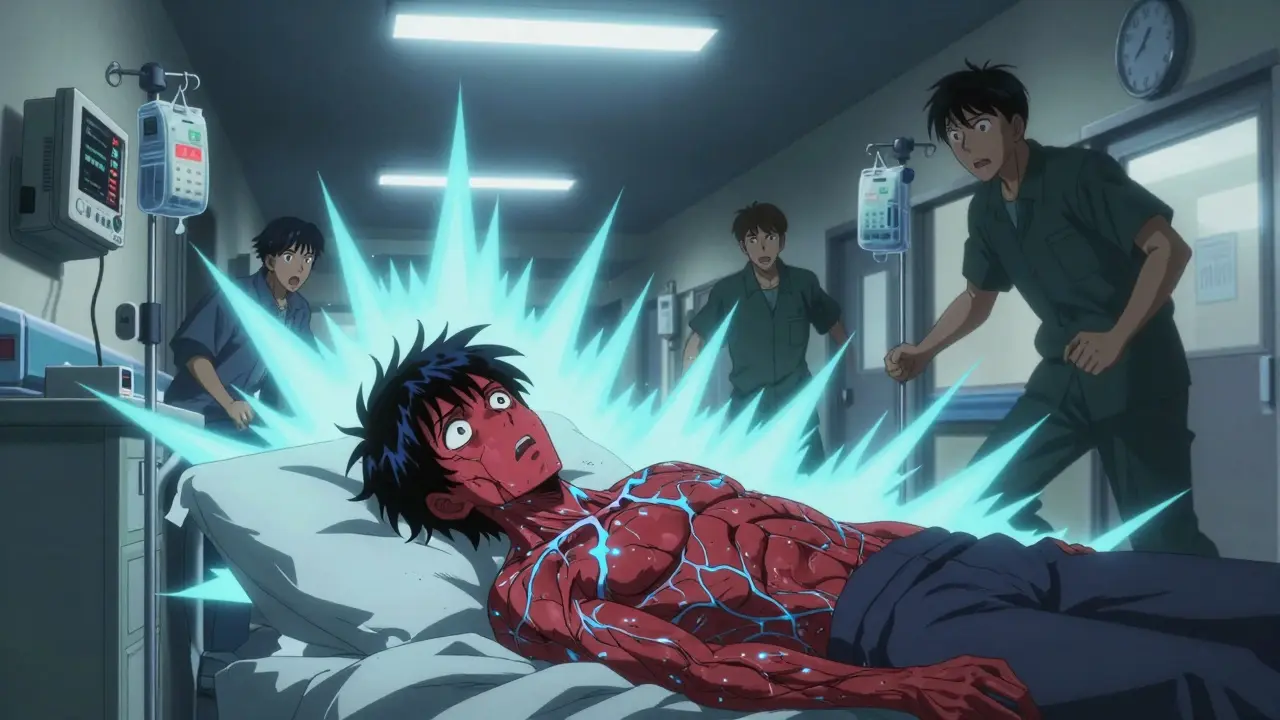
Thyroid storm isn’t just a bad day with a fast heartbeat. It’s a full-body meltdown caused by your thyroid going completely off the rails. Imagine your metabolism turned up to 11 - not just for hours, but for days - and your organs start failing one by one. That’s what happens in thyroid storm, a rare but deadly complication of untreated or poorly controlled hyperthyroidism. It doesn’t sneak up. It hits like a freight train. Without immediate ICU-level care, death is almost certain. Even with treatment, 8 to 25% of patients don’t survive. The difference between life and death often comes down to how fast you recognize it and how quickly you act.
What Exactly Is Thyroid Storm?
Thyroid storm, also called thyrotoxic crisis, is the most extreme form of hyperthyroidism. It’s not just having too much thyroid hormone - it’s having so much that your body can’t cope. The hormones T3 and T4, which normally keep your metabolism humming along, go into overdrive. Your heart races, your temperature spikes, your brain gets foggy, your gut shuts down. Everything speeds up until it breaks.
This isn’t your average case of Graves’ disease or an overactive thyroid. Those can be managed with pills and follow-ups. Thyroid storm is an emergency. It’s when the system collapses. The Japan Thyroid Association’s diagnostic criteria, now widely used globally, require clear evidence of thyrotoxicosis - meaning blood tests show free T4 levels more than 2.5 times the upper limit and T3 more than 3 times normal - plus at least one neurological symptom (like confusion or coma) and one other major sign: fever over 104°F, heart rate above 140 bpm, heart failure, or severe diarrhea. Some patients have all of them.
What makes it different from regular hyperthyroidism? Speed. Hyperthyroidism builds over weeks or months. Thyroid storm hits in hours. A person might feel fine one day, then be in the ICU the next.
What Triggers It?
Thyroid storm doesn’t appear out of nowhere. It’s almost always triggered by a major stressor in someone who already has uncontrolled hyperthyroidism. The most common trigger? Poorly managed disease - about 60 to 70% of cases. Someone might stop their medication, forget refills, or ignore symptoms until it’s too late.
Infections are the second biggest cause, especially pneumonia or sepsis. Surgery - even something routine like a dental procedure or gallbladder removal - can be enough to push someone over the edge. Trauma, including physical injury to the neck, can also trigger it. One documented case came after a punch to the throat. Emotional stress, stroke, diabetic ketoacidosis, and pulmonary embolism are other known triggers.
Even treatment can backfire. In about 1 to 2% of cases, radioactive iodine therapy - meant to calm the thyroid - actually causes a storm a week or more later. That’s why patients are closely monitored after this treatment. Pregnancy is another risk, especially in the first few months after delivery. Postpartum thyroiditis can spiral into thyroid storm if not caught early.
The bottom line: if you have hyperthyroidism and something big happens - infection, surgery, trauma, extreme stress - you need to be watched like a hawk. Don’t wait for symptoms to get worse.
How Do You Know It’s Thyroid Storm?
There’s no single test that says "thyroid storm." Diagnosis is clinical - based on symptoms, signs, and lab results together. Here’s what doctors look for:
- Fever: Usually 104°F to 106°F (40°C to 41.1°C). Sweating is heavy and constant.
- Heart rate: Over 140 beats per minute. Sometimes over 180. Irregular rhythms like atrial fibrillation are common.
- Neurological changes: Agitation, delirium, hallucinations, seizures, or coma. In fact, 90% of patients have some form of altered mental status.
- Gastrointestinal issues: Nausea, vomiting, diarrhea - occurring in 50 to 60% of cases. Some patients have liver damage too, with jaundice and bilirubin levels above 3 mg/dL.
- Cardiovascular collapse: High systolic blood pressure (often over 180 mmHg) with low diastolic pressure, leading to a wide pulse pressure. Later, blood pressure can crash as the heart fails.
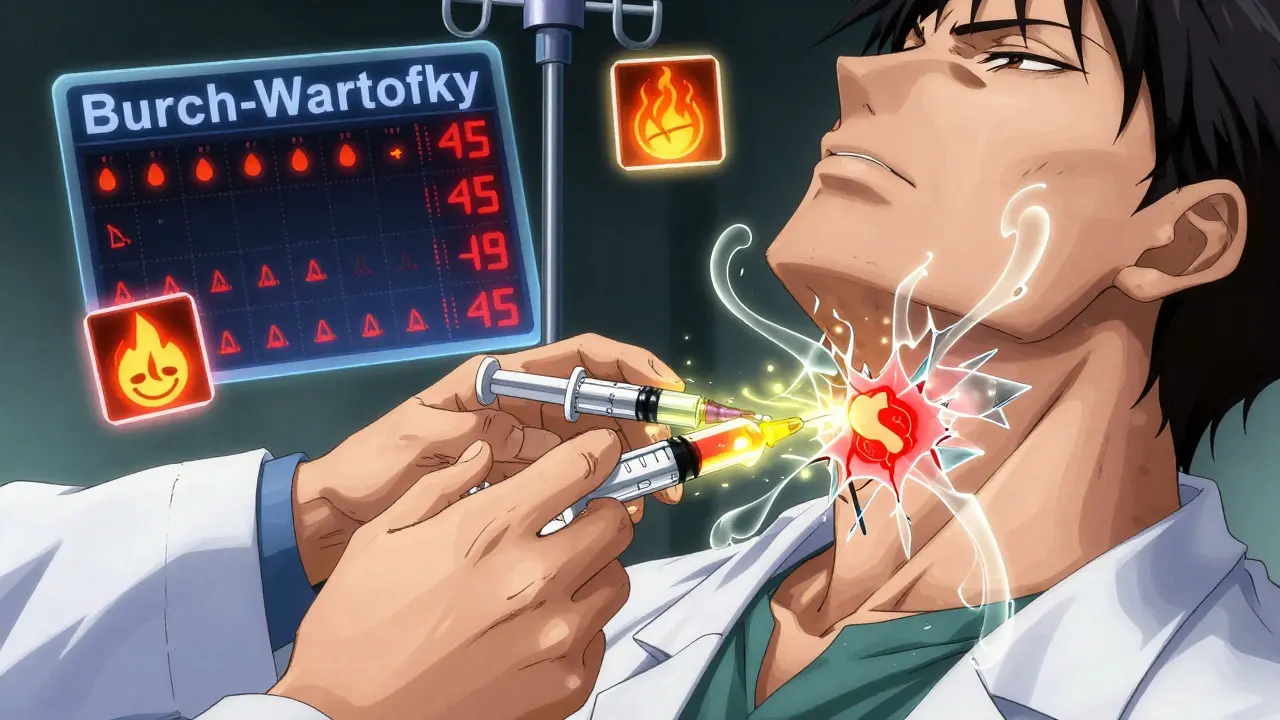
The Burch-Wartofsky Point Scale is the most used scoring tool. It assigns points for each symptom. A score above 45 is diagnostic for thyroid storm. Each extra point increases the risk of death by 5%. If someone has a temperature above 105.8°F, a systolic BP below 90, or is in a coma, their odds of survival drop sharply.
Lab tests confirm the diagnosis: free T4 and T3 are sky-high, TSH is undetectable. Liver enzymes, white blood cell count, and electrolytes are often abnormal. Arterial blood gases show respiratory alkalosis early on, then metabolic acidosis as the body fails.
ICU Treatment: The Race Against Time
Every minute counts. The goal? Stop hormone production, block hormone action, reduce conversion of T4 to T3, and support failing organs. Treatment starts within one to two hours of suspicion - not after waiting for test results.
Step 1: Block hormone production - Methimazole is the first choice, given as a 60-80 mg loading dose, then 15-20 mg every 4 to 6 hours. If methimazole isn’t available, propylthiouracil (PTU) is used at 600-1,000 mg loading dose, then 200-250 mg every 4 hours. PTU also blocks T4 to T3 conversion, which is why it’s sometimes preferred in severe cases.
Step 2: Block hormone release - Potassium iodide (500 mg every 6 hours) or sodium iodide (1 g daily) is given - but only after antithyroid drugs. Giving iodine first can make things worse by fueling hormone release.
Step 3: Block hormone effects - Propranolol is the beta-blocker of choice. It’s given orally every 4 to 6 hours, or intravenously in 1-2 mg doses every 5 minutes if heart rate is above 140. It doesn’t lower hormone levels, but it stops the heart from racing, reduces tremors, and calms the nervous system. Other beta-blockers aren’t as effective.
Step 4: Reduce inflammation and hormone conversion - Hydrocortisone (100 mg IV every 8 hours) is given to prevent adrenal insufficiency and to stop the body from turning T4 into the more powerful T3. This is often overlooked but critical.
Step 5: Support the body - Fever is managed with acetaminophen. Ice packs and cooling blankets are used if temperature hits 104°F. IV fluids - often 2 to 3 liters of normal saline - fix dehydration and low blood pressure. Oxygen and mechanical ventilation are needed if breathing is weak or mental status is poor. Vasopressors like norepinephrine may be required if blood pressure crashes.
For the worst cases - when standard treatment fails - plasmapheresis can be used. This filters the blood to remove excess thyroid hormones. One 2021 study showed a 78% success rate in patients who didn’t respond to drugs. It’s not common, but it saves lives when nothing else works.
Survival and Recovery: What Happens After?
Survival depends on how fast you act. If treatment starts within 6 hours, survival jumps to 75-80%. If it’s delayed beyond 24 hours, survival drops to 20%. Age matters too. Elderly patients have a 30% mortality rate. Those with heart disease are 2.3 times more likely to die.
Recovery isn’t quick. Most patients spend 7 to 8 days in the ICU. About two-thirds need a breathing tube for an average of 5 days. Over 40% need drugs to support blood pressure. Neurological symptoms usually clear up in 24 to 48 hours. Confusion lifts in about 72 hours. Full mental recovery takes a week to two weeks.
Long-term, 85% of survivors need lifelong thyroid hormone replacement. Why? Because the underlying hyperthyroidism is usually treated permanently - with radioactive iodine or surgery - to prevent another storm. Only 15% go into remission with medication alone. But if they skip follow-ups, recurrence rates jump from 2-3% to 25-30%.
Recovery isn’t just physical. Many survivors report lasting fatigue, anxiety, and brain fog for months. Regular check-ins with an endocrinologist are non-negotiable.
What Can Be Done to Prevent It?
The best treatment for thyroid storm is never having it in the first place. People with hyperthyroidism need education and structure. They must understand:
- Never skip medication - even if you feel fine.
- Call your doctor immediately if you develop fever, rapid heartbeat, or confusion - don’t wait.
- Get checked after infections, surgery, or trauma.
- Know the signs: fever, racing heart, vomiting, mental changes - these aren’t "just a bad flu."
Programs like the American Association of Clinical Endocrinologists’ Thyroid Storm Awareness Initiative have already reduced delayed diagnoses by 18%. Better awareness saves lives.
If you or someone you know has Graves’ disease or another form of hyperthyroidism, keep a printed list of warning signs in your wallet. Share it with family. Make sure your primary care doctor and endocrinologist are in communication. Thyroid storm doesn’t care how healthy you seem. It only cares if you’re prepared.
Can thyroid storm happen to someone who doesn’t know they have hyperthyroidism?
Yes. Some people have mild or hidden hyperthyroidism for years - maybe just weight loss, anxiety, or a fast heartbeat they ignore. Thyroid storm can be the first sign something’s wrong. That’s why unexplained fever, rapid heart rate, or sudden confusion in someone with risk factors should always trigger thyroid testing.
Is thyroid storm more common in women?
Yes. Women are 5 to 10 times more likely to develop hyperthyroidism, especially Graves’ disease, due to autoimmune and hormonal factors. Thyroid storm follows that pattern - it’s far more common in women, particularly those aged 20 to 40. Pregnancy and postpartum periods are high-risk windows.
Can you get thyroid storm from taking too many thyroid pills?
No. Thyroid storm is caused by the body’s own overproduction of hormones, not by taking too much replacement hormone like levothyroxine. Taking extra levothyroxine can cause symptoms of hyperthyroidism, but it rarely leads to the full-blown multi-organ failure seen in thyroid storm. The trigger is always an underlying disease like Graves’ disease, not medication overdose.
What’s the difference between thyroid storm and a panic attack?
A panic attack can cause a fast heartbeat and sweating, but it doesn’t cause fever above 104°F, vomiting, jaundice, or coma. Panic attacks are psychological and resolve quickly with calming techniques. Thyroid storm is a physical disaster - your body is literally overheating and shutting down. Blood tests will show massive hormone levels in thyroid storm, but normal levels in a panic attack.
Is thyroid storm contagious?
No. Thyroid storm is not contagious. It’s caused by an autoimmune condition (like Graves’ disease) or other internal triggers. You can’t catch it from someone else. However, infections - which can trigger thyroid storm - are contagious. That’s why preventing infections is part of managing hyperthyroidism.
Can thyroid storm come back after treatment?
Yes, but only if the underlying hyperthyroidism isn’t properly treated. If someone survives thyroid storm and then stops taking their medication or skips follow-ups, recurrence rates jump to 25-30%. Definitive treatments like radioactive iodine or surgery reduce recurrence to under 3%. Long-term management is not optional - it’s lifesaving.


Tatiana Bandurina
January 21, 2026 AT 20:25Philip House
January 22, 2026 AT 15:15Ryan Riesterer
January 22, 2026 AT 19:17Akriti Jain
January 22, 2026 AT 22:43Mike P
January 23, 2026 AT 06:55Jasmine Bryant
January 24, 2026 AT 04:41Liberty C
January 25, 2026 AT 22:55shivani acharya
January 26, 2026 AT 21:58Sarvesh CK
January 27, 2026 AT 08:30Patrick Roth
January 27, 2026 AT 16:34Oren Prettyman
January 28, 2026 AT 15:31Chiraghuddin Qureshi
January 28, 2026 AT 17:15Brenda King
January 29, 2026 AT 09:36Keith Helm
January 30, 2026 AT 13:57arun mehta
January 31, 2026 AT 04:06