

Every year, thousands of people accidentally take too much of a medication - not because they’re trying to get high, but because they lost track. Maybe they took a painkiller for back pain on Monday, then again on Wednesday, and forgot they already had one. Maybe they mixed a prescription with a sleep aid they bought online. Maybe they didn’t know their pill was laced with fentanyl. These aren’t rare mistakes. They’re preventable ones.
A medication log isn’t just for doctors. It’s your personal safety net. It’s the simplest, most powerful tool you can use to stop an overdose before it happens. You don’t need an app. You don’t need to be tech-savvy. You just need a notebook, a pen, and the discipline to write things down - every single time.
What Goes in a Medication Log?
Don’t just write down the name of the pill. That’s not enough. You need to capture the full picture. Here’s what each entry should include:
- Medication name - Exact brand or generic name. If it’s a pill you got from a pharmacy, write what’s on the bottle. No shortcuts.
- Dosage - Not just “one pill.” Write “10 mg oxycodone” or “500 mg acetaminophen.” If you split a pill, write “half of 20 mg.”
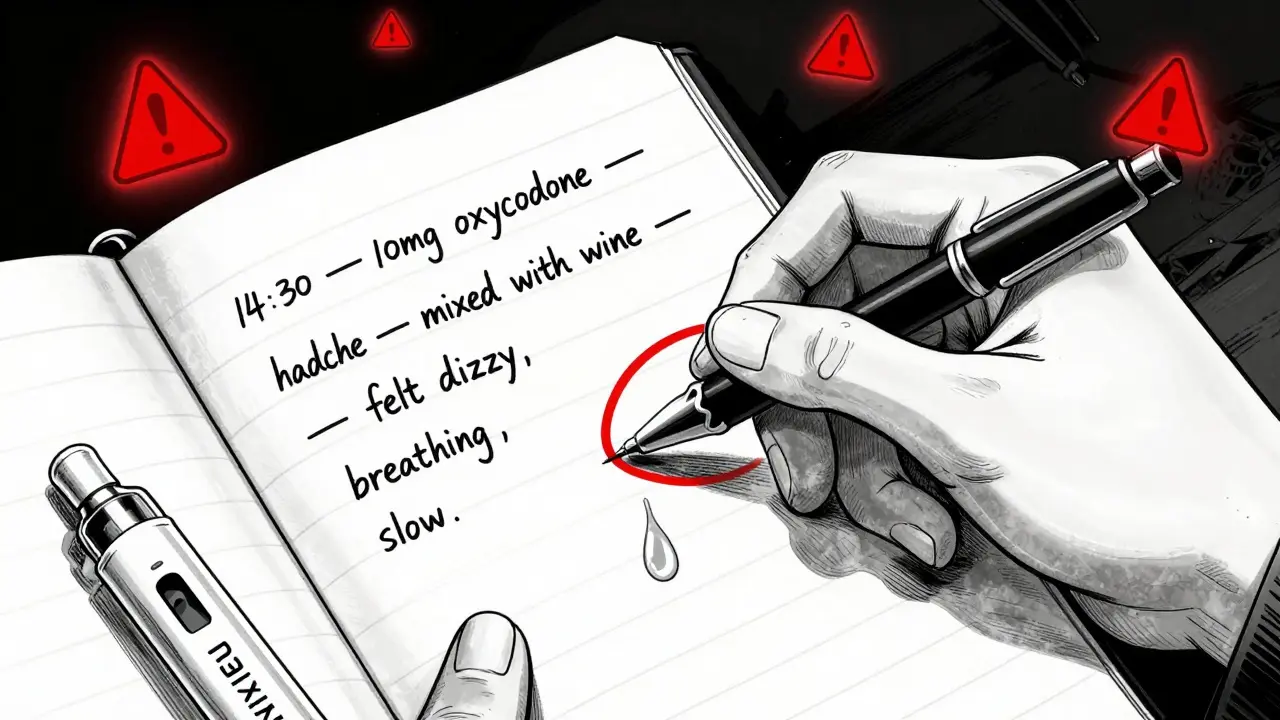
- Date and time - Use a 24-hour clock if you can. 14:30 is clearer than “3 p.m.”
- Reason for taking it - “Headache,” “anxiety,” “sleep,” “back pain.” This helps you spot patterns. Are you taking more when you’re stressed? Are you using it for pain or just to feel okay?
- Method of use - Swallowed? Crushed? Snorted? Injected? The way you take a drug changes how fast it hits your system - and how dangerous it is. Crushing a slow-release pill can kill you.
- Other substances taken at the same time - Alcohol? Benzodiazepines? Sleep meds? Even over-the-counter cold pills can mix dangerously with opioids. Write it all down.
- Effects or side effects - “Drowsy,” “nauseous,” “no pain,” “felt dizzy,” “breathing felt slow.” This is your body’s feedback. If you notice the same reaction every time you take a certain combo, that’s a red flag.
- Drug test results (if applicable) - If you use test strips for fentanyl or xylazine, write “fentanyl detected” or “clean.” This isn’t optional if you’re using street drugs.
That’s it. Seven fields. Takes less than a minute. But it saves lives.
Why a Paper Log Still Beats Apps
You might think a phone app is better. Maybe it reminds you. Maybe it syncs with your pharmacy. But here’s the truth: when you’re in crisis, your phone dies. You’re shaking. You can’t think. You can’t unlock your phone. A notebook? It’s always there. No battery. No password. No glitch.
And apps don’t help if you’re taking drugs you bought off the street. No app can tell you if your pill has fentanyl in it. Only a test strip can. And you need to write that result down - right next to the time you took it.
Real people in Sydney, Melbourne, and Brisbane are using simple notebooks with colored pens. Blue for pain meds. Red for sleep aids. Green for anything they’re not sure about. They keep them in their wallet, their purse, or taped inside their medicine cabinet. It’s not fancy. It’s effective.
How to Use Your Log to Avoid Overdose
Here’s how to turn your log from a record into a safety system:
- Start low. Go slow. If you’re trying a new medication or increasing a dose, write down the lowest possible amount first. Wait 24 hours. Write how you felt. Then - and only then - consider going up a little. Never double up because you “don’t feel anything.”
- Check your log before you take anything. Don’t guess. Don’t rely on memory. Open the notebook. Look at the last time you took it. Look at the dose. Look at what else you took that day. If you took two painkillers in the last 6 hours? Don’t take another.
- Look for dangerous combos. Every time you write down a new drug, check if you’ve taken anything else that slows your breathing - alcohol, Xanax, sleeping pills, muscle relaxers. If yes, don’t take it. Write “RISK: ALCOHOL + OPIOID” in red pen. That’s your brain’s alarm bell.
- Track your tolerance. If you notice you need more and more to get the same effect, that’s a sign your body’s changing. Write it down. Don’t ignore it. That’s the first step toward dependence - and overdose risk.
- Share it with someone you trust. Give a copy to a friend, partner, or family member. Tell them: “If I don’t answer my phone for 2 hours, check this.” They don’t need to understand all the meds. They just need to know your normal pattern. If they see you took 4 pills in 3 hours - and you’re not responding - they can call for help.
What Your Log Can’t Do - And What You Need to Know
Your log won’t stop a doctor from prescribing you too much. It won’t stop a dealer from selling you fake pills. It won’t replace naloxone. But it gives you control. It turns guesswork into facts.
Here’s what you still need:
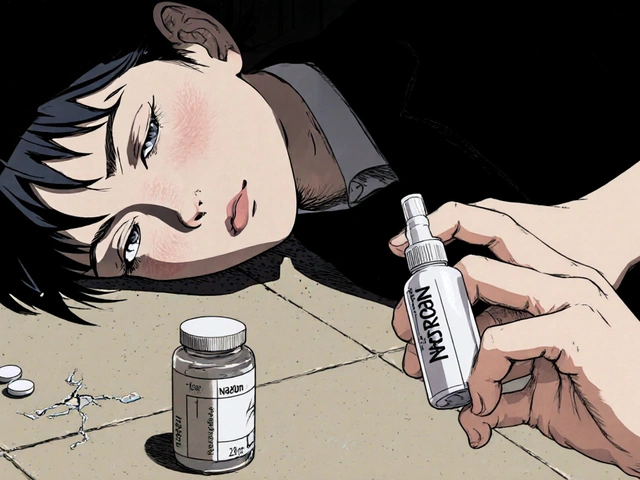
- Naloxone - Keep it in your house, your bag, your car. Know how to use it. Practice with a training kit.
- Test strips - Get them for free from harm reduction centers. Test every pill or powder you take, even if you’ve used it before. Fentanyl doesn’t care how long you’ve been using.
- A safety plan - Never use alone. Always tell someone where you are. Keep your phone charged. Have the emergency number saved.
Your log is part of a bigger system. It’s the piece you control. The rest? That’s about having tools and people around you.
Common Mistakes (And How to Fix Them)
People try logs. Then they quit. Here’s why - and how to fix it:
- “I forget to write it down.” - Set a phone alarm for 8 p.m. every day: “Log meds.” When it goes off, write what you took that day. Even if you didn’t take anything, write “nothing.” Consistency beats perfection.
- “I don’t remember the dose.” - Keep the original bottle. Take a photo of the label with your phone. Write “see photo” in your log. Or cut out the label and tape it in.
- “It’s too much work.” - Start small. Log just your opioids or your sleep meds for one week. Once it becomes a habit, add more.
- “I’m embarrassed.” - You’re not alone. Thousands of people use logs. This isn’t about shame. It’s about survival.

Real Stories Behind the Numbers
In 2023, a 32-year-old man in Newcastle stopped taking his prescribed oxycodone after a surgery. He started buying pills online because his pain came back. He didn’t tell his doctor. He didn’t tell anyone. He didn’t log anything.
One night, he took two pills he thought were the same as before. He didn’t know they were laced with fentanyl. He passed out. His roommate found him. Called 000. Used naloxone. He woke up in the hospital.
After that, he started a log. Every pill. Every time. He wrote down the test strip results. He showed it to his sister. He started going to a support group.
He’s alive today because he stopped guessing. He started tracking.
You don’t need to wait for a near-death experience to start.
Where to Get Help
If you’re using opioids, benzodiazepines, or any drug that can cause overdose, you’re not alone. Free services exist:
- NSW Health Drug and Alcohol Services - Free naloxone, test strips, and counseling.
- Needle and Syringe Programs - Available in every major city. No ID needed. Just walk in.
- 1800 RESPECT - 24/7 crisis line for substance use and mental health.
- LifeLine - 13 11 14. Talk to someone who won’t judge.
You don’t need to fix everything at once. Just start logging. One entry. Today.
Do I need to log every single medication, even vitamins?
No. Focus on drugs that affect your central nervous system: opioids, benzodiazepines, sleep aids, alcohol, stimulants, and any illicit substances. Vitamins, fish oil, or antibiotics don’t raise overdose risk - unless you’re mixing them with something dangerous. Keep it simple. Track what kills.
Can I use a digital app instead of paper?
You can - but only if you’re confident your phone won’t die, get lost, or lock you out. Many apps don’t let you log street drugs or test strip results. Paper is reliable, immediate, and doesn’t need Wi-Fi. If you use an app, make sure it lets you add custom fields for substances and effects. And always have a backup - like a printed copy.
What if I take a pill and don’t remember?
That’s a red flag. Memory loss from drugs is dangerous. If you’ve ever taken a pill and later couldn’t remember doing it, stop using alone. Get test strips. Use a log with a trusted person who can check your entries. Your brain is telling you something’s wrong. Listen.
How often should I review my log?
Check it every time you take a new dose. Then do a weekly review. Look for patterns: Are you taking more on weekends? Are you mixing with alcohol? Are your doses creeping up? If you see a trend, talk to a doctor or counselor. Don’t wait for a crisis.
Is it illegal to keep a log of illegal drugs?
No. Keeping a personal record of your drug use is not illegal in Australia. Harm reduction organizations encourage it. Police won’t come to your house because you wrote down “fentanyl detected” in your notebook. Your log is for your safety - not for anyone else.
What if I miss a day?
Don’t quit. Just write “missed” and start again tomorrow. Perfection isn’t the goal. Consistency is. One day off won’t ruin your safety. Stopping altogether will.
Chris & Kara Cutler
February 2, 2026 AT 03:09Donna Macaranas
February 4, 2026 AT 01:17Rachel Liew
February 5, 2026 AT 01:35Lisa Rodriguez
February 5, 2026 AT 18:43Lilliana Lowe
February 7, 2026 AT 08:34vivian papadatu
February 9, 2026 AT 05:09Melissa Melville
February 11, 2026 AT 03:54Naresh L
February 11, 2026 AT 23:26Sami Sahil
February 13, 2026 AT 16:37franklin hillary
February 14, 2026 AT 17:10Bob Cohen
February 16, 2026 AT 17:04June Richards
February 17, 2026 AT 05:41Jaden Green
February 18, 2026 AT 18:03Lu Gao
February 18, 2026 AT 19:52Angel Fitzpatrick
February 19, 2026 AT 18:37