
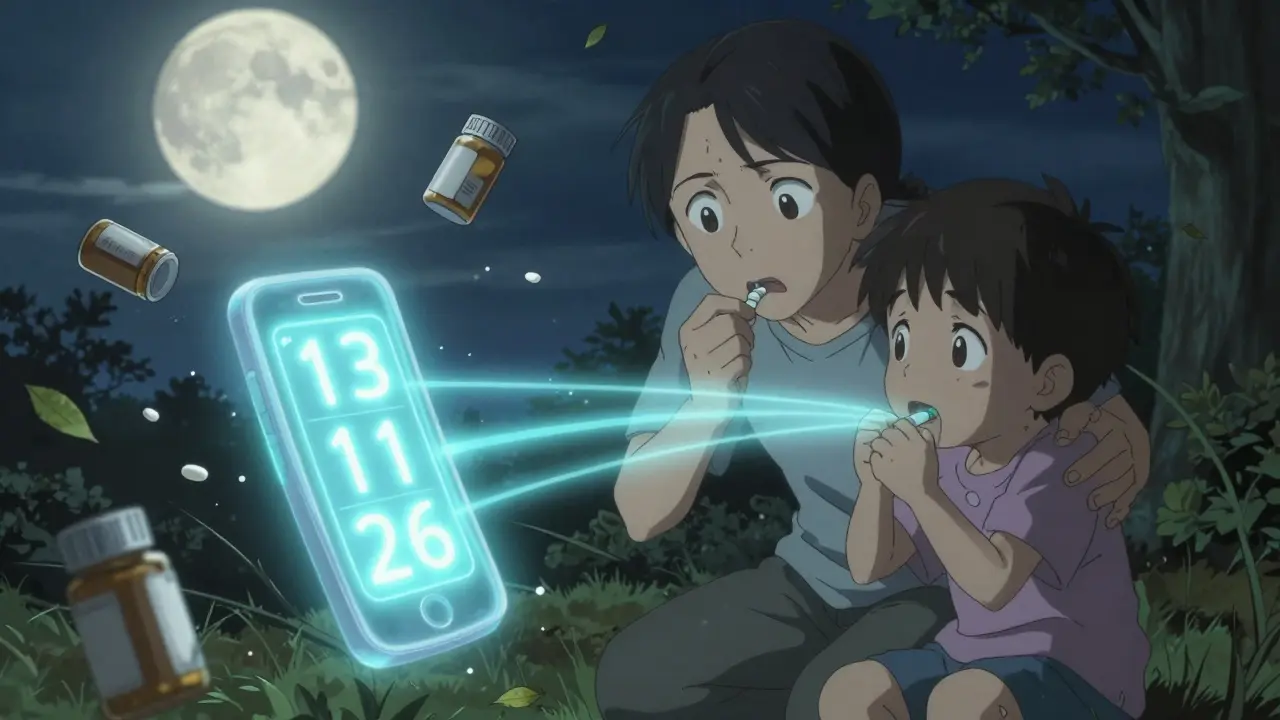
When a child swallows the wrong medication, every second counts. It’s not a "wait and see" situation. One pill, one tablet, one chewable - even a single dose of adult medication can send a child to the hospital, or worse. In Australia alone, over 2,000 children under five are treated each year for accidental medication ingestion. The good news? Acting fast and knowing exactly what to do can make all the difference. Here’s what actually works - no guesswork, no outdated advice, just clear steps backed by medical experts.
Step 1: Stay Calm, But Act Immediately
Panic slows you down. Breathe. Then move. The first thing you must do is call Poison Control. In Australia, that’s 13 11 26. Don’t wait. Don’t try to figure out what happened first. Don’t call your GP or drive to the hospital before calling. Poison specialists are trained to give you real-time instructions based on what was swallowed, how much, and the child’s age and weight. They’ve handled thousands of cases. They know exactly what to ask and what to tell you. In fact, studies show that calling Poison Control reduces hospitalization rates by 43%.
Step 2: Remove Any Remaining Medication
If you see pills, liquid, or patches still in the child’s mouth, carefully remove them with your fingers. Don’t force it. Don’t stick your finger down their throat. Just gently wipe or pull out what’s visible. If it’s a medicated patch - like a pain reliever or nicotine patch - check the skin and inside the mouth, especially the roof. Patches can stick there and keep releasing drugs for hours. Remove it with gloves if you have them. If not, wash your hands afterward.
Step 3: Do NOT Induce Vomiting
This is critical. You’ve probably heard older advice about giving syrup of ipecac to make a child throw up. That advice is outdated, dangerous, and has been banned by medical guidelines since 2004. Vomiting doesn’t remove enough of the drug to matter - and it can cause more harm. It increases the risk of choking, aspiration, or burns if the substance is caustic. Even if the child is vomiting on their own, don’t try to make it happen. Let the body do what it needs to do - and let Poison Control guide you.
Step 4: Gather Information
While you’re on the phone with Poison Control, gather these details:
- What medication was taken? (Look for the name on the bottle - even if it’s empty)
- How much was taken? (Estimate if you’re not sure - "three chewables" is better than "a bunch")
- When was it taken? (Even if it was 10 minutes ago, that matters)
- How old is the child? What’s their weight? (This helps determine toxicity levels)
- Are they showing any symptoms? (Drowsiness, vomiting, unusual behavior)
Keep the medication container nearby. Poison Control will ask for the exact ingredients. If you can’t find it, describe the pill: color, shape, markings. Many medications have numbers or letters printed on them - those can help identify the drug.
Step 5: Watch for These Warning Signs
Some reactions happen fast. If your child shows any of these, call 000 (or 911 if you’re overseas) immediately:
- Difficulty breathing or stopped breathing
- Loss of consciousness or unresponsiveness
- Seizures or shaking
- Pupils that are extremely large or tiny
- Extreme drowsiness lasting more than 20 minutes
- Excessive drooling or foaming at the mouth
- Pale, cold, or bluish skin
These signs mean the body is in crisis. Don’t wait. Don’t try to drive yourself. Call emergency services. They can start treatment on the way.
Step 6: What Happens at the Hospital?
Even if the child seems fine after calling Poison Control, many cases require monitoring. Doctors don’t just check vital signs - they look for hidden damage. For example:
- If it was a heart medication like amlodipine or beta-blockers, they’ll monitor heart rate and blood pressure for at least 12 hours. A drop in blood pressure below 70/40 mmHg can happen silently.
- If it was acetaminophen (paracetamol), liver damage can take hours to show up. Blood tests are needed even if the child feels okay.
- If it was a sulfonylurea (a type of diabetes pill), blood sugar can crash. They’ll check glucose every 30 minutes for several hours.
Doctors may give activated charcoal if the ingestion happened within the last hour. It binds to drugs in the stomach and prevents absorption. But it’s not a magic fix - it only works on certain substances. Antidotes like naloxone (for opioids) or octreotide (for certain diabetes pills) are given only if needed. You won’t know unless you get professional help.
Step 7: Why Calling Poison Control Is Non-Negotiable
Most parents delay calling because they think, "Maybe they’re fine," or "I’ll just watch them." But here’s what actually happens:
- A 2-year-old swallowed one 10 mg amlodipine tablet. Mom waited 45 minutes to call. The child needed 36 hours of heart monitoring.
- A 3-year-old took three antihistamine tablets. Dad called Poison Control right away. The child was monitored at home and sent home in 2 hours.
The difference? Time. Poison Control gives you a roadmap. They know if the dose is dangerous, if you need to go to the ER, or if you can safely wait at home. And they’re available 24/7. Don’t rely on Google. Don’t wait for your doctor’s office to open. Call the experts.
Prevention: How to Stop It From Happening Again
Accidents happen - but most are preventable. Here’s what works:
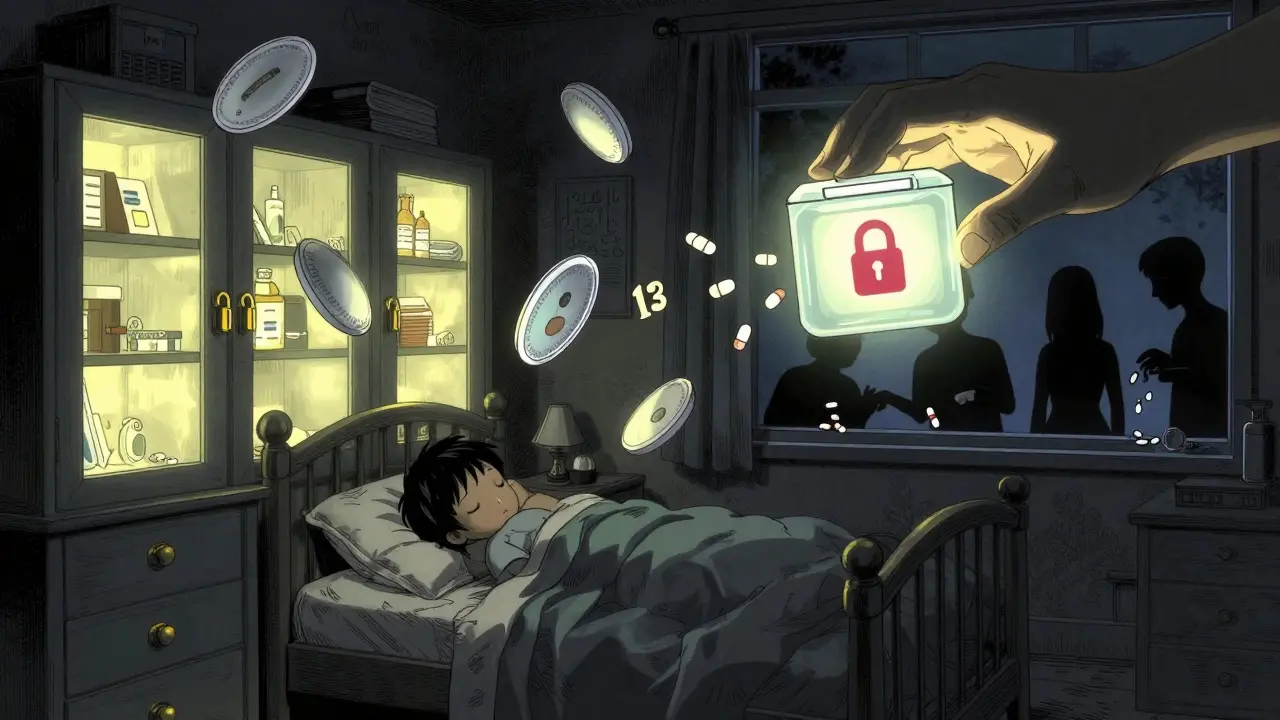
- Lock it up. Medication should be stored in a locked cabinet, not a drawer or on the counter. Even if you think "I’ll be quick," someone else might not be.
- Use child-resistant packaging. All liquid medications in Australia now come with flow restrictors. They cut accidental ingestion by 58%. Always reseal after use.
- Never refer to medicine as candy. Saying "This will make you feel better like a sweet" teaches kids to associate pills with treats.
- Check all rooms. Medications left in purses, nightstands, or bathrooms are common sources. A child can climb, reach, or open things faster than you think.
- Consider smart pill boxes. Devices like Hero Health alert you if a dose is missed and lock until the right time. They cost around $90/month but reduce accidental access by 73% in studies.
According to the CDC, homes with locked storage see 85% fewer incidents. Simple steps save lives.
What’s Changing in 2026?
New rules are coming. In March 2023, the FDA approved universal child-resistant packaging requiring two independent safety mechanisms - not just one. Australia is expected to adopt similar standards by 2025. These designs make it nearly impossible for a child to open a bottle without adult help. Also, webPOISONCONTROL - an online tool that uses AI to triage cases - now handles nearly 3 out of 10 pediatric exposures with 94% accuracy. It’s not a replacement for calling, but it’s a powerful backup.
Final Thought: You’re Not Alone
If this happens to you, you’re not a bad parent. Accidents happen to good, careful people. What matters is what you do next. Call Poison Control. Follow their instructions. Get help. And then - take steps to make sure it doesn’t happen again. Every parent should know the number: 13 11 26. Write it on the fridge. Save it in your phone. Tell your partner, your babysitter, your in-laws. Because when it matters most, you won’t have time to search for it.
What should I do if my child swallowed a pill but seems fine?
Even if your child seems fine, you still need to call Poison Control at 13 11 26. Many medications, like acetaminophen or heart drugs, cause damage hours after ingestion. Symptoms can disappear and then return. Poison Control will tell you if you need to go to the hospital or if monitoring at home is safe. Never assume "no symptoms = no problem."
Can I use syrup of ipecac to make my child vomit?
No. Syrup of ipecac has not been recommended since 2004. It doesn’t reliably remove medication from the stomach, and it can cause serious side effects like aspiration pneumonia or worsening chemical burns. Never use it. Instead, remove visible pills from the mouth and call Poison Control immediately.
Is it safe to give my child milk or water after they swallow medicine?
Don’t give anything unless Poison Control tells you to. Milk, water, or food can interfere with how the body absorbs the drug or worsen certain poisonings. For example, giving milk after iron overdose can increase absorption. Always follow expert instructions - not home remedies.
How quickly do symptoms appear after a child swallows medication?
It depends on the drug. Some, like opioids or heart medications, can cause symptoms within 10-30 minutes. Others, like acetaminophen, may take 6-12 hours before liver damage shows up. That’s why you can’t wait to see symptoms - you need to act before they appear. Poison Control can estimate timing based on the substance.
What if I don’t know what pill my child swallowed?
Call Poison Control anyway. Describe the pill: color, shape, any writing on it. If you have multiple bottles, bring them all. Poison Control has databases that match pill imprints. Even if the bottle is empty, the shape and size can help identify the drug. Don’t wait to find the label - call now.
Can I use activated charcoal at home?
No. Activated charcoal is a medical treatment that requires professional administration. It’s not available over-the-counter for home use, and giving it incorrectly can cause choking or lung damage. Only trained staff should give it - usually in a hospital setting. Don’t try to use it yourself.
Are child-resistant caps really effective?
Yes. Studies show that child-resistant packaging reduces accidental ingestion by 58%. But they’re not foolproof - some kids figure them out. That’s why locking medication in a cabinet is still the best protection. Always combine caps with secure storage.
What should I do if my child ingests a patch?
Remove the patch immediately with gloves or clean hands. Check the child’s skin and mouth - patches can stick to the roof of the mouth or tongue. Call Poison Control. Even if the patch looks small, it can release a dangerous dose over hours. Don’t wait for symptoms.
Does the time of day matter when calling for help?
No. Poison Control centers in Australia are open 24/7, 365 days a year. It doesn’t matter if it’s 3 a.m. or a holiday. Call immediately. Delaying for "office hours" can cost time - and possibly a life.
Should I take my child to the ER without calling Poison Control first?
Only if they’re having seizures, stopped breathing, or are unconscious. Otherwise, call Poison Control first. They can tell you whether the ER is necessary, what to bring, and how to prepare. Going straight to the ER without calling may lead to delays, misdiagnosis, or unnecessary tests. Poison Control helps you make the right decision fast.

Dominic Punch
February 23, 2026 AT 13:14Let me tell you something straight - calling Poison Control isn't just smart, it's the only thing that separates a scared parent from a child who walks away unharmed. I've seen it firsthand. My niece swallowed a single blood pressure pill. We called 13 11 26 within 90 seconds. They told us to keep her awake, give her sips of water, and monitor her breathing. No ER. No panic. Just calm, expert guidance. That's the power of trained professionals. Don't Google. Don't guess. Call them. Period.
Lou Suito
February 24, 2026 AT 11:51Dominic Punch
February 25, 2026 AT 17:19Wow. Just... wow. You gave activated charcoal from the hardware store? That’s not even a real thing you can buy at Home Depot. And you think Poison Control is a front for Big Pharma? That’s not paranoia - that’s full-blown conspiracy delusion. The fact that you’re even typing this makes me terrified for your kids. If you’re this misinformed, you shouldn’t be allowed near medicine bottles. Ever.
Haley Gumm
February 26, 2026 AT 03:36Wow. Just wow. This post is so thorough it’s almost painful. I mean, the level of detail? The citations? The stats? It’s like someone took a toxicology textbook and turned it into a love letter to child safety. I’m not crying - you’re crying. Also, I just saved the number 13 11 26 to my lock screen. Because one day, I might need it. And when I do? I’ll be ready.
Gabrielle Conroy
February 26, 2026 AT 22:04I love this so much. 🙌 I’m a nurse and I’ve seen too many parents wait because they ‘didn’t want to bother anyone.’ Spoiler: They’re not bothering anyone. They’re saving lives. I printed this guide and taped it to my fridge next to the fire escape plan. Also - child-resistant caps? YES. But lock it in a cabinet. Always. I’ve had toddlers open bottles faster than my 8-year-old opens a TikTok app. 🤯
Nerina Devi
February 27, 2026 AT 21:15As a Canadian parent, I appreciate the Australian focus - but let’s not forget that in Canada, we have Poison Control at 1-800-268-9017. The principles are identical. This guide is gold. I’ve shared it with every new parent in my book club. One of them had her 18-month-old swallow a single Advil tablet. She called immediately. They said: 'Monitor. Don’t induce vomiting. Bring the bottle.' She didn’t go to the hospital. Her child is fine. This is the kind of information that changes outcomes. Thank you.
Lillian Knezek
March 1, 2026 AT 05:18kirti juneja
March 2, 2026 AT 03:23OMG I just read this and I’m literally shaking. My cousin’s kid did this last year - swallowed a whole bottle of melatonin gummies. She called Poison Control, they said ‘keep her awake, give her water, we’ll call you back in 15.’ She did. No ER. No drama. Just calm. I’m telling everyone. This is the kind of info that saves lives. Also - lock it up. Like, literally lock it. My toddler is a ninja. She found my vitamins in my purse. 🙈
Bhaskar Anand
March 2, 2026 AT 20:47Dinesh Dawn
March 4, 2026 AT 01:53Hey, I get where you're coming from - home remedies work sometimes. But here's the thing: melatonin isn't a spice. Amlodipine isn't a spice. When your kid swallows something that can stop their heart? You don't gamble. You call the experts. I'm from India too. My sister's baby swallowed a blood pressure pill. We called 13 11 26 - because it's free, 24/7, and trained. She's alive today because we didn't try to 'be traditional.' We did what works. No shame in that.
Nick Hamby
March 4, 2026 AT 12:02There’s a deeper philosophical layer here that deserves attention. The act of calling Poison Control isn’t just about medical triage - it’s a radical act of humility. It’s admitting that you, as a parent, are not omniscient. That you do not have all the answers. That you are willing to surrender control to a system you don’t understand - because you trust it more than your fear. In a world that glorifies self-reliance, choosing to call for help is one of the most courageous things a human being can do. And it saves lives. Every. Single. Time.
Vanessa Drummond
March 5, 2026 AT 11:39