

Why Medication Planning Matters More Than You Think
Imagine climbing to 17,000 feet, lungs burning, head pounding, and your prescription insulin sitting in a backpack that’s been frozen overnight. No pharmacies nearby. No cell service. Just you, your gear, and a growing sense of panic. This isn’t a horror story-it’s what happens when people skip proper medication prep for high-altitude pilgrimages and treks. Every year, thousands of people head to places like Mount Kailash, Everest Base Camp, or the Andes without realizing how dangerous it can be to run out of meds or store them wrong. And it’s not just about altitude sickness. Diarrhea, dehydration, infections, and even insulin failure can turn a spiritual journey into a medical emergency.
Know Your Risks Before You Step Out
If you’re going above 8,000 feet, your body is in uncharted territory. At that height, oxygen levels drop by nearly 30%. That’s enough to trigger Acute Mountain Sickness (AMS) in up to 85% of people who climb too fast. Symptoms? Headache, nausea, dizziness, fatigue. Left unchecked, it can turn into High Altitude Cerebral Edema (HACE)-brain swelling-or High Altitude Pulmonary Edema (HAPE)-fluid in the lungs. Both are life-threatening. Research from the NIH shows that 43% of trekkers at Everest Base Camp report clear AMS symptoms. And 22% of all medical evacuations from high-altitude treks happen because someone didn’t bring the right meds-or didn’t know how to use them.
Essential Medications to Pack
Here’s what you actually need to carry, not just what sounds good:
- Acetazolamide (Diamox): For preventing altitude sickness. Take 125 mg twice a day, starting one day before you ascend. Keep taking it for at least three days after reaching your highest point. Side effects? More bathroom trips and tingling fingers-normal, not dangerous.
- Dexamethasone: A steroid used only in emergencies for HACE. Keep it on hand. Dose: 8 mg first, then 4 mg every 6 hours if symptoms worsen. This isn’t for daily use-it’s a rescue drug.
- Nifedipine (extended-release): For HAPE. Take 20 mg every 12 hours if you start coughing, gasping, or feel like you’re drowning in your own lungs. It opens blood vessels in the lungs, easing pressure.
- Antibiotics: Azithromycin (500 mg daily for 3 days) for traveler’s diarrhea. It’s more effective than ciprofloxacin at high altitudes. Diarrhea hits 60% of trekkers between 9,000-14,000 feet.
- Pain and fever relief: Ibuprofen (400 mg) works better than acetaminophen for altitude headaches. Keep 10-15 tablets.
- Antihistamines: Diphenhydramine (25-50 mg) for allergic reactions or sleep issues. Altitude messes with your sleep cycle.
- Topicals: Antibiotic ointment, hydrocortisone cream, and blister pads. Blisters are the #1 reason people quit treks.
If you take daily meds for diabetes, high blood pressure, or asthma-bring double your supply. And never pack them in checked luggage. Lost bags happen. Always carry meds in your daypack.
Storage Is Just as Important as What You Bring
Medications don’t handle extremes well. Insulin? If it gets below 32°F (0°C), it loses 25% potency in just 24 hours. Glucometers? They give wrong readings below freezing. A 2023 Reddit post from a diabetic trekker in Nepal described how his insulin failed at 14,000 feet. He needed a $4,200 evacuation.
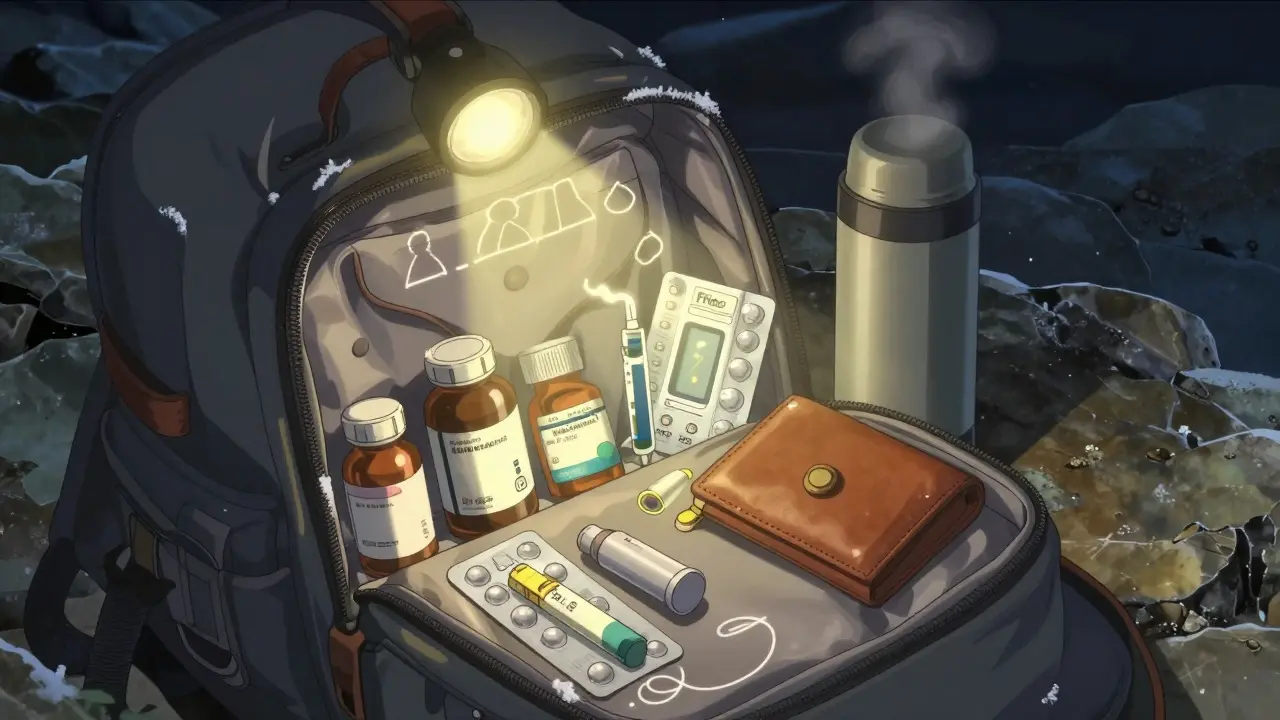
Use insulated, waterproof containers. Some people use small coolers with reusable ice packs. Others wrap pills in wool socks and keep them close to their body at night. For insulin, consider a Frio wallet-it uses evaporative cooling and lasts up to 45 hours without ice. Keep your meds between 59-77°F (15-25°C). If you’re sleeping in sub-zero tents, don’t leave your meds on the ground.
Pre-Trip Medical Checkup: Don’t Skip It
92% of travel medicine specialists say a pre-trip visit is the single most important step. You need to know if you’re at risk for heart or lung problems that could worsen at altitude. A simple EKG or lung function test can save your life. The Himalayan Rescue Association found that 83% of serious altitude complications could’ve been prevented with a basic checkup.
Bring your full medication list. Ask your doctor:
- Can I safely take acetazolamide with my current meds?
- Do I need a letter for controlled substances? (Some countries require it for painkillers or sedatives.)
- Should I adjust my dosage for high altitude?
- Do I need a prescription for dexamethasone or nifedipine? (These aren’t always available over the counter abroad.)
And always carry meds in original bottles with pharmacy labels. Customs officials and local doctors need to see the prescription info. No random pill organizers for controlled drugs.
What About Local Pharmacies?
Don’t count on them. A 2013 survey found that 89% of health camps along major pilgrimage routes in Nepal didn’t stock acetazolamide, dexamethasone, or nifedipine. Even if you find a pharmacy, the meds might be expired, fake, or stored wrong. One trekker described how his friend had to beg a Sherpa to help locate a second inhaler because the local shop only had the wrong brand.
Plan for the worst. If you’re going to a remote area, bring everything you need. Period.
Altitude Acclimatization: Medication Isn’t a Magic Fix
Some people think Diamox lets them climb fast. It doesn’t. It helps your body adjust, but it doesn’t replace slow ascent. The gold standard? Gain no more than 1,000 feet (305 meters) per day above 10,000 feet. Sleep at a lower altitude than you climbed to. Take rest days. Drink 4-5 liters of water daily. Skip alcohol and sleeping pills.
Medication helps-but it’s a backup, not a shortcut. If you’re flying into Lhasa at 12,000 feet, you’re already at risk. Acetazolamide is your best friend here. But still, take it easy for the first 48 hours.
Special Cases: Diabetics, Asthmatics, and Pregnant Travelers
Diabetics: Test blood sugar more often. Cold affects readings. Carry glucagon and fast-acting sugar. Pack extra test strips and batteries.
Asthmatics: Bring your inhaler, plus a spacer. Cold, dry air triggers attacks. Consider carrying a short course of oral steroids as a backup.
Pregnant women: Avoid acetazolamide and dexamethasone unless absolutely necessary. Consult your OB-GYN. High altitude increases risks of pre-eclampsia and low birth weight. Many experts advise against trekking above 10,000 feet during pregnancy.
What If Something Goes Wrong?
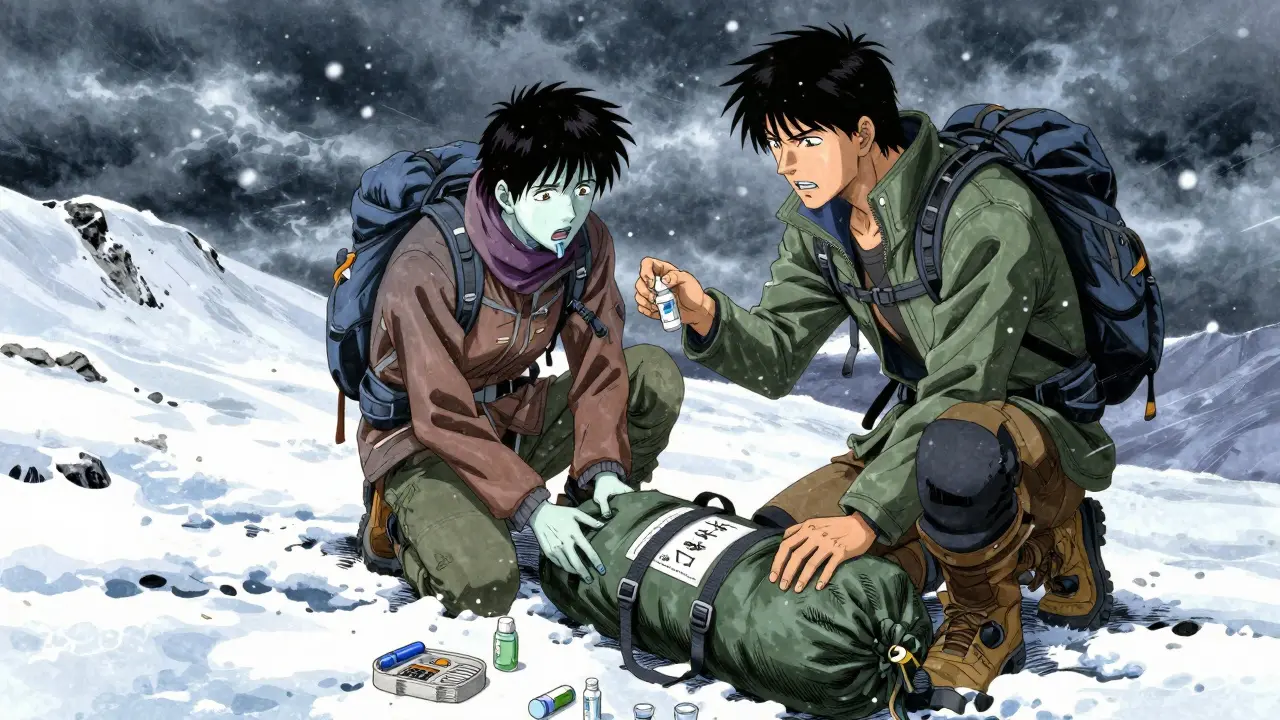
If you or someone in your group shows signs of HACE (confusion, trouble walking, vomiting) or HAPE (coughing up frothy sputum, blue lips, extreme breathlessness), descend immediately. Even 1,000 feet can save a life. If descent isn’t possible, use a Gamow bag-a portable hyperbaric chamber. These are rare in remote areas, but some trekking companies now carry them. Ask ahead.
Keep a printed emergency plan: who to call, where the nearest clinic is, how to reach your embassy. Save offline maps and emergency contacts in your phone.
Final Checklist Before You Leave
- ✅ Double all prescription meds, including insulin and inhalers
- ✅ Pack meds in original containers with labels
- ✅ Carry a doctor’s letter for controlled substances
- ✅ Use insulated, waterproof storage for temperature-sensitive drugs
- ✅ Bring acetazolamide, dexamethasone, nifedipine, azithromycin, ibuprofen, diphenhydramine
- ✅ Include blister pads, antiseptic wipes, and bandages
- ✅ Get a pre-trip checkup 4-6 weeks before departure
- ✅ Know your limits-don’t push through symptoms
- ✅ Tell someone your route and expected return date
Preparing for a pilgrimage or trek isn’t just about packing a good jacket or enough snacks. It’s about respecting your body’s limits and planning for the unexpected. The mountains don’t care if you’re devout, fit, or determined. They only respond to preparation. Get it right, and you’ll reach your destination stronger. Skip it, and you might not make it back.
Can I buy altitude sickness meds like Diamox in Nepal or India?
Yes, you can find acetazolamide in major cities like Kathmandu or Delhi, but quality and availability are unreliable. Many pharmacies stock expired or counterfeit versions. Don’t rely on this. Bring your own supply from home, in original packaging, with a prescription. Local clinics along trekking routes rarely carry essential emergency meds like dexamethasone or nifedipine.
Do I need a prescription for dexamethasone or nifedipine?
In most countries, yes. These are prescription-only medications, even if they’re available over the counter in some places. Carry a doctor’s note explaining why you need them. If you’re flying internationally, some countries require special permits for steroids or cardiac drugs. Check with your country’s health authority before departure.
How much water should I drink at high altitude?
Aim for 4 to 5 liters per day. Dehydration worsens altitude sickness symptoms. Urine should be pale yellow-if it’s dark, you’re not drinking enough. Avoid alcohol and caffeine, which dehydrate you further. Drink even if you’re not thirsty. Your body loses moisture faster at high elevations due to dry air and increased breathing rate.
Is it safe to take ibuprofen for altitude headaches?
Yes, ibuprofen (400 mg) is actually more effective than acetaminophen for altitude-related headaches, according to clinical studies. It reduces inflammation and swelling in the brain, which helps with AMS. Take it as needed, up to 400 mg every 6-8 hours. Don’t exceed 1,200 mg per day. If headaches persist despite ibuprofen and rest, descend.
Should I carry a portable oxygen canister?
Portable oxygen canisters are widely marketed but often misleading. Most contain only 10-20 minutes of oxygen and don’t significantly improve symptoms. They’re not a substitute for descent. If you’re at risk for severe altitude illness, focus on carrying dexamethasone and a Gamow bag instead. Oxygen canisters are expensive and add weight without reliable benefit.
Can I use my regular insulin at high altitude?
Yes, but storage is critical. Insulin degrades when exposed to freezing temperatures or extreme heat. Keep it insulated and close to your body at night. Use a Frio wallet or similar cooling device. Test your blood sugar more frequently-cold can cause glucometers to give inaccurate readings. Always carry backup insulin and syringes. Never leave insulin in checked luggage or a cold tent.
What if I run out of meds on the trail?
If you run out of essential meds like insulin, antibiotics, or asthma inhalers, stop and assess. Don’t keep climbing. Contact your trekking agency or local guide. Many have emergency contacts or satellite phones. In remote areas, local health posts may have limited supplies, but don’t assume they’ll have what you need. Prevention is the only reliable solution-always bring double your supply.
Are there any medications I should avoid before a high-altitude trek?
Yes. Avoid sleeping pills, sedatives, and alcohol-they suppress breathing, which is already reduced at altitude. Also avoid NSAIDs like naproxen if you have kidney issues, since dehydration increases kidney stress. Check with your doctor about any new medications you’re starting before your trip. Some blood pressure or heart meds need adjustment at high elevations.



Carl Crista
February 5, 2026 AT 11:10Diana Phe
February 5, 2026 AT 13:00Andre Shaw
February 6, 2026 AT 23:36Dr. Sara Harowitz
February 7, 2026 AT 21:27Joyce cuypers
February 8, 2026 AT 13:16Georgeana Chantie
February 10, 2026 AT 05:20Carol Woulfe
February 10, 2026 AT 08:53Lisa Scott
February 10, 2026 AT 21:21Jennifer Aronson
February 11, 2026 AT 06:44anjar maike
February 11, 2026 AT 14:05Sam Salameh
February 13, 2026 AT 09:08Cullen Bausman
February 15, 2026 AT 08:15Cole Streeper
February 16, 2026 AT 15:12divya shetty
February 16, 2026 AT 19:14