
NSAID Risks: What You Need to Know About Side Effects and Safe Use
When you reach for an NSAID, a nonsteroidal anti-inflammatory drug used to reduce pain, fever, and inflammation. Also known as non-opioid pain relievers, these drugs include common brands like ibuprofen, naproxen, and aspirin. They work by blocking enzymes that cause swelling and pain—but they also block protective ones in your stomach and kidneys, which is where the real danger starts.
Many people think NSAIDs are harmless because they’re sold over the counter. But gastrointestinal bleeding, a serious side effect where the stomach or intestinal lining gets damaged happens in over 100,000 people in the U.S. every year because of these drugs. It’s not just older adults—healthy people taking just a few pills a week for headaches or back pain are at risk too. The damage doesn’t always come with warning signs like pain or nausea. Sometimes, the first clue is dizziness, black stools, or fainting.
Then there’s the kidney damage from NSAIDs, a silent threat that reduces blood flow to the kidneys, especially in people with existing conditions like high blood pressure or diabetes. One study found that people taking NSAIDs daily for more than a year had a 30% higher chance of sudden kidney failure. And if you’re already on blood pressure meds or diuretics? The risk jumps even higher. These drugs don’t just hurt your stomach—they can shut down your kidneys without you noticing until it’s too late.
And don’t forget the cardiovascular risks, the increased chance of heart attack or stroke tied to long-term NSAID use, even in people without prior heart disease. The FDA issued a black box warning for all NSAIDs in 2005 after multiple studies showed naproxen, ibuprofen, and celecoxib all raised heart event risk. It’s not about how much you take—it’s about how long you take it. Weekend use for a sprained ankle? Probably fine. Daily use for arthritis or chronic pain? That’s when things get dangerous.
What’s missing from the label? That these drugs don’t fix the cause of your pain—they just hide it. And while they’re great for short-term flare-ups, they’re not meant to be a daily crutch. The real solution often lies in physical therapy, weight management, or alternative treatments like acupuncture or heat therapy. But most people never hear that. They just keep popping pills because the pain comes back.
Below, you’ll find real stories and research-backed advice from people who’ve dealt with NSAID side effects firsthand. You’ll learn how to spot early warning signs, which drugs are safest for your body type, how to protect your stomach if you must use them, and what alternatives actually work. No fluff. No marketing. Just what you need to know before your next pill.
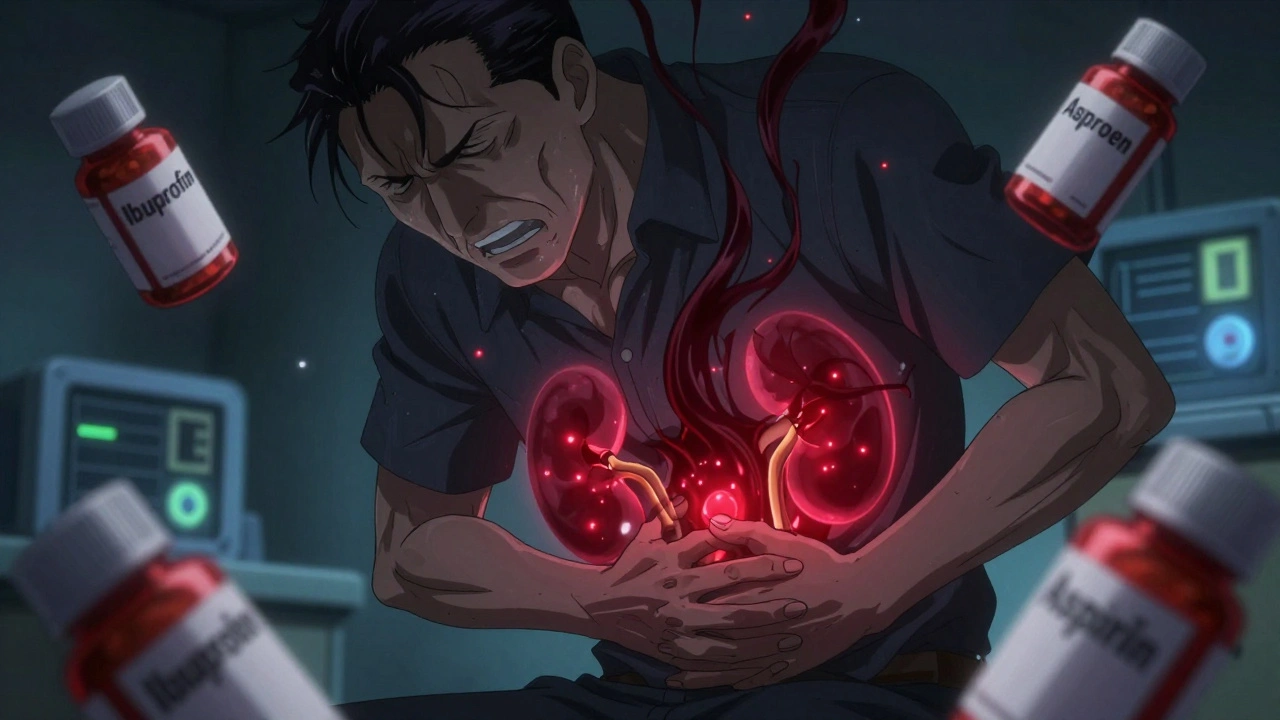
NSAIDs and Kidney Disease: How to Prevent Acute Kidney Injury
NSAIDs like ibuprofen can cause sudden kidney injury, especially in people with existing kidney disease. Learn how to recognize the risks, avoid dangerous drug combinations, and choose safer pain relief options.