
Medication Interactions: What You Need to Know to Stay Safe
When you take more than one medicine, your body doesn’t always handle them the way you expect. This is called a medication interaction, a reaction between two or more drugs that changes how they work in your body. Also known as drug interaction, it can make a drug useless, turn a safe pill into a danger, or even cause sudden, life-threatening side effects. You might think if your doctor prescribed both, they’re safe together—but that’s not always true. Even over-the-counter pills, herbal supplements, or grapefruit juice can mess with your prescription in ways you won’t feel until it’s too late.
Some interactions happen because of your genes. pharmacogenomics, the study of how your DNA affects how your body breaks down drugs explains why one person gets sick from a standard dose while another feels fine. For example, if you’re a slow metabolizer of clopidogrel due to a CYP2C19 gene variation, taking omeprazole at the same time can block its heart-protecting effects. That’s not a coincidence—it’s biology. And it’s why women are nearly twice as likely as men to have bad reactions: most drug studies were done on men, so dosing wasn’t built for female bodies. Then there’s medication reconciliation, the process of comparing your current meds to what you were taking before hospitalization. Nearly half of all post-discharge errors happen because no one checked if your new prescriptions clashed with your old ones. A simple mix like opioids plus alcohol or benzodiazepines can slow your breathing to a stop. These aren’t rare cases—they’re predictable, preventable, and happening right now.
You don’t need to memorize every possible combo. But you do need to know how to protect yourself. Ask your pharmacist: "Could this new pill interact with anything I’m already taking?" Keep a list—meds, supplements, even vitamins—and bring it to every appointment. If you’re on a blood thinner, an antidepressant, or something for heart disease, don’t assume it’s safe with a new painkiller or cold medicine. The system isn’t perfect, but you can be the missing safety check.
Below, you’ll find real stories and hard facts about the most dangerous drug mixes, how your genes play a role, what to do after leaving the hospital, and which common medications you should never combine. These aren’t theory pieces—they’re guides written by people who’ve seen the results of ignored interactions. Read them. Use them. They might save your life.
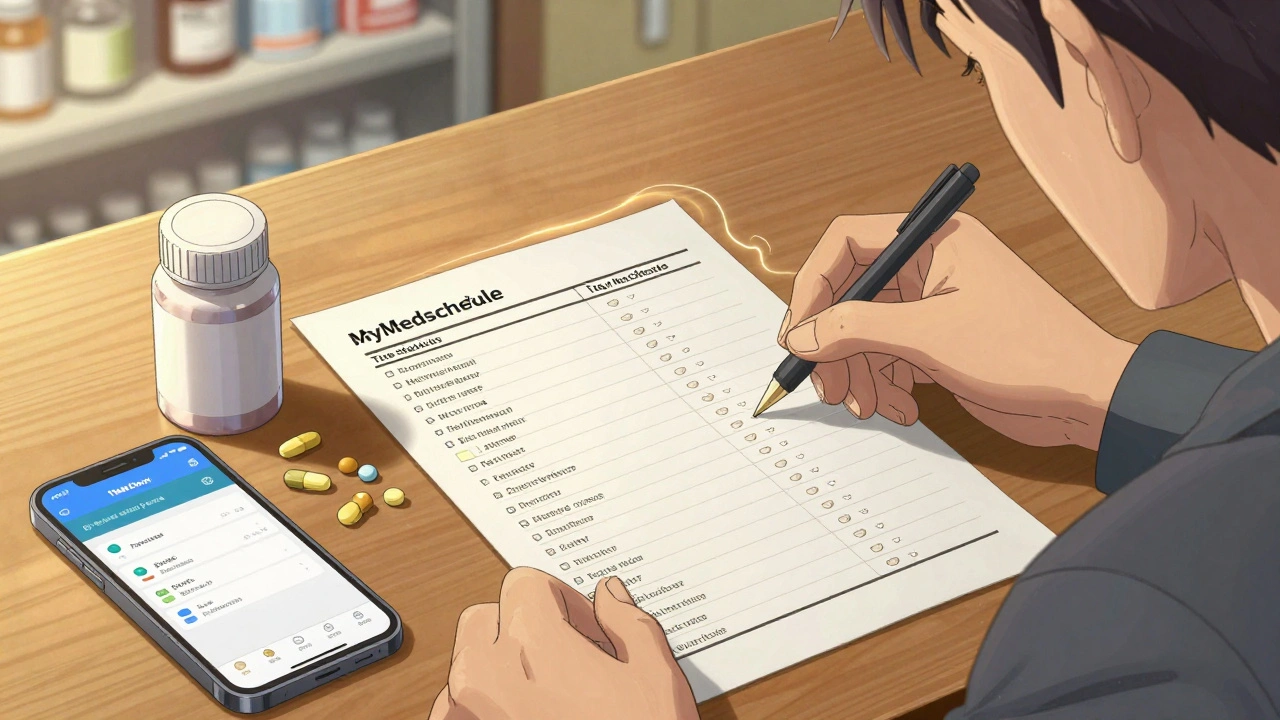
Creating Your Personal Medication List: What to Include for Safety
A personal medication list is a simple but powerful tool to prevent dangerous drug interactions, reduce errors, and ensure safety during medical emergencies. Know exactly what to include and how to keep it updated.