
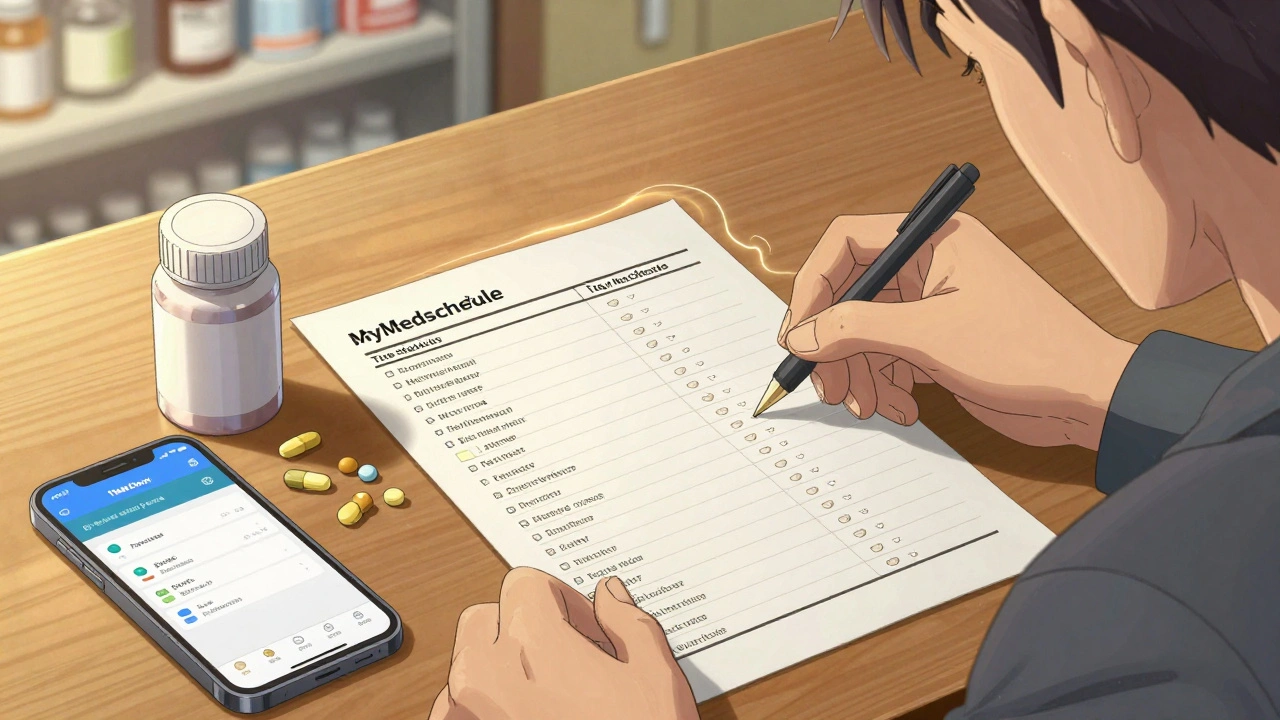
Medication Interaction Checker
Medication Interaction Checker
Check potential interactions between medications, supplements, and OTC drugs. Remember: The CDC reports that 30% of unexpected drug reactions happen because patients forget to mention OTC meds or supplements.
Every year, more than 1.5 million people in the U.S. end up in the emergency room because of medication mistakes. Many of these cases aren’t caused by doctors or pharmacists-they happen because the patient’s medication list was outdated, incomplete, or never shared. The truth is, medication list isn’t just a piece of paper. It’s your lifeline in a medical emergency.
Why Your Medication List Matters More Than You Think
Think about the last time you saw a doctor. Did you tell them about the ibuprofen you take every night for your knee? Or the magnesium supplement you started last month? If not, you’re not alone. A 2023 study from the Journal of the American Geriatrics Society found that nearly 30% of unexpected adverse drug reactions happen because patients forget to mention over-the-counter meds or supplements. Medications don’t exist in isolation. They interact. A common blood pressure pill might react badly with a popular herbal remedy. A sleep aid combined with an antidepressant could slow your breathing. In older adults, these interactions increase fall risk by 50%. That’s not a small risk-it’s life-changing. The Centers for Disease Control and Prevention (CDC) says that 91% of adults over 65 take at least one medication weekly. Four in ten take five or more. That’s a lot of chances for something to go wrong. But here’s the good news: keeping a simple, accurate list cuts medication errors by 27% during hospital admissions, according to the Agency for Healthcare Research and Quality (AHRQ).What to Put on Your Medication List
Your list doesn’t need to be fancy. It just needs to be complete. Here’s exactly what to include:- Full name of each medicine-both brand and generic. Example: “Lipitor” and “atorvastatin.”
- Dosage-how much you take. Write “10 mg” not “one pill.”
- How often-“once daily,” “every 6 hours,” “as needed for pain.”
- Why you take it-“for high cholesterol,” “for anxiety,” “for joint pain.”
- Prescription vs. over-the-counter-don’t skip the OTC stuff. Aspirin, antacids, sleep aids, and cold meds all count.
- Supplements and herbs-vitamin D, fish oil, turmeric, echinacea. These aren’t “harmless.” They can interact with prescriptions.
- Allergies and past reactions-“Rash from penicillin,” “stomach cramps from sulfa drugs,” “dizziness from codeine.”
- Emergency contact-name and phone number of someone who knows your meds.
Some people even write down what their pills look like-color, shape, markings. If you’re confused between two similar-looking pills, this saves time and prevents mistakes. Pfizer’s 2023 safety guide says this simple step reduces confusion by up to 40%.
How to Keep It Updated (And Why Most People Fail)
The biggest mistake? Outdated lists. AHRQ found that 35% of medication errors happen because the list hasn’t been updated after a change. Here’s how to avoid that:- Update immediately-the moment your doctor changes a dose, adds a new pill, or stops one. Don’t wait for your next appointment.
- Check every month-set a reminder on your phone. Go through your pill bottles and compare them to your list.
- Use the same pharmacy-CVS Health reports patients who use one pharmacy have 37% fewer drug interactions. Your pharmacist can spot problems you might miss.
- Write notes on the bottle-stick a small label on your medicine bottle saying “for high blood pressure.” That way, even if you lose your list, you still know why you’re taking it.
Don’t rely on memory. Even the most organized person forgets. A 2023 University of Michigan study found that patients who photographed their pill bottles and used a barcode-scanning app reduced documentation errors by 63%.
How to Carry Your List-In Person and Digitally
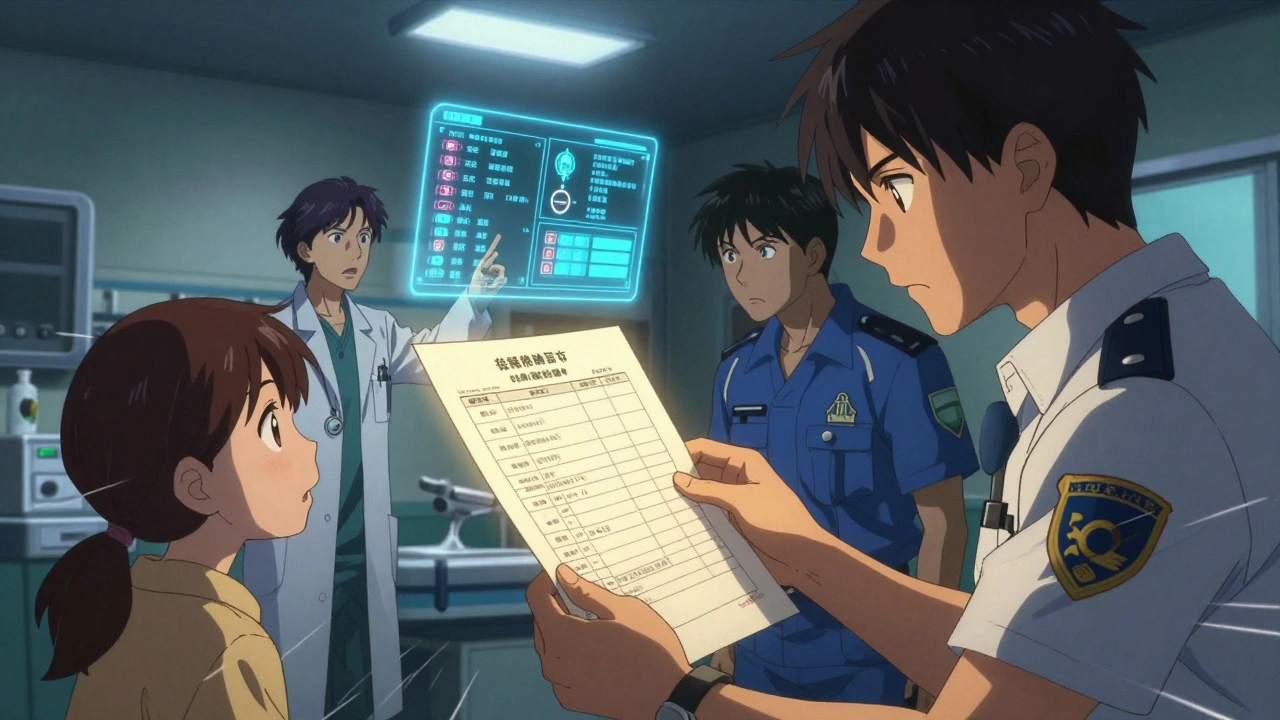
A list on your phone is useless if your phone’s dead. A paper list in your purse is useless if you forget to bring it. Here’s what works:- Keep a printed copy in your wallet-fold it small, laminate it if you can. Emergency responders look for this.
- Save a digital copy-use your phone’s Notes app, Google Keep, or Apple Health. Add it to your emergency contacts.
- Use a dedicated app-the FDA’s MyMedSchedule app (updated March 2024) lets you take a photo of your pill and it auto-fills the details. It’s 92% accurate, according to NIH testing.
- Share it with everyone-not just your GP. Dentists, physical therapists, and even paramedics need to know what you’re taking.
Some people even print two copies-one for their wallet, one for a family member. That way, if you’re unconscious, someone else can tell the hospital what’s in your system.
Technology Is Making This Easier-But Don’t Rely on It Alone
There are tools now that make this less of a chore:- QR code lists-the CDC’s 2024 template includes a QR code that links to real-time drug interaction checkers.
- Electronic health record downloads-thanks to the 21st Century Cures Act, you can now download your full medication history from your doctor’s system. But only 38% of patients do it.
- Pill organizers with timers-Walgreens’ 2022 study showed a 45% improvement in dosing accuracy when patients used these alongside a written list.
But here’s the catch: technology doesn’t replace your responsibility. Apps can glitch. QR codes can break. Your list is only as good as the information you put in it.
Who Needs This Most (And Why)
You might think this is only for older adults. But here’s the reality:- Adults aged 40-79 take an average of 4.8 prescription medications.
- 28% also take three or more dietary supplements.
- Medications affecting the brain-like sleep aids, painkillers, or antidepressants-can make you dizzy or slow your reflexes.
That means if you drive, cook, or even walk around the house, an undetected interaction could put you at risk. The CDC found that these meds increase fall risk by 50% in people over 65. But younger people on multiple prescriptions are at risk too.
And if you’re caring for someone else-a parent, partner, or child-you’re even more likely to need this. Caregivers who keep updated lists reduce hospital readmissions by 22%, according to a University of Pennsylvania pilot program.
What Happens When You Don’t Have One
Imagine this: you collapse at home. Paramedics arrive. They see you’re on a blood thinner, but they don’t know you also took aspirin that morning. Or you’re in the ER with chest pain, and the doctor prescribes a new beta-blocker-but they don’t know you’re already on a similar drug. These aren’t hypotheticals. They happen every day. A 2022 AHRQ report found that half of all medication errors during care transitions-like moving from hospital to home-happen because the patient’s list was wrong or missing. That’s not a rare mistake. That’s the norm. The cost? Not just in health. It’s financial too. AHRQ estimates that if everyone kept an accurate list, we could prevent 150,000 ER visits each year-and save $1.2 billion in healthcare spending.Your Next Steps
You don’t need to be perfect. You just need to start.- Grab a piece of paper or open a note on your phone.
- Go through every pill bottle, supplement container, and OTC box in your medicine cabinet.
- Write down the name, dose, frequency, and reason for each one.
- Add allergies and past reactions.
- Include your emergency contact.
- Print one copy. Save one digitally. Give one to a trusted person.
- Set a monthly reminder to update it.
This isn’t about being organized. It’s about being safe. Your list could be the difference between a quick recovery and a life-threatening mistake.
Do I need to include vitamins and supplements on my medication list?
Yes. Vitamins, herbs, and supplements can interact with prescription drugs just like medications. For example, St. John’s Wort can reduce the effectiveness of birth control pills and antidepressants. Fish oil can increase bleeding risk when taken with blood thinners. The FDA and CDC both require these to be listed because they’re a leading cause of unexpected reactions-accounting for nearly 30% of cases.
Should I use a paper list or a phone app?
Use both. A paper copy ensures you have it if your phone dies or you’re in an emergency where technology isn’t available. A digital copy lets you update it easily and share it instantly. Apps like the FDA’s MyMedSchedule can even scan your pill bottle and auto-fill details. But never rely on just one-backup is critical.
What if I forget to update my list after a change?
Set a monthly reminder on your phone-call it “Med List Check.” When your doctor changes your meds, write it down right away. Even if you’re busy, scribble it on a sticky note and transfer it later. Outdated lists are the #1 reason for medication errors. AHRQ says 35% of errors come from not updating. Don’t let that be you.
Can my pharmacist help me create my list?
Absolutely. Pharmacists are trained to spot interactions and can pull your full prescription history from their system. Ask them to print you a copy or help you fill out a form. If you use the same pharmacy consistently, they’ll have the most accurate record of what you’re taking-especially if you get all your meds there.
Is this only for older adults?
No. While older adults are more likely to take multiple medications, anyone on two or more drugs-prescription, OTC, or supplements-should have a list. Even young adults on birth control, antidepressants, and pain relievers are at risk. The CDC reports that adults aged 40-79 take an average of 4.8 prescriptions. That’s enough to create dangerous combinations.
What if I don’t trust my doctor to update my list?
You don’t need to trust them to update it-you need to update it yourself. Your doctor won’t remember every pill you’ve ever taken. You’re the only one who knows what you’re actually using. The FDA says your personal list is the most reliable source. Always bring it to appointments. If your doctor ignores it, that’s a red flag. Your safety comes first.
How often should I review my list?
At least once a month. But also after every doctor’s visit, pharmacy refill, or change in how you feel. If you stop taking something, cross it out. If you start something new, add it immediately. The AHRQ says 100% of healthcare organizations recommend updating right after any change. Don’t wait.
Can I use my electronic health record instead of a personal list?
Your EHR is a good starting point, but it’s not enough. Not all medications are recorded there-especially OTC drugs, supplements, or things you bought without a prescription. Plus, EHRs can be outdated or incomplete. Your personal list should be your primary source. Use your EHR to double-check, not replace, your own record.



Gillian Watson
December 4, 2025 AT 17:33Just made my list after reading this. Printed one, saved on my phone, gave one to my sister. Feels weird to admit I never did this before but now I feel way less anxious about going to the doctor.
Also added my turmeric and melatonin. Who knew those could mess with blood thinners?
Jordan Wall
December 6, 2025 AT 00:40OMG this is such a *basic* health hygiene practice but like 98% of the population is functionally incompetent when it comes to pharmacokinetics and polypharmacy risk stratification 😭
Also why are we still using paper? QR codes linked to blockchain-secured med histories are the future. Also my pharmacist just sent me a PDF with a QR that auto-updates via API. You’re welcome.
PS: if you don’t have a MyMedSchedule profile you’re literally a walking adverse event waiting to happen.
Augusta Barlow
December 7, 2025 AT 07:37Let me guess… this is all part of the Big Pharma agenda to make you dependent on their apps and ‘trusted’ pharmacies while hiding the fact that 70% of meds are just placebos with side effects worse than the original condition.
And don’t get me started on how the CDC and FDA are in bed with Pfizer. They want you to believe your supplements are dangerous so you keep buying their overpriced synthetics.
My uncle took 17 pills a day for 12 years and died of kidney failure. They never told him the statins were causing it. You think they’d want you to track that? Nah. They want you docile and dosed.
Meanwhile, the real solution is fasting, magnesium, and sunlight. But they’ll never tell you that because it doesn’t have a patent.
Heidi Thomas
December 7, 2025 AT 10:11Stop wasting time with paper lists. If you’re not using the FDA’s MyMedSchedule app you’re doing it wrong. And yes, I’ve checked the NIH data. It’s 92% accurate. Everything else is amateur hour.
Also you’re idiots if you think OTC meds don’t count. Aspirin alone causes 10,000 ER visits a year. You think your ‘natural’ fish oil is safe? It’s a blood thinner. Read the damn studies.
And no, your pharmacist doesn’t care enough to catch your errors. You’re the only one responsible. Get it together.
Libby Rees
December 8, 2025 AT 06:58This is one of the most practical and necessary pieces of health advice I’ve seen in years. Thank you for laying it out so clearly.
I’ve been keeping a list since my mother had a bad reaction after her hip surgery. She forgot to mention her herbal tea blend. It interacted with her blood pressure meds.
Now I update mine every Sunday evening. I keep a printed copy in my purse and a digital copy in my phone’s emergency contacts. Simple. Reliable.
And yes - supplements count. Even the ones labeled ‘natural.’
Chad Handy
December 8, 2025 AT 08:41I’ve been on five different meds for anxiety, chronic pain, and acid reflux for the last eight years. I used to think I remembered everything. Then I went to the ER after passing out in the grocery store.
The doctor asked me what I was taking. I said ‘the blue one, the white one, the red one, and that herbal thing I got from the health food store.’
Turns out the herbal thing was kava root. It amplified the sedative effect of my other meds. My heart rate dropped to 42.
They kept me overnight. I didn’t sleep. I just stared at the ceiling thinking about how stupid I was.
Now I have a laminated card in my wallet. I show it to every new doctor. I even show it to the dentist. I don’t care if they think I’m weird. I’m alive.
I wish I’d done this sooner.
Ollie Newland
December 8, 2025 AT 15:08Big shoutout to pharmacists. Seriously. I used to think they just handed out pills. Then I asked mine to review my list. She caught that my fish oil and blood thinner were a bad combo, and that I’d been taking the wrong dose of my thyroid med for six months.
She printed me a clean version. Gave me a little pamphlet. Didn’t judge.
Now I go every time I refill. It’s like a free health audit.
And yes - I still keep the paper copy. My phone died during a power outage last winter. Thank god I had the card.
Michael Feldstein
December 9, 2025 AT 19:05Love this. I’m a caregiver for my dad and I didn’t realize how much of a game-changer this is until I started tracking his meds. We used to argue about whether he took his pills. Now we have a shared Google Doc. He updates it, I check it.
He even took a photo of his pill bottle with MyMedSchedule and it auto-filled everything. He thought it was magic.
And we gave a copy to his physical therapist. She said she’s seen too many seniors fall because of med interactions.
Small effort. Huge payoff.
jagdish kumar
December 11, 2025 AT 00:14Life is a river. Your pills are stones. If you forget one, the current takes you.
Write it down. Not for the doctors. For yourself.
You are not your medications. But they are part of your story.
Know your story.