
In Vitro Dissolution: What It Is and Why It Matters for Generic Drugs
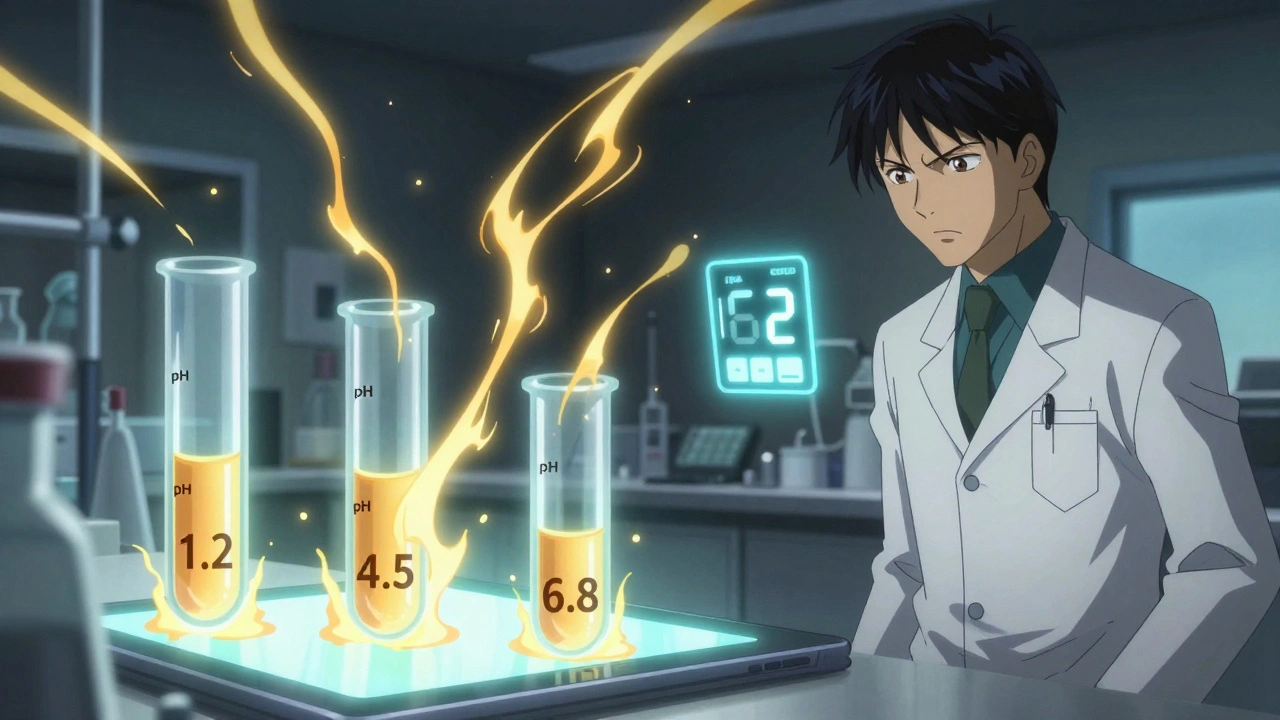
When you take a pill, it needs to break down properly in your body to work. in vitro dissolution, a lab test that measures how quickly a drug dissolves in a controlled liquid environment. Also known as drug release testing, it’s the first big check that a generic pill will act the same as the brand version. This isn’t just paperwork—it’s the reason your $5 generic ibuprofen works just as well as the $30 name-brand version.
The FDA doesn’t require every generic drug to be tested in people before approval. Instead, they rely heavily on in vitro dissolution data to prove bioequivalence—meaning the drug gets into your bloodstream the same way, at the same speed, and in the same amount. If the dissolution profile doesn’t match the original drug, the generic gets rejected. This is why companies spend millions perfecting the coating, particle size, and formulation of their pills. It’s not magic—it’s science, and it’s non-negotiable.
It’s also why some generics cost less than others. Not all manufacturers hit the same dissolution targets on the first try. Some use cheaper materials that dissolve too fast or too slow. That’s why you’ll see posts here about generic drugs and how they’re made, why some are trusted more than others, and how the GDUFA program helps the FDA review these tests faster. You’ll also find articles on how pharmacies handle generic specialty drugs, how biosimilars are tested, and why dose verification matters when a drug’s release profile is tight.
What you won’t find are vague claims like "all generics are the same." They’re not. The difference between a good generic and a bad one often comes down to this one test: in vitro dissolution. If the pill doesn’t dissolve right in the lab, it won’t work right in your body. That’s why this test is the silent gatekeeper of every generic drug you take—whether it’s for high blood pressure, depression, or acid reflux. The posts below dive into real cases where this test made or broke a drug’s approval, how manufacturers tweak formulations to pass it, and why you should care even if you never set foot in a lab.
Bioequivalence Waivers: When the FDA Allows Generic Drugs to Skip Human Trials
The FDA allows certain generic drugs to skip human trials using bioequivalence waivers, based on in vitro dissolution testing. Learn which drugs qualify, how the process works, and why it saves millions.