
FDA Biowaiver: What It Means for Generic Drugs and Drug Costs
When the FDA biowaiver, a regulatory shortcut that allows generic drug manufacturers to skip clinical bioequivalence studies in humans. Also known as a biowaiver request, it’s a critical tool that helps bring low-cost generics to market faster without compromising safety. This isn’t magic—it’s science. If a drug is taken by mouth, dissolves quickly in the body, and is absorbed the same way as the brand-name version, the FDA says you don’t need to test it on people again. That saves time, money, and ultimately lowers what you pay at the pharmacy.
The ANDA application, the official form generic drug companies submit to the FDA for approval. Also known as Abbreviated New Drug Application, it’s the main pathway for getting a generic on the shelf. Without the biowaiver, every single generic would need full clinical trials—like the brand did. That would mean waiting years and spending millions per drug. With the biowaiver, many generics get approved in under a year. That’s why you can buy metformin, lisinopril, or atorvastatin for pennies. The GDUFA, a fee program that lets the FDA collect money from generic drug makers to speed up reviews. Also known as Generic Drug User Fee Amendments, it’s the engine that keeps this system running. It funds more reviewers, cuts backlogs, and ensures that when a company submits a biowaiver, it gets looked at quickly.
This system works because of strict rules. The generic must dissolve at the same rate as the brand. It must contain the same active ingredient, in the same strength, and in the same form—tablet, capsule, or liquid. The FDA doesn’t accept guesswork. They rely on dissolution testing, pharmacokinetic models, and data from decades of research. If your drug is highly soluble and highly permeable (a Class I drug under the Biopharmaceutics Classification System), it’s a strong candidate for a biowaiver. That’s why most common pills qualify. But injectables, inhalers, and complex formulations? Those still need human trials. The biowaiver isn’t for everything—but it covers the vast majority of what people take daily.
What does this mean for you? More choices. Lower prices. Faster access. When a generic gets approved through a biowaiver, it doesn’t mean it’s weaker or less safe. It means the science says it’s identical in how your body uses it. You’re not getting a second-rate version—you’re getting the same medicine, just without the brand-name markup. And because of this process, thousands of Americans save hundreds or even thousands each year on prescriptions. That’s not just policy—it’s personal savings on your insulin, your blood pressure pill, your antidepressant.
Behind every cheap generic on your pharmacy shelf is a carefully reviewed biowaiver, a submitted ANDA, and a system designed to make essential medicines affordable. The FDA doesn’t cut corners—just the ones that don’t matter. And that’s why you can trust your generic.
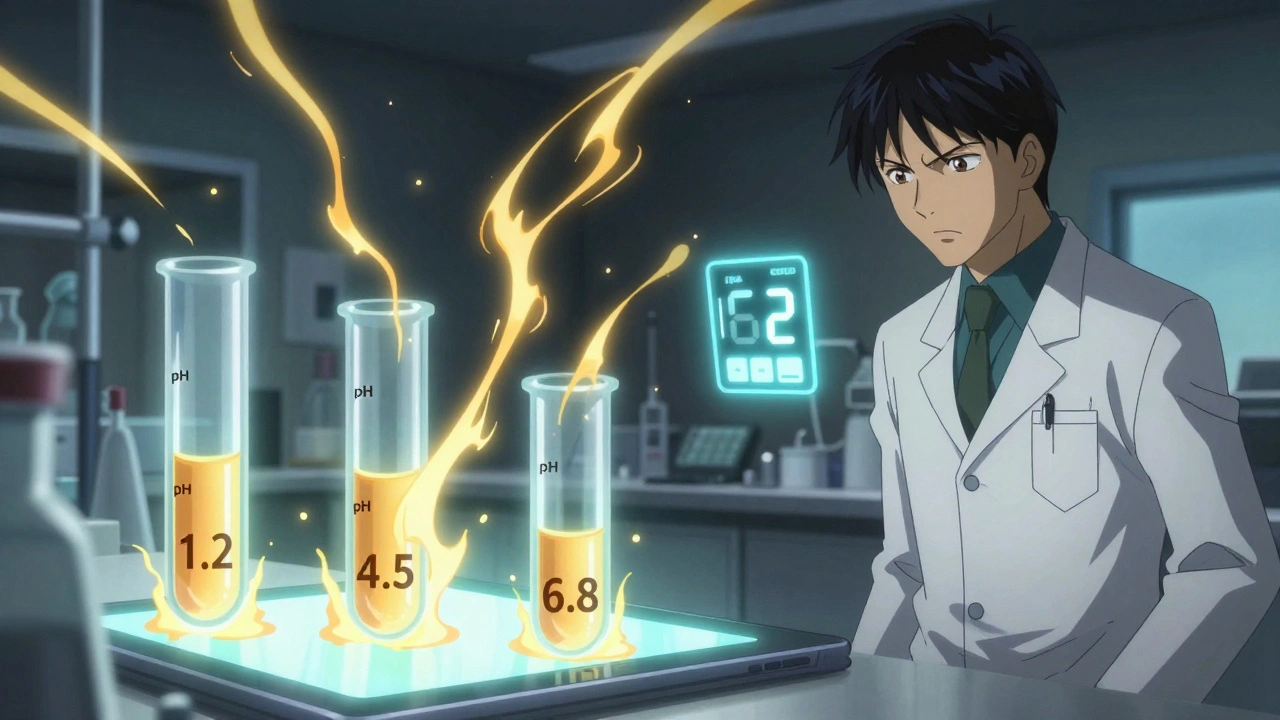
Bioequivalence Waivers: When the FDA Allows Generic Drugs to Skip Human Trials
The FDA allows certain generic drugs to skip human trials using bioequivalence waivers, based on in vitro dissolution testing. Learn which drugs qualify, how the process works, and why it saves millions.