
Acute Kidney Injury: Causes, Risks, and What You Need to Know
When your kidneys suddenly stop working the way they should, that’s acute kidney injury, a rapid loss of kidney function that can develop over hours or days. Also known as acute renal failure, it’s not a disease on its own—it’s a warning sign something else is wrong in your body. This isn’t something that creeps up slowly. It hits hard, often after an infection, a bad reaction to meds, or a drop in blood flow. And if you’re on multiple prescriptions, especially for high blood pressure, diabetes, or heart issues, you’re at higher risk than you might think.
One of the biggest triggers? medication side effects, especially from NSAIDs, antibiotics, and certain blood pressure drugs. Even a few days of over-the-counter painkillers can throw your kidneys off balance if you’re dehydrated or already have reduced kidney function. Then there’s electrolyte imbalance, a common complication where potassium, sodium, or magnesium levels spike or crash. That’s why so many posts here talk about lab values, drug interactions, and how to monitor your body after hospital stays. Your kidneys don’t just filter waste—they keep your blood chemistry stable. When that system breaks down, everything else starts to unravel.
What makes this even trickier is that symptoms are quiet. You might feel tired, swollen, or just off—but not in a way that screams "kidney problem." That’s why it’s often caught too late. The good news? If caught early, many cases can be reversed. But it takes knowing what to look for: less urine, confusion, nausea, or sudden weight gain. And if you’re on meds like clopidogrel, PPIs, or diuretics, you need to be extra careful. The posts here don’t just list facts—they show you how to connect the dots between your prescriptions, your labs, and your body’s signals.
You’ll find real stories here—not theory—about how people spotted the signs after a hospital discharge, how a simple drug swap saved someone’s kidneys, and why checking your electrolytes isn’t just a lab chore but a life-saver. Whether you’re managing chronic illness, helping an older relative, or just want to avoid a hospital visit, this collection gives you the tools to act before it’s too late.
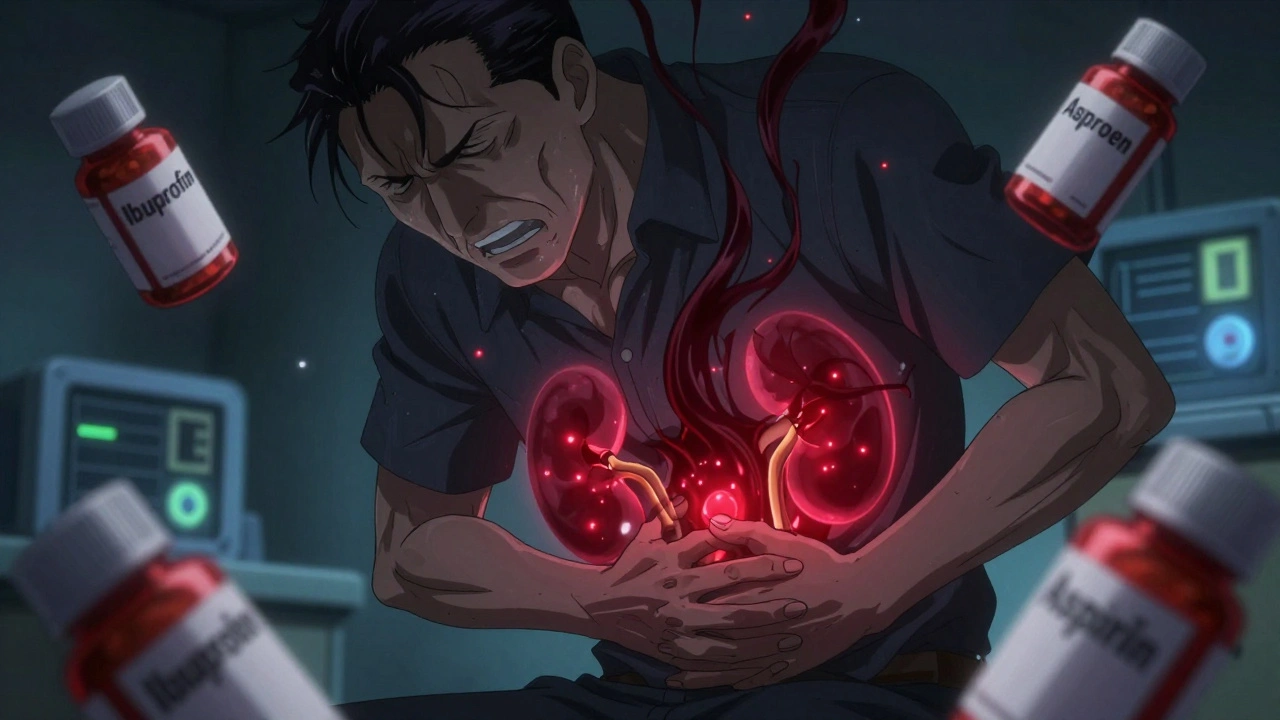
NSAIDs and Kidney Disease: How to Prevent Acute Kidney Injury
NSAIDs like ibuprofen can cause sudden kidney injury, especially in people with existing kidney disease. Learn how to recognize the risks, avoid dangerous drug combinations, and choose safer pain relief options.