Every year, millions of fake pills, injectables, and creams slip through borders, online stores, and pharmacies-looking just like the real thing. But inside? They could be filled with chalk, rat poison, or nothing at all. In 2025, global authorities seized over 50 million doses of counterfeit medications in a single operation. These aren’t just scams-they’re life-threatening. And the people behind them aren’t small-time operators. They’re organized criminal networks using advanced techniques to fool even trained pharmacists.
What Gets Counterfeited-and Why
Counterfeiters don’t guess what people need. They follow the money-and the demand. The most common fake drugs in 2025 were weight-loss injectables like Ozempic, Semaglutide, and Tirzepatide. Why? Because they’re expensive, in high demand, and easy to ship. A single counterfeit pen can sell for $200 online, while the real thing costs over $1,000. That’s a 500% markup. Criminals don’t need to make perfect copies-they just need them to look close enough. Other top targets include erectile dysfunction pills, Botox, dermal fillers, and HIV medications. These aren’t recreational drugs. They’re life-sustaining treatments. When a patient with HIV gets a fake version, it doesn’t just fail to work-it can cause drug resistance. That’s not just dangerous. It’s irreversible.Where the Fakes Come From-and How They Get Here
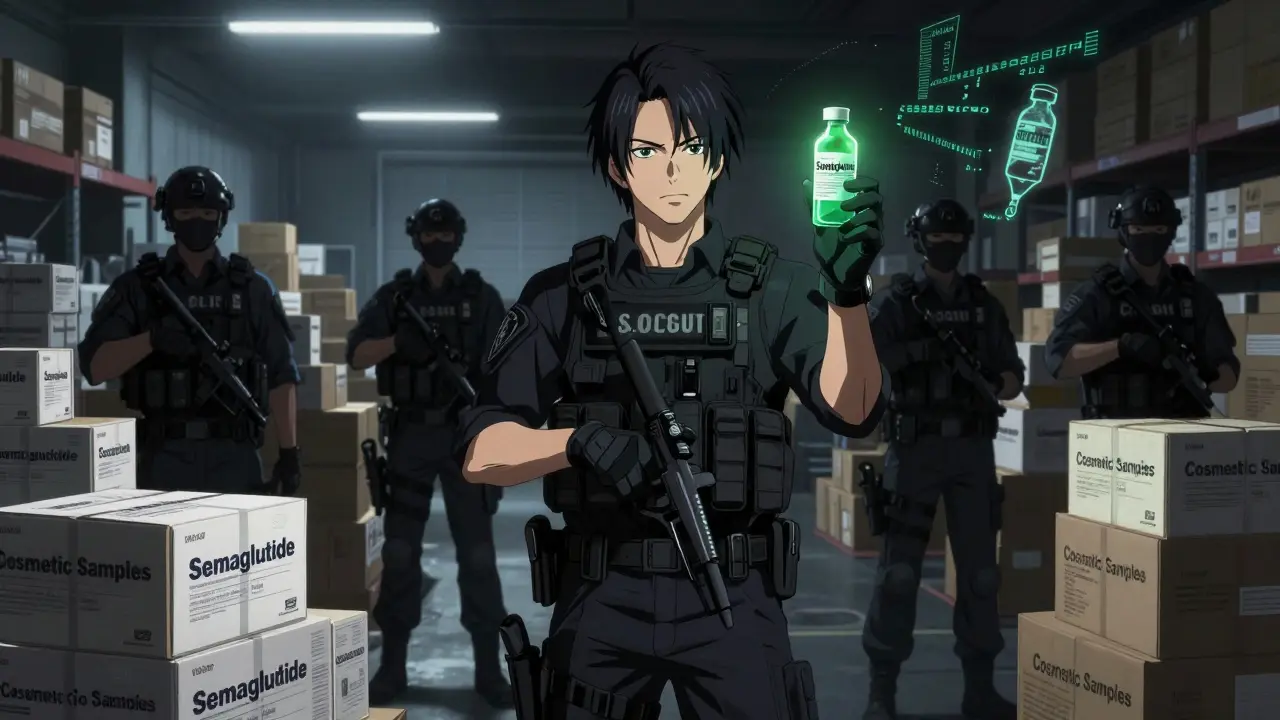
The majority of counterfeit medications seized at U.S. borders in 2024 came from India and China (including Hong Kong). But the route isn’t direct. Criminals now ship unassembled parts: empty vials, fake labels, packaging materials. They send them to small warehouses in Colombia, South Korea, or even within the U.S. itself. There, they’re assembled and shipped as small parcels-often under 1 pound-to avoid customs scrutiny. In August 2025, U.S. Customs intercepted 16,740 counterfeit pre-filled injectable pens. They were labeled as Semaglutide, but lab tests showed only 12% contained any active ingredient. The rest? Industrial solvents, heavy metals, and unidentifiable powders. These shipments came from 17 different countries, packed in boxes labeled as “cosmetic samples” or “dietary supplements.” Online marketplaces are the main delivery system. Etsy alone accounted for 47% of counterfeit GLP-1 sales in 2025. Sellers use fake storefronts, misleading photos, and testimonials from bots. Some even mimic the exact font, color, and logo of the real manufacturer. One patient in Iowa bought what she thought was Ozempic from an Etsy seller. The packaging was flawless. The pen clicked like the real thing. But after two injections, she ended up in the ER with severe cellulitis. The filler contained glass shards.Real Cases: What Happened When Fakes Reached Patients
In Cincinnati, CBP seized $3.5 million worth of fake medications in one shipment. Among them: counterfeit HIV drugs labeled as Truvada. Lab results showed no antiretroviral compounds. Just starch and talc. If these had reached patients, it would have been a public health disaster. In Nigeria, NAFDAC shut down a facility producing fake herbal treatments for diabetes and hypertension. The “medications” were brewed in unsterilized buckets and bottled in reused medicine containers. One batch contained arsenic. In South Africa, police found R2.2 million ($118,000) in fake insulin and cancer drugs in a warehouse. The vials were labeled with expiry dates from 2027-but the actual manufacturing date was 2020. The drugs had been stored in a hot garage. They were useless. Worse, they could have caused organ damage. And then there’s the Reddit post from a nurse in Texas. She treated a woman who bought “Botox” from Instagram. The product was labeled as Allergan, but the vial had no serial number. The patient developed facial paralysis. The toxin wasn’t botulinum. It was a neurotoxic industrial cleaner.
The Regulatory Gap: Why So Many Fakes Slip Through
Here’s the brutal truth: U.S. Customs can’t seize every fake drug. They can only stop products that are counterfeit-meaning they falsely claim to be made by a real company. If a product is just unapproved, or imported without a prescription, it’s not illegal to bring in. It’s just… not allowed. That’s a loophole big enough for a truckload of fake insulin to drive through. Dr. Carmen Catizone of the National Association of Boards of Pharmacy says it plainly: “CBP cannot seize medications that violate only the Federal Food, Drug, and Cosmetic Act.” That means thousands of dangerous products enter the country every month because they don’t fake a brand-they just don’t have approval. Meanwhile, the FDA’s MedWatch system recorded a 43% jump in adverse events linked to suspected counterfeit drugs in the first half of 2025. Most involved weight-loss injectables and cosmetic fillers. These aren’t isolated cases. They’re symptoms of a broken system.What’s Being Done-and What’s Working
Interpol’s 2025 Pangea XVI operation shut down 13,000 illegal websites and arrested 769 people across 90 countries. It was the largest coordinated crackdown in history. But even that seized only a fraction of what’s out there. Pharmaceutical companies like Pfizer have trained law enforcement in 183 countries to spot fake packaging: mismatched batch numbers, blurry text, wrong color shades, missing holograms. One telltale sign? Authentic Ozempic pens have a tiny laser-etched line along the barrel. Fakes often miss it-or get it wrong. Some companies are using blockchain to track every vial from factory to pharmacy. In pilot programs, this cut counterfeit incidents by 37%. But adoption is slow. Most small pharmacies and online sellers don’t have the tech or budget to join. The U.S. Department of Justice prosecuted 70+ people for selling $9.5 million in fake HIV drugs through online marketplaces. One defendant was caught using a fake FDA registration number on his website. It was a made-up ID. But it looked official enough to fool hundreds of buyers.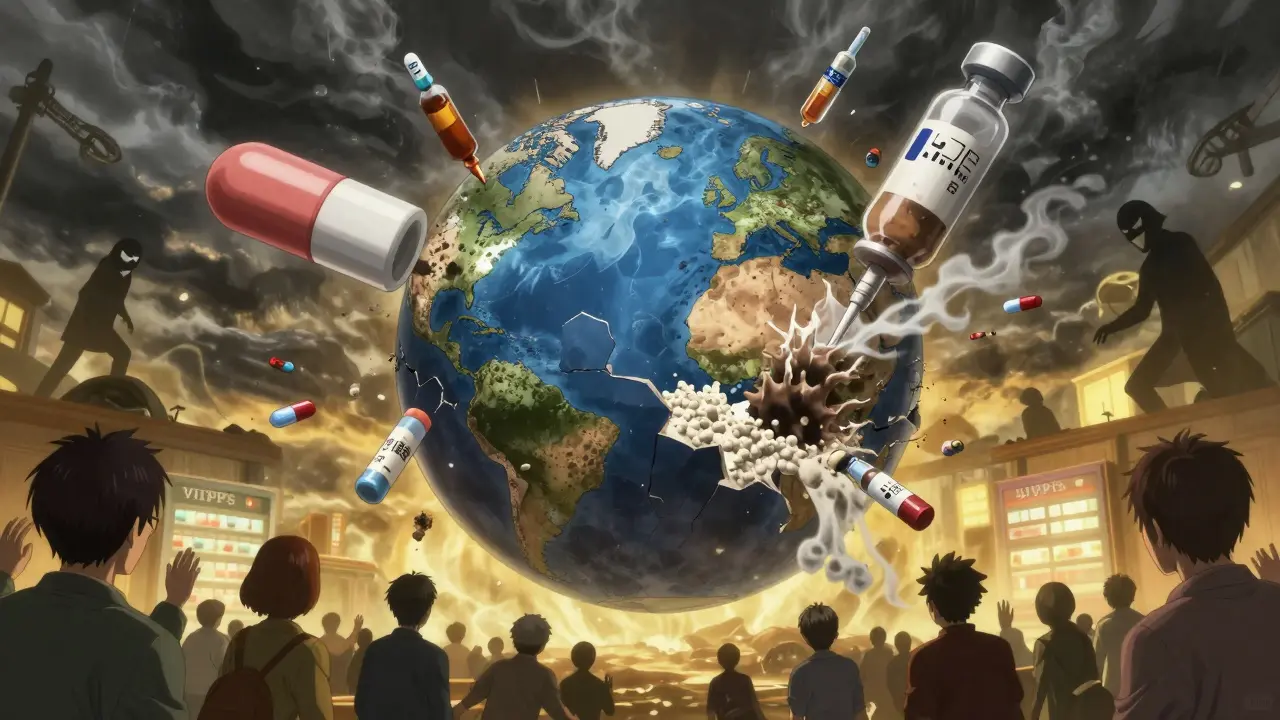
What You Can Do to Protect Yourself
You don’t need to be a pharmacist to spot a fake. Here’s what works:- Buy only from licensed pharmacies. If it’s not on the NABP’s Verified Internet Pharmacy Practice Sites (VIPPS) list, don’t trust it.
- Check the packaging. Real medications have consistent fonts, sharp printing, and tamper-evident seals. Fakes often have crooked labels or mismatched colors.
- Ask for the lot number. Legitimate pharmacies can verify it with the manufacturer. If the seller refuses, walk away.
- Never buy injectables from social media or Etsy. No legitimate doctor prescribes them that way.
- Report suspicious products. Use the FDA’s MedWatch system. One report can trigger an investigation.
The Bigger Picture: Why This Matters Beyond One Pill
Counterfeit drugs aren’t just about one person getting sick. They erode trust in medicine. When patients lose faith in their prescriptions, they stop taking them. That leads to worse outcomes-for diabetes, HIV, cancer, heart disease. It’s a ripple effect. Criminal networks are adapting. They’re using AI to generate fake packaging, deepfake videos to promote products, and encrypted apps to coordinate shipments. The next wave of counterfeits won’t just mimic brands-they’ll mimic trust. The good news? We know how to fight back. Better border tech. Stronger penalties. Global cooperation. Patient education. But progress is slow. And every day, someone orders a fake pill because they can’t afford the real one. This isn’t a problem for governments to solve alone. It’s a public health emergency that needs every one of us to pay attention-to question, to verify, to speak up.How common are counterfeit medications?
In 2024, global authorities documented over 6,400 incidents of counterfeit drug seizures across 136 countries. The Pharmaceutical Security Institute estimates that 1 in 10 medications in low-income countries are fake, and in high-income countries, the rate is rising fast-especially for high-demand drugs like GLP-1 agonists and cosmetic injectables.
Can I tell if a medication is fake just by looking at it?
Sometimes. Counterfeiters are getting better, but many still make mistakes. Look for blurry text, mismatched colors, misspelled names, or packaging that feels cheap. Real medications have precise labeling and tamper-proof seals. If the lot number doesn’t scan or the pharmacy won’t verify it, it’s likely fake.
Are online pharmacies safe?
Only if they’re verified. The National Association of Boards of Pharmacy (NABP) maintains a list of accredited online pharmacies (VIPPS). If a site doesn’t require a prescription, offers “discounts” on controlled drugs, or ships from overseas, it’s almost certainly illegal. Avoid sites on Etsy, Instagram, or Facebook selling injectables-those are 99% fake.
What should I do if I think I’ve taken a counterfeit drug?
Stop taking it immediately. Contact your doctor or go to the ER if you feel unwell. Then report it to the FDA through MedWatch. Even if you’re not sick, your report helps authorities track patterns and shut down operations. Don’t throw the packaging away-keep it for evidence.
Why do counterfeit drugs keep appearing even after big seizures?
Because demand is high and profits are huge. A single counterfeit pen can make $200 in profit. Criminals treat this like a business: when one factory is shut down, another opens. They shift to new markets, new platforms, and new methods-like shipping parts separately to avoid detection. Without global coordination and stronger enforcement, the cycle continues.