Opioid Dose Calculator for Older Adults
Safe Dose Calculator
Results
Recommended starting dose:
Risk level:
Key considerations:
- Start low: 25-50% of standard adult dose
- Go slow: Increase doses over weeks, not days
- Monitor: Check for dizziness, confusion, or falls
When an older adult starts taking opioids for pain, it’s rarely just about pain anymore. The body changes with age-kidneys slow down, liver metabolism drops, fat increases, muscle decreases-and suddenly, a dose that’s safe for a 40-year-old can send a 75-year-old to the emergency room. Opioids in older adults aren’t just riskier; they’re fundamentally different. And too often, doctors and patients alike don’t realize how dangerous even small doses can be.
Why Opioids Hit Older Adults Harder
It’s not that older people are weak. It’s biology. As we age, our bodies process drugs differently. The liver doesn’t break down opioids as quickly. The kidneys don’t flush them out as efficiently. That means the drug sticks around longer, building up in the system. At the same time, the blood-brain barrier weakens, letting more of the drug reach the brain. The result? Sedation, confusion, dizziness-all of which increase the chance of falling.
One study found that older adults on opioids had a 6% fracture rate over 33 months, compared to 4% in those not taking them. That difference might sound small, but in a population already at risk for fractures, it’s enough to matter. And it’s not just falls. A 2023 study of over 75,000 older Danes with dementia showed that starting opioids after a dementia diagnosis led to an elevenfold increase in death within the first two weeks. That’s not a coincidence. It’s a warning.
Falls Aren’t Just Accidents-They’re Predictable
Falls aren’t random. They’re a side effect. Opioids cause dizziness, slow reaction times, and drop blood pressure when standing up (orthostatic hypotension). Some opioids, like tramadol, even cause low sodium levels (hyponatremia), which leads to confusion and unsteadiness. Combine that with other medications-antidepressants, sleeping pills, blood pressure drugs-and the risk multiplies.
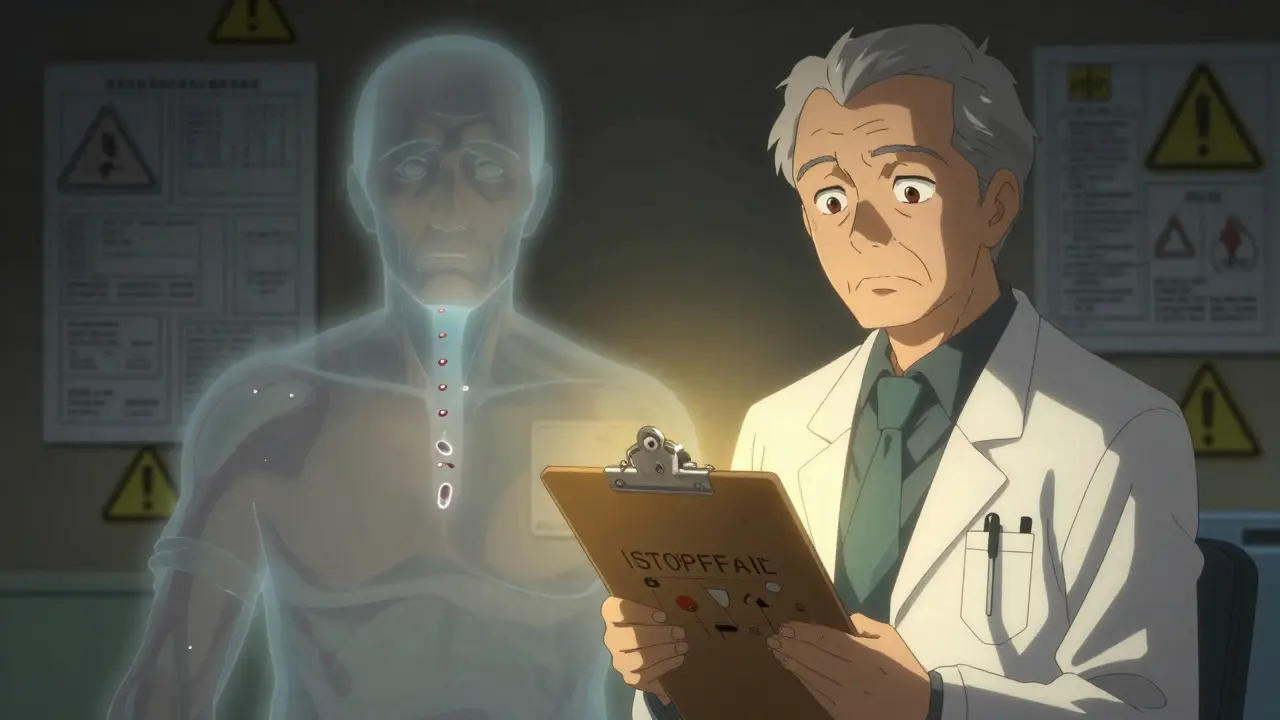
Doctors often miss this. They see an older patient stumble and think, “They’re just getting older.” But it’s not aging. It’s the drug. A tool called STOPPFall helps clinicians decide when to stop or reduce opioids in people who are at risk of falling. It’s not perfect, but it’s a step toward recognizing that a fall isn’t just bad luck-it’s a signal.
Delirium: The Silent Danger
Delirium looks like confusion. It looks like forgetfulness. It looks like dementia. But it’s not. It’s often caused by medication. Opioids are one of the top culprits. In older adults, especially those with early dementia, even a small dose can trigger delirium. And once it happens, recovery is slower. Hospital stays get longer. Mortality goes up.
Here’s what’s heartbreaking: families often think the confusion is just part of getting older. They don’t connect it to the pain pill their parent started last month. And doctors? They assume the patient’s memory issues are from Alzheimer’s, not the medication. That delay in recognizing opioid-induced delirium can be deadly.
Dosing: Start Low, Go Slow-Really Slow
There’s a rule in geriatric medicine: start low, go slow. But in practice, it’s often ignored. A typical starting dose for a 30-year-old with back pain might be 10 mg of oxycodone twice daily. For someone over 65? That’s too much. Experts recommend starting at 25% to 50% of the usual adult dose. Sometimes even less.
And it’s not just about the initial dose. It’s about how fast you increase it. In younger people, doctors might double the dose in a week if pain isn’t controlled. In older adults, that’s a recipe for disaster. Changes should happen over weeks, not days. And every adjustment needs monitoring: Are they sleeping more? Are they stumbling? Are they confused after taking their pill?
There’s no magic number. It depends on the person. But if you’re prescribing opioids to someone over 65, you’re not just treating pain-you’re managing risk. And risk means watching closely.
The Hidden Problem: Physical Dependence in Just Days
Most people think addiction takes months. But physical dependence? It can happen in a week. A 70-year-old on opioids for a hip fracture might be fine for a few days. Then, when they stop the pills, they get shaky, sweaty, nauseous, and anxious. That’s not addiction. That’s physical dependence. And it’s often mistaken for withdrawal from alcohol or anxiety.
Doctors don’t always ask about it. Patients don’t always report it. And when they do, it’s dismissed as “just being dramatic.” But if you don’t taper slowly, you can trigger severe withdrawal-even in someone who’s only been on opioids for 10 days. That’s why stopping opioids isn’t a one-time decision. It’s a process. Slow, careful, monitored.
Who’s Prescribing? Who’s Not Listening?
Primary care doctors are the ones writing most of these prescriptions. But many say they feel unprepared. Nearly half of them admit they don’t know how to safely taper opioids. They’re scared of causing pain. They’re scared of angering patients. And patients? Many are terrified of addiction, but unaware of falls, confusion, or overdose risks. There’s a gap. A big one.
A study in Australia found that older adults often believe opioids are the only real solution for chronic pain. They don’t know about physical therapy, acupuncture, or nerve blocks. They don’t know that opioids can make pain worse over time. And they rarely get the full picture from their doctor.
What Should You Do?
If you or a loved one is on opioids for chronic pain, ask these questions:
- Is this the lowest dose possible?
- Have we checked for interactions with other medications?
- Have we tried non-drug options like exercise, heat, or physical therapy?
- Are we monitoring for dizziness, confusion, or falls?
- When was the last time we reviewed whether we still need this drug?
There’s no shame in wanting pain relief. But there’s danger in not asking questions. Opioids aren’t the only option. And sometimes, the best pain management is no opioid at all.
The Bigger Picture
Emergency visits for opioid problems in older adults jumped 112% between 2005 and 2014. That’s not progress. That’s a system failing. We’ve prescribed too many pills, too freely, without understanding how aging changes the rules. The tide is turning. Guidelines are tightening. Tools like STOPPFall and START/STOPP are helping. But change takes time.
The goal isn’t to eliminate opioids. It’s to use them wisely. To respect the body’s limits. To treat pain without trading one problem for ten others. For older adults, that means more patience, more monitoring, and more honesty-from doctors, families, and patients.
Can opioids cause delirium in older adults without dementia?
Yes. While people with dementia are especially vulnerable, any older adult can develop opioid-induced delirium. Symptoms include sudden confusion, trouble focusing, hallucinations, or agitation. It’s often mistaken for dementia progression or infection. Stopping or reducing the opioid often reverses it within days.
Is tramadol safer than other opioids for seniors?
No. Tramadol is often thought to be milder, but it carries unique risks. It can cause hyponatremia (low sodium), leading to dizziness and confusion. It also interacts with many common medications like SSRIs and affects liver enzymes differently than other opioids. For older adults, it’s not safer-it’s riskier in different ways.
How do I know if my parent’s confusion is from opioids or dementia?
Look at timing. If confusion started shortly after beginning or increasing an opioid dose, it’s likely drug-related. Dementia progresses slowly. Opioid-induced confusion can come on in hours or days. Try reducing or pausing the opioid under medical supervision. If mental clarity improves, the drug was likely the cause.
What are alternatives to opioids for chronic pain in older adults?
Physical therapy, tai chi, heat/cold therapy, acupuncture, and certain non-opioid medications like gabapentin or topical NSAIDs can be very effective. For arthritis, joint injections may help. For nerve pain, low-dose antidepressants like amitriptyline are often used. The key is a multimodal approach-not one magic pill.
Can you safely stop opioids after years of use?
Yes, but it must be done slowly. Abruptly stopping can cause severe withdrawal-even after a few weeks of use. A taper usually takes weeks to months, depending on the dose and duration. Monitor for symptoms like anxiety, sweating, nausea, or sleep problems. Work with a doctor who understands geriatric pharmacology. Don’t try to quit alone.
Why do doctors keep prescribing opioids to older adults despite the risks?
Many doctors believe pain is undertreated in older adults and fear being accused of neglect. Others don’t know how to taper safely or lack time to explore alternatives. Some patients push for opioids because they’ve been told they’re the strongest option. It’s a mix of outdated beliefs, lack of training, and systemic pressure-not malice.
Next Steps
If you’re managing pain for an older adult, start by reviewing all medications with a pharmacist or geriatrician. Ask about non-opioid options. Track falls, confusion, or sleep changes. Keep a journal. If opioids are still needed, insist on the lowest effective dose and regular check-ins. And if you’re a clinician-listen more than you prescribe. Sometimes, the best thing you can do is help someone walk away from the pill bottle.