

Stopping opioids isn’t just about quitting a drug. If you’ve been taking them for weeks or months-even as prescribed-you’re likely physically dependent. That means your body has adapted. When you cut back too fast, your nervous system goes into overdrive. Symptoms hit hard: nausea, muscle aches, anxiety, insomnia, diarrhea. And it’s not just physical. Many people feel like they’re losing control, trapped in a cycle of pain and panic. The good news? You don’t have to power through it alone. A tapering plan, done right, makes all the difference.
Why Tapering Matters More Than You Think
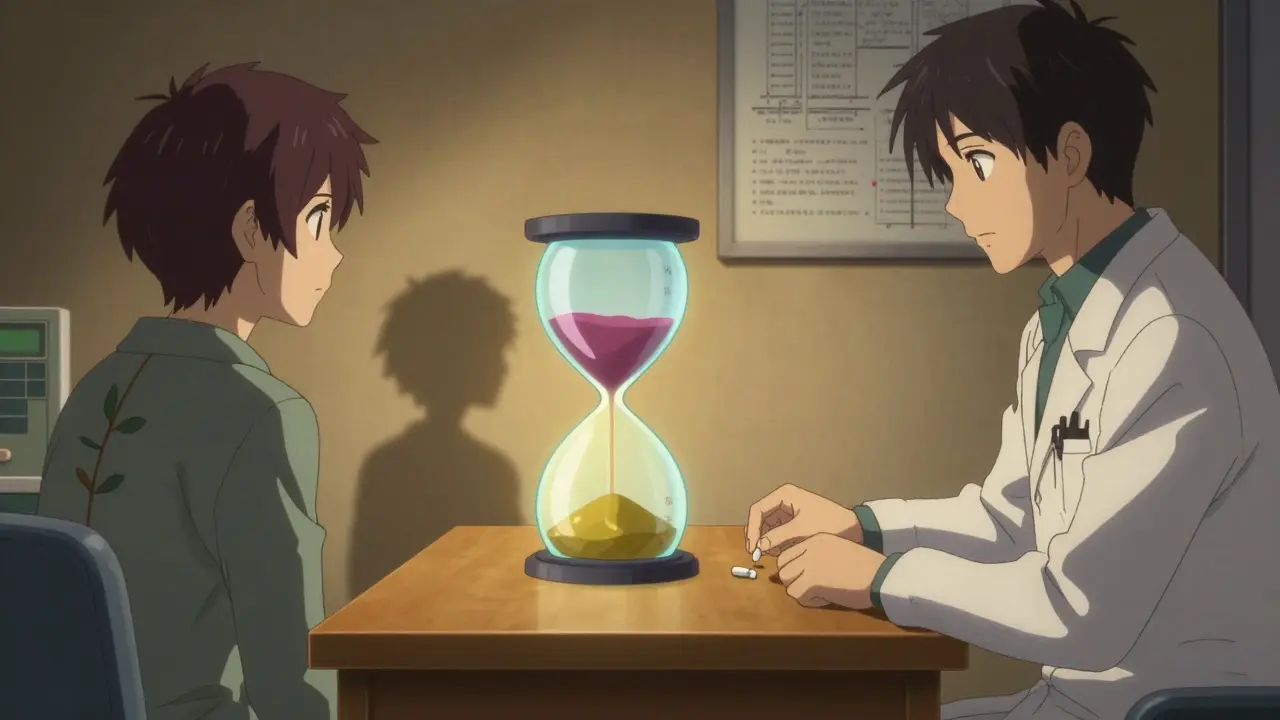
Rapidly stopping opioids is dangerous. It’s not just uncomfortable-it can be life-threatening. A 2017 study in Pain Medicine found that people forced into fast tapers had 3.5 times higher risk of suicidal thoughts. Emergency room visits spiked. Mental health crises followed. The CDC’s 2022 guidelines are clear: don’t rush. If your current dose isn’t putting you in immediate danger, there’s no need to hurry. Tapering isn’t about punishment or cutting corners. It’s about giving your body time to readjust. Think of it like turning down a heater slowly instead of flipping off the breaker. Your nervous system needs to relearn how to function without the constant presence of opioids. Slower tapers-reducing by 5% to 10% every few weeks-have been shown to improve adherence by 73% and cut emergency visits by 41%, according to Oregon Health Authority data.When Should You Consider Tapering?
Not everyone on opioids needs to taper. But if any of these apply to you, it’s worth talking to your doctor:- You’ve recovered from surgery or injury and no longer need strong pain relief.
- Your pain hasn’t improved after months of steady dosing-despite taking the full amount.
- You’re dealing with side effects like constipation, drowsiness, or confusion that affect your daily life.
- Your doctor suspects misuse, even if you’re following the script.
- You’ve chosen a different approach-physical therapy, acupuncture, or cognitive behavioral therapy-and want to reduce reliance on pills.
What Does a Safe Taper Look Like?
There’s no one-size-fits-all plan. But here’s what works for most people based on clinical guidelines:- Short-term users (less than 6 months): Reduce by 10-25% every 3-4 days. For example, if you’re taking 8 pills a day, drop to 6 after 3-4 days, then 4, then 2, until you’re off.
- Long-term users (over a year): Slow is better. Reduce by 5-10% every 3-4 weeks. Some people take 6 months to a year to fully taper. That’s normal.
- High-dose users (over 90 mg morphine equivalent daily): Tapers may last a year or more. The VA recommends pausing reductions if symptoms become moderate or worse.
Common Withdrawal Symptoms-and How to Handle Them
Withdrawal symptoms vary, but these are the most common, based on DSM-5 data:- Nausea and vomiting (87%): Try ginger tea, small sips of electrolyte drinks, or over-the-counter bismuth subsalicylate (Pepto-Bismol). Avoid heavy meals.
- Muscle aches and cramps (85%): Warm baths, gentle stretching, or a heating pad help. Some doctors prescribe baclofen (5 mg, 3x/day) for short-term relief.
- Anxiety and restlessness (80%): Breathing exercises, mindfulness apps, or short walks outside can calm the nervous system. Cognitive behavioral therapy (CBT) is proven to reduce anxiety during tapering-used by 41% of successful taperers, per SAMHSA.
- Insomnia (78%): Stick to a sleep schedule. Avoid screens before bed. Melatonin (3-5 mg) can help reset your rhythm. Gabapentin (100-300 mg at night) is often used off-label for sleep during tapering.
- Diarrhea (75%): Stay hydrated. Loperamide (Imodium) can help short-term. Avoid caffeine and spicy foods.
What Doesn’t Work-and Why
Many people try to quit cold turkey. Others follow online “miracle” plans that promise detox in 7 days. These rarely end well. A 2018 JAMA Internal Medicine study found fast tapers led to 68% more severe symptoms. And dropout rates? Five times higher than with slow tapers, according to the Journal of General Internal Medicine. One Healthgrades review from 2022 describes a patient forced to go from 180 mg MEDD to zero in four weeks. They ended up in the ER with seizures and extreme anxiety. Insurers sometimes push fast tapers to cut costs. But the real cost? A 2021 Patient Advocate Foundation report found 63% of patients on mandated rapid tapers developed new mental health conditions. Over 20% needed hospitalization.The Role of Support Systems
You don’t have to do this alone. The most successful tapering stories all have one thing in common: support.- Therapy: CBT helps reframe thoughts around pain and fear of withdrawal. It’s not optional-it’s essential.
- Peer groups: Reddit’s r/OpiatesRecovery has 145,000 members. Many share 6-month tapers from 120 mg MEDD using 10% monthly cuts. Their advice? “Don’t compare your day 10 to someone else’s day 2.”
- Complementary care: Acupuncture helped 33% of patients in Oregon’s 2021 registry. Physical therapy improved mobility for those whose pain was tied to stiffness or inactivity.
- Family involvement: Having someone check in daily reduces isolation. That’s huge when you’re feeling emotionally raw.

What Your Doctor Should Do
A good clinician doesn’t just hand you a taper schedule. They:- Ask what matters to you-sleep? Function? Freedom from drowsiness?
- Review your pain, mood, and sleep at every visit.
- Pause or slow the taper if symptoms get worse.
- Provide a written, flexible plan you can adjust together.
- Use motivational interviewing to build trust-not pressure.
What Comes After Tapering
Stopping opioids isn’t the end. It’s a transition. Many people find their pain hasn’t vanished-it’s just changed. That’s where non-drug tools become vital:- Physical therapy: Strength and mobility training reduce pain signals over time.
- Acupuncture: Shown to reduce chronic pain intensity in multiple studies.
- Yoga and tai chi: Improve body awareness and reduce stress-related pain flare-ups.
- Neuromodulation devices: Wearable TENS units are now covered by some insurers for chronic pain.
Looking Ahead
The future of opioid tapering is personal. Researchers at Massachusetts General Hospital are testing AI tools that predict withdrawal severity based on your genetics, sleep patterns, and stress levels. Wearable sensors are being piloted in Oregon to track heart rate variability and sweating in real time-letting doctors adjust tapers before symptoms get bad. Meanwhile, payment models are shifting. Medicare and private insurers are starting to pay for comprehensive pain programs-not just pills. That means more access to therapy, physical rehab, and peer support. The goal? Not just to get you off opioids, but to help you live better without them.Can I taper off opioids on my own?
While some people do, it’s risky without medical support. Withdrawal can trigger severe anxiety, depression, or suicidal thoughts. A doctor can monitor your symptoms, adjust your plan, and prescribe medications like lofexidine or gabapentin to ease discomfort. If you’re on high doses or have a history of mental health issues, self-tapering is not recommended.
How long does opioid withdrawal last?
Physical symptoms usually peak within 72 hours and start improving after 5-7 days. But some symptoms-like anxiety, sleep problems, or cravings-can linger for weeks or months. This is called post-acute withdrawal syndrome (PAWS). It’s not a relapse. It’s your brain healing. Support and time are key.
Will my pain get worse after I stop opioids?
It’s common to feel more pain temporarily as your body adjusts. But long-term opioid use can actually make your nervous system more sensitive to pain-a condition called opioid-induced hyperalgesia. Many people find their baseline pain decreases after tapering, especially when combined with physical therapy, movement, and stress management.
Are there medications that help with withdrawal?
Yes. Lofexidine (brand name Lucemyra) is FDA-approved specifically for opioid withdrawal symptoms. It doesn’t block cravings but reduces physical symptoms like sweating, chills, and rapid heartbeat. Gabapentin and baclofen are often used off-label for nerve pain and muscle cramps. Clonidine is another option, though it’s older and has more side effects. Always use these under medical supervision.
What if I relapse during my taper?
Relapse doesn’t mean failure. It means the plan needs adjusting. Many people pause their taper, stabilize, and try again later. Talk to your doctor. Consider adding therapy or support groups. Relapse is part of the process for many-not a sign of weakness. The goal isn’t perfection. It’s progress.
Is it possible to stop opioids without feeling awful?
Yes, if you taper slowly and have support. People who reduce by 5-10% per month often report only mild symptoms-like slightly restless sleep or a brief spike in anxiety. The key is pacing. Rushing guarantees discomfort. Patience makes it manageable. You’re not just reducing a dose-you’re rebuilding your body’s natural balance.

Sandeep Jain
December 24, 2025 AT 12:37Been through this twice. Slow taper saved my life. Cut by 5% every 4 weeks. Sleep was trash for months, but I didn’t end up in the ER. Your body remembers. Give it time.
Sophia Daniels
December 25, 2025 AT 16:17Oh wow, another ‘just taper slowly’ pamphlet. 🙄 Meanwhile, my cousin got kicked off opioids by her insurer in 14 days and ended up on methadone. Guess the CDC doesn’t care about people who aren’t ‘compliant’.
Nikki Brown
December 26, 2025 AT 18:46People who taper slowly are just weak. If you can’t handle withdrawal, maybe you weren’t supposed to be on them in the first place. 🙃
Amy Lesleighter (Wales)
December 27, 2025 AT 16:35It’s not about being strong. It’s about being smart. Your nervous system isn’t a light switch. Turning it off fast? That’s not willpower. That’s self-sabotage. I’ve seen people break their backs trying to ‘tough it out.’
roger dalomba
December 28, 2025 AT 13:59Wow. A 14-page essay on how to not die. Groundbreaking. Next up: How to breathe without oxygen.
Erwin Asilom
December 30, 2025 AT 04:47Consistency is key. Stick to the plan. Even if you feel like quitting, keep going. Small steps. Daily discipline. You’re not just reducing pills-you’re rebuilding your life.
Fabio Raphael
January 1, 2026 AT 04:01I’m curious-how many people actually get personalized taper plans? Or do most just get a printout and a shrug from their doc?
Natasha Sandra
January 1, 2026 AT 11:55So true!! 💪 I tapered over 8 months and cried a lot but also started hiking again 🌿✨ #recoveryispossible
Rajni Jain
January 1, 2026 AT 23:55My aunt did this in India with yoga and chai. No meds. Just time and people checking on her every day. She’s been clean for 3 years now. Not everyone needs a clinic.
Peter sullen
January 2, 2026 AT 18:21It is imperative to underscore that the implementation of a structured, individualized, and evidence-based tapering protocol is not merely a clinical intervention-it is a biopsychosocial imperative that mitigates the risk of iatrogenic harm and fosters neuroadaptive homeostasis.
Brittany Fuhs
January 3, 2026 AT 21:02Why do Americans think they need a 6-month plan to quit painkillers? In my country, you just stop. No drama. No apps. No therapists. Just willpower.
Sumler Luu
January 5, 2026 AT 16:54Thanks for sharing this. I’m 3 months in and my doctor just told me to cut 20% this week. I’m scared. This info helps.
Steven Destiny
January 6, 2026 AT 05:44STOP BEING SOFT. If you can’t handle withdrawal, you’re not ready to be off them. This article is enabling. Just quit. Now. No excuses.
Becky Baker
January 8, 2026 AT 04:12My ex’s dad died from withdrawal. They forced him off in 2 weeks. He had heart issues. This isn’t a joke. Please, if you’re reading this and your doc is rushing you-get a second opinion.