
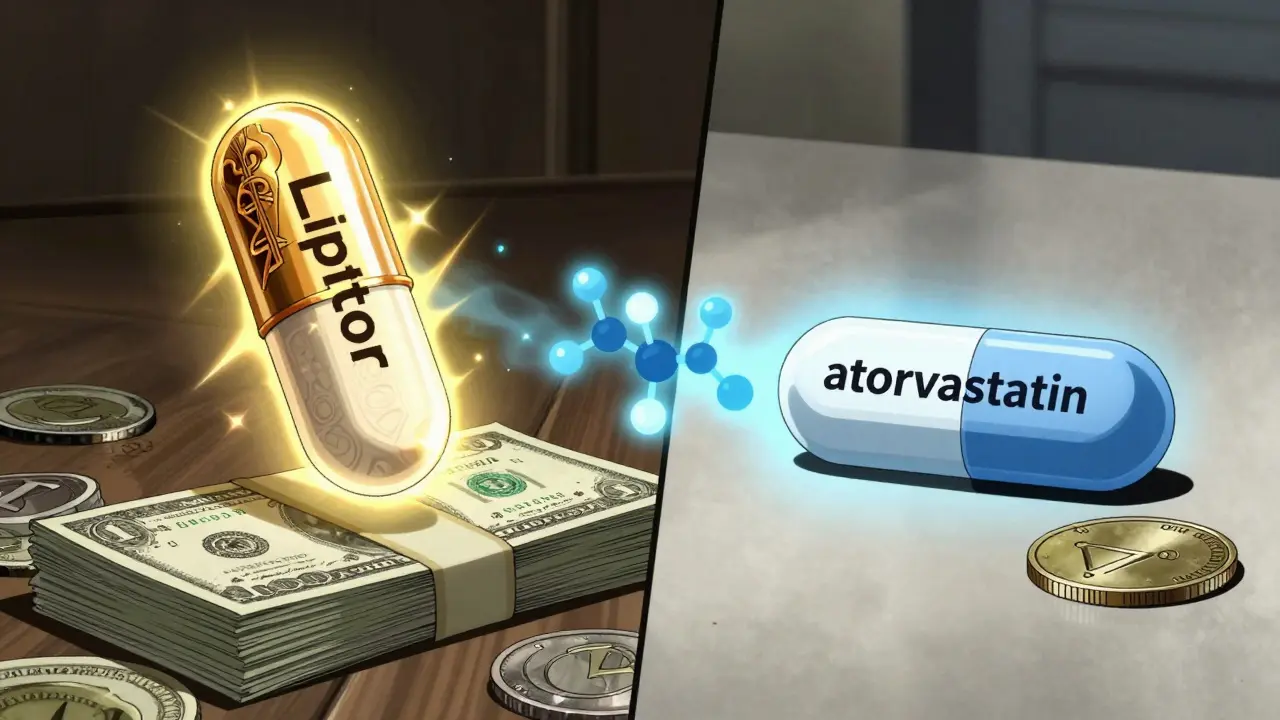
When you pick up a prescription, you might see two options on the receipt: the name you recognize, like Lipitor, or a plain label like atorvastatin. The price difference is staggering - $130 for the brand, $1 for the generic. But is that generic just as good? Or are you risking your health to save a few bucks?
The truth isn’t as complicated as drug ads make it seem. Most of the time, generic drugs work exactly the same as their brand-name cousins. But there are exceptions. And if you’re taking something like a blood thinner or thyroid medicine, those exceptions matter a lot.
What Exactly Makes a Drug "Generic"?
A generic drug isn’t a copy. It’s a legal, FDA-approved version of a brand-name drug that contains the exact same active ingredient, in the same strength, and delivered the same way - whether it’s a pill, injection, or inhaler. The FDA requires that generics deliver the same amount of medicine into your bloodstream at the same speed as the brand. That’s called bioequivalence.
Here’s the catch: generics can look different. They might be a different color, shape, or size. That’s because trademark laws stop them from looking identical to the brand. But what’s inside? Identical. The FDA checks every batch. Manufacturing facilities for generics are held to the same standards as those making brand-name drugs. In fact, many brand-name companies make their own generics once the patent expires.
The difference? Cost. Brand-name drugs carry the price tag of research, clinical trials, and marketing. The FDA estimates it costs about $2.6 billion to bring a new drug to market. Generics skip all that. They only need to prove they work the same - no new safety studies, no expensive trials. That’s why they cost 80% to 85% less. In 2022, the average savings was 82.5%.
Why Do 9 Out of 10 Prescriptions Use Generics?
If generics are just as effective and way cheaper, why don’t everyone use them? They do. About 90% of all prescriptions filled in the U.S. are for generic drugs. That’s not a trend - it’s the norm.
That’s because the system is built to push them. Pharmacists are legally required in 49 states to swap in a generic unless the doctor writes "dispense as written." Insurance companies often charge higher copays for brand-name drugs. Some plans won’t cover the brand at all unless you’ve tried the generic first.
The numbers speak for themselves. From 2007 to 2016, generic drugs saved the U.S. healthcare system $1.67 trillion. Medicare saved $77 billion. Medicaid saved $38 billion. In 2022, the generic drug market was worth over $110 billion. And it’s growing fast.
Take Lipitor. When its patent expired, the price dropped from $130 a month to under $1. Same pill. Same effect. Just cheaper.
When Generics Might Not Be the Same
Here’s where things get tricky. Not all drugs are created equal - even if they’re labeled the same.
There’s a small group of medications called narrow therapeutic index (NTI) drugs. These are drugs where even tiny changes in blood levels can cause big problems. Too little, and the drug doesn’t work. Too much, and it’s toxic.
Examples include:
- Warfarin (blood thinner)
- Levothyroxine (thyroid hormone)
- Phenytoin, carbamazepine (seizure meds)
- Lithium (mood stabilizer)
For these, the FDA allows a wider range of bioequivalence (80%-125%) - meaning a generic could deliver 15% more or less of the drug than the brand. That’s still considered safe for most people. But for someone with epilepsy or on blood thinners, that 15% can mean the difference between control and crisis.
A 2017 study in Epilepsy & Behavior found that switching between different generic versions of levetiracetam led to a 32% higher risk of seizure-related hospitalizations. Patients on Synthroid (levothyroxine) reported side effects like fatigue, weight gain, or heart palpitations after switching manufacturers - even though the active ingredient was unchanged.
The FDA says all approved generics are safe. But experts like Dr. Michael Privitera from the University of Cincinnati Epilepsy Center say consistency matters. If you’re stable on one generic brand, don’t switch unless your doctor says so.
What’s in the Pill That Isn’t the Active Ingredient?
Generics can have different fillers, dyes, or preservatives. These are called inactive ingredients. They don’t treat your condition. But they can cause problems if you’re allergic.
For example, some generics use lactose as a filler. If you’re lactose intolerant, you might get bloating or diarrhea - even though the medicine itself is fine. Others use food dyes like FD&C Red No. 40. People with sensitivities report headaches or rashes after switching.
That’s why it’s smart to check the pill’s appearance and ingredients if you notice a change. If your new generic looks different and you feel off, don’t assume it’s "all in your head." Talk to your pharmacist. Ask if the manufacturer changed. Ask for the inactive ingredients list.
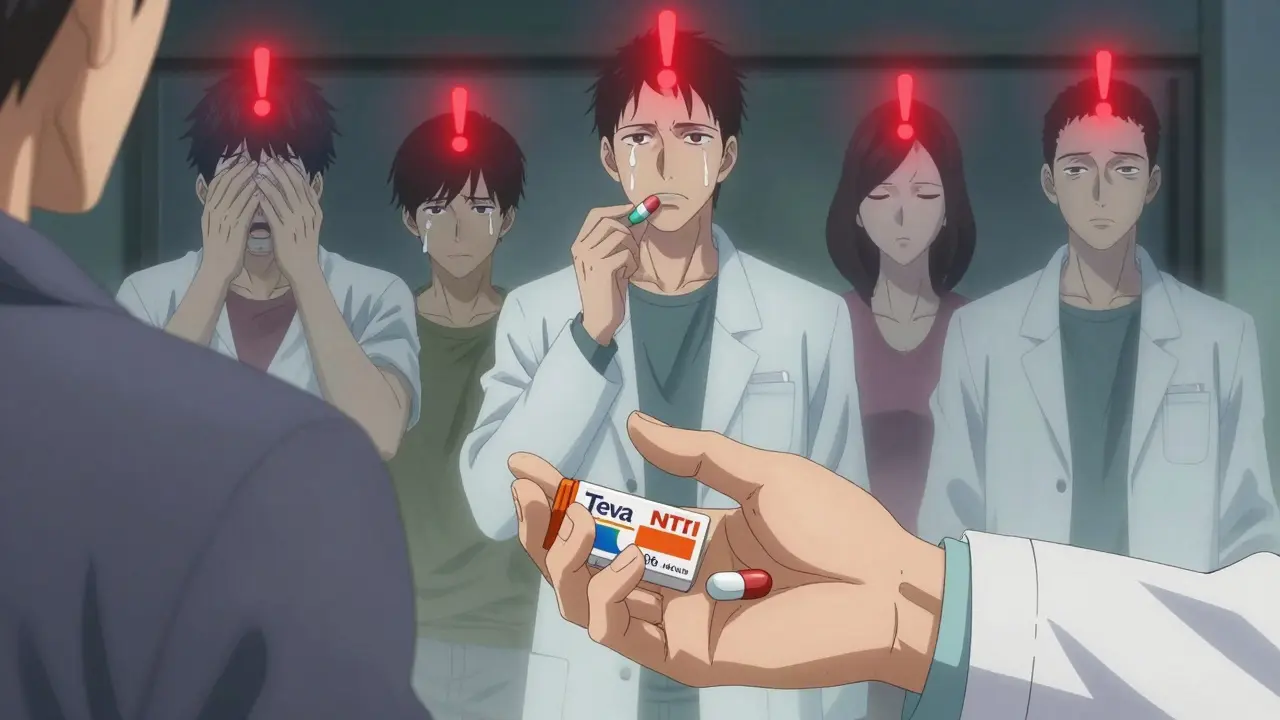
Many people don’t realize that the same generic drug can be made by different companies - and each one might have a different formulation. One batch might be made by Teva, another by Mylan, another by a smaller company you’ve never heard of. All are FDA-approved. But if you’re sensitive, switching between them can cause side effects.
How to Stay in Control
You don’t have to guess. Here’s how to make sure you’re getting what you need:
- Ask for the same manufacturer. If you’re stable on a generic from Teva, ask your pharmacist to stick with it. You can even request it by name on your prescription.
- Check the label. Generic pills have the same active ingredient name, but the manufacturer’s name is printed on the bottle. Keep track of it.
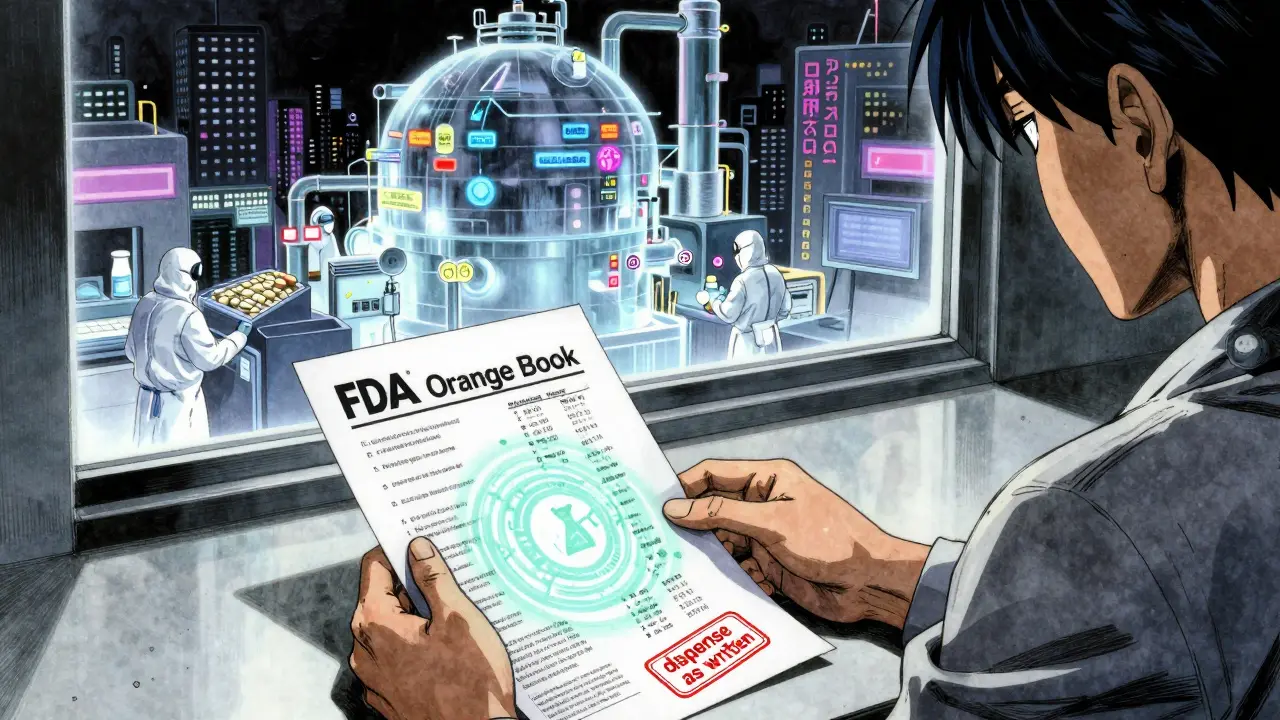
- Use the FDA’s Orange Book. This free tool lists every approved generic and its therapeutic equivalence rating. If a drug is rated AB, it’s considered interchangeable. If it’s BX, it’s not recommended for substitution - especially for NTI drugs.
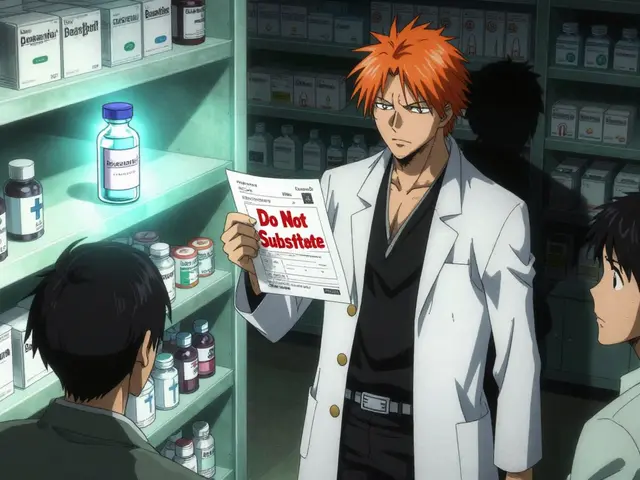
- Ask your doctor to write "dispense as written" if needed. This stops automatic substitution. It’s your right. Don’t feel guilty asking.
- Use GoodRx or similar apps. Compare prices. Sometimes the brand is cheaper than a specific generic - especially after insurance discounts.
And if you’re on a NTI drug? Keep a log. Note how you feel after each refill. If you notice changes - mood swings, heart rate shifts, new fatigue - talk to your doctor. It might not be the drug. But it might be.
What About Biosimilars?
There’s another category you might see: biosimilars. These aren’t traditional generics. They’re copies of complex biologic drugs - like Humira, Enbrel, or Remicade. These aren’t made from chemicals. They’re made from living cells. That makes them harder to copy exactly.
As of 2023, the FDA has approved 35 biosimilars. They’re growing fast. But they still make up less than 3% of the biologics market. Why? They’re expensive to develop. And they’re still 15%-35% cheaper than the brand - not 80% like traditional generics.
Still, they’re saving money. When Humira lost its patent in 2023, its biosimilars cut the price by over 70%. That’s huge for people who need it every two weeks.
Are Generics Safe? The Evidence Says Yes - Mostly
A 2016 study in JAMA looked at over 2,000 bioequivalence tests. The average difference between generics and brands? Just 3.5%. That’s well within the FDA’s safe range.
For common drugs like metformin, lisinopril, or atorvastatin, patient reviews show 87% report no difference at all. That’s the majority.
But the 13% who do notice a change? They’re not wrong. For them, consistency matters. That’s why the American Academy of Neurology and other medical groups recommend sticking with the same manufacturer for NTI drugs.
There’s no conspiracy. No cover-up. Just science - and a few edge cases where small differences matter.
What’s Changing Now?
The FDA is working to fix gaps. Their new GDUFA III program, launched in 2023, aims to cut approval times for generics from 14 months to 10. They’re also pushing to improve quality control for overseas factories - where 18% of facilities had inspection issues in 2023, compared to 8% in the U.S.
Drug shortages are still a problem. In 2022, there were 178 active shortages of generic drugs. Most were for older, low-cost medications - like antibiotics or injectables. That’s not because generics are unsafe. It’s because they’re cheap. When the profit margin is slim, manufacturers sometimes stop making them.
But the long-term trend is clear: more generics. More savings. More access.
By 2030, the World Health Organization expects 70% of all prescriptions worldwide to be for generics. That’s up from 56% today. It’s not just about cost - it’s about making medicine available to everyone.
Final Take: Should You Use Generics?
For most people - yes. Absolutely.
If you’re on blood pressure medicine, antidepressants, cholesterol drugs, or antibiotics, generics are a safe, smart choice. You’ll save hundreds, maybe thousands, a year. And you won’t lose effectiveness.
But if you’re on a narrow therapeutic index drug - thyroid, epilepsy, blood thinners, lithium - pay attention. Don’t switch manufacturers without talking to your doctor. Keep track of what you’re taking. If you feel different after a refill, speak up.
Generics aren’t inferior. They’re just different. And sometimes, that difference matters.
The goal isn’t to avoid generics. It’s to use them wisely.


SRI GUNTORO
January 29, 2026 AT 00:20People still think generics are "inferior"? Wow. I guess you'd rather pay $130 a month for Lipitor while your neighbor starves because they can't afford insulin. Moral bankruptcy wrapped in a pill bottle. At least have the decency to feel guilty.
Robert Cardoso
January 29, 2026 AT 01:24The FDA's 80%-125% bioequivalence window for NTI drugs is statistically indefensible. The coefficient of variation for levothyroxine absorption across manufacturers exceeds 20% in controlled studies, far beyond the 10% threshold for clinical equivalence. You're not just risking efficacy-you're gambling with endocrine stability. The data doesn't lie, and the FDA's lax standards are a regulatory failure.
Chris Urdilas
January 30, 2026 AT 07:31Look, I get the fear. I used to be paranoid about generics too. Then I switched my blood pressure med from brand to generic and saved $120/month. No dizziness. No weird side effects. My doctor even said the levels were spot-on. Turned out my anxiety was the real problem. Sometimes the pill works fine-it's your brain that's screaming.
Katie Mccreary
January 30, 2026 AT 13:59I switched to a generic levothyroxine and gained 15 pounds in two months. My heart felt like it was going to explode. Then I switched back to Synthroid and everything went back to normal. Don't tell me it's "all in my head"-my body knows the difference.
Amber Daugs
January 31, 2026 AT 17:08It's not about cost-it's about responsibility. You think it's okay to let someone's epilepsy flare up because a pharmacist picked the cheapest generic? That's not frugality. That's negligence dressed up as savings. People die because someone chose a $1 pill over a $130 one. Shame on you for normalizing this.
Ambrose Curtis
February 1, 2026 AT 09:05my doc told me to stick with the same generic brand and i did. teva for my seizure med. switched to mylan once by accident and i had a seizure 3 days later. now i check the bottle like it's a bomb. if it says mylan, i call the pharmacy. no joke. this stuff matters. also, the orange book is your best friend. use it.
Jess Bevis
February 2, 2026 AT 01:23In India, generics are the only option. We don't have a choice. But they work. My dad's been on generic metformin for 12 years. No issues. The system isn't perfect, but people survive-and thrive-on them every day. Don't let fear override reality.
Rose Palmer
February 3, 2026 AT 05:14For individuals managing chronic conditions, consistency in medication is not a luxury-it is a clinical imperative. I strongly encourage patients to maintain a medication log, document any physiological changes post-switch, and communicate these observations to their prescribing provider with specificity. Your health deserves this level of diligence.
Howard Esakov
February 3, 2026 AT 23:07Oh wow, a 130-dollar pill? How quaint. I take my biosimilar Humira every two weeks. Cost? $15 after insurance. The brand? $1200. You're still crying about $130? You're not poor-you're entitled. 🤡
Mindee Coulter
February 4, 2026 AT 02:19