
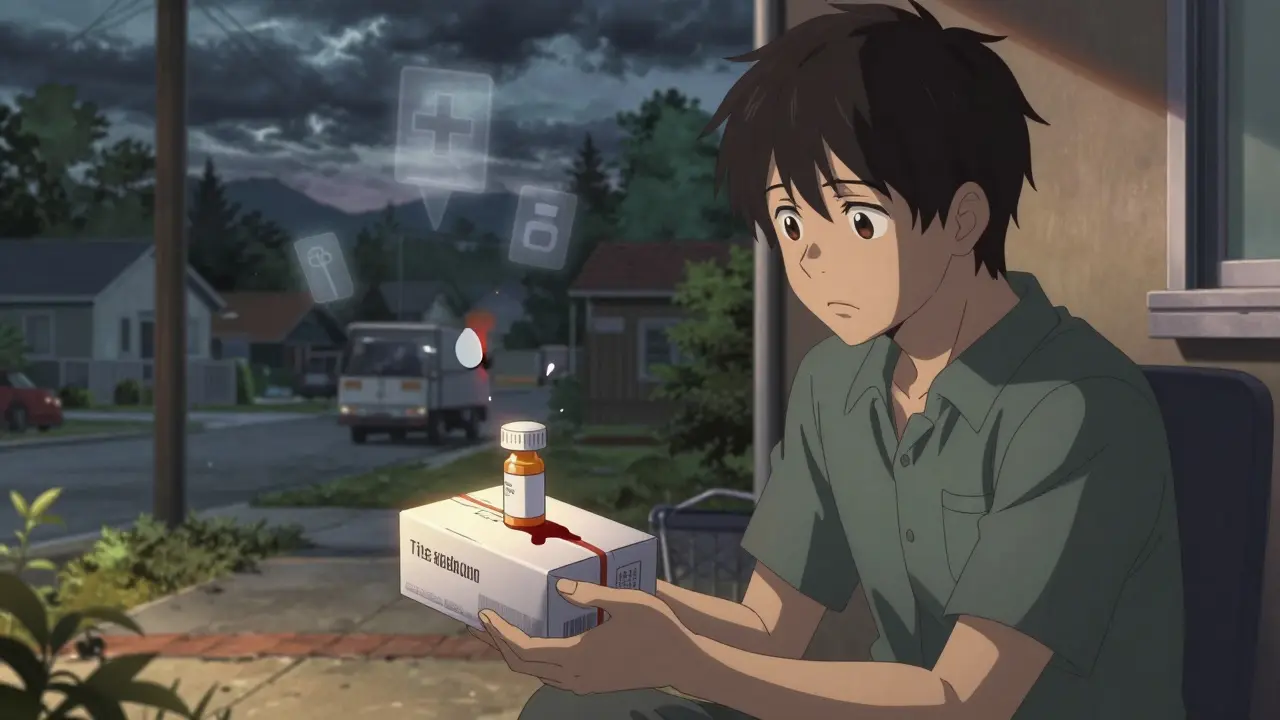
More people are getting their prescriptions delivered to their door than ever before. In 2023, mail-order pharmacies in the U.S. brought in over $206 billion in sales - up from $86 billion just ten years earlier. But here’s the catch: prescription volume only rose by 11% during that time. That means prices, not quantity, are driving the explosion. For many, especially those managing chronic conditions like high blood pressure, diabetes, or depression, mail-order generics seem like a no-brainer: lower copays, automatic refills, and no trips to the pharmacy. But behind the convenience lies a messy reality - one where medications can arrive melted, prices get inflated, and pharmacists you’ve never met are making decisions that affect your health.
Why Mail-Order Generics Are Popular
The biggest draw is cost. If you’re on a 90-day supply of a generic blood pressure pill, your insurer might charge you just $10 out of pocket - compared to $45 for a 30-day supply at your local pharmacy. That’s a $45 monthly savings, which adds up fast. For people with diabetes, hypertension, or thyroid issues, these savings aren’t optional. They’re life-changing. A 2022 IQVIA study found that 58% of diabetes patients and 63% of hypertension patients use mail-order services. That’s not because they’re lazy - it’s because they can’t afford to skip doses. Automatic refills help, too. No more running out of meds because you forgot to call in a refill. Mail-order pharmacies send your next shipment before you run out, assuming everything goes smoothly. For people juggling multiple prescriptions, this reduces the mental load. You don’t have to remember which drug is due when. Your insurance company’s pharmacy benefit manager (PBM) handles it. And for Medicare Part D enrollees, mail-order is practically built into the system. About 34% of beneficiaries used it by 2019, and that number’s still climbing.The Hidden Price Game
Here’s where things get shady. Just because you’re paying $10 doesn’t mean the drug costs $10. A generic antidepressant might retail for $12 at your local pharmacy. But when it goes through a mail-order PBM, the billed price can jump to $100 - an 800% markup. Brand-name drugs? Sometimes they’re marked up 35 times higher than retail. The difference? PBMs negotiate deals with drugmakers and pharmacies, then pocket the difference. You’re not seeing the real cost. Your copay is low, but your insurer - and eventually, your premiums - are paying the rest. This isn’t just about greed. It’s a structural flaw. Mail-order pharmacies are owned by big health companies - Express Scripts (Cigna), CVS Caremark, and OptumRx. Together, they handle nearly 80% of all mail-order prescriptions in the U.S. They’re not just delivering pills. They’re controlling pricing, formularies, and even which generics you’re allowed to get. And they’re not required to tell you what the real price is.Temperature Risks: When Your Medicine Melts
Medications have strict storage rules. Most need to stay between 68°F and 77°F. Insulin, for example, can lose effectiveness if it gets above 86°F for more than 24 hours. But here’s the scary part: a study in the Journal of the American Pharmacists Association found that only one-third of mail-order shipments stay within safe temperature ranges during transit. Reddit users have posted photos of insulin vials that arrived warm, cloudy, or even melted. One woman in Arizona described her insulin arriving after a 4-day summer delivery - the liquid inside looked like syrup. She didn’t know it was ruined until her blood sugar spiked. The FDA has logged over 1,200 reports of temperature-related failures between 2020 and 2023. That’s likely just the tip of the iceberg. Most people don’t report it. They just assume their meds didn’t work. No federal law requires mail-order pharmacies to monitor or guarantee temperature control. No labels on packages say, “This box contains insulin - do not leave in hot car.” No tracking tells you if the truck was too hot. You just hope for the best.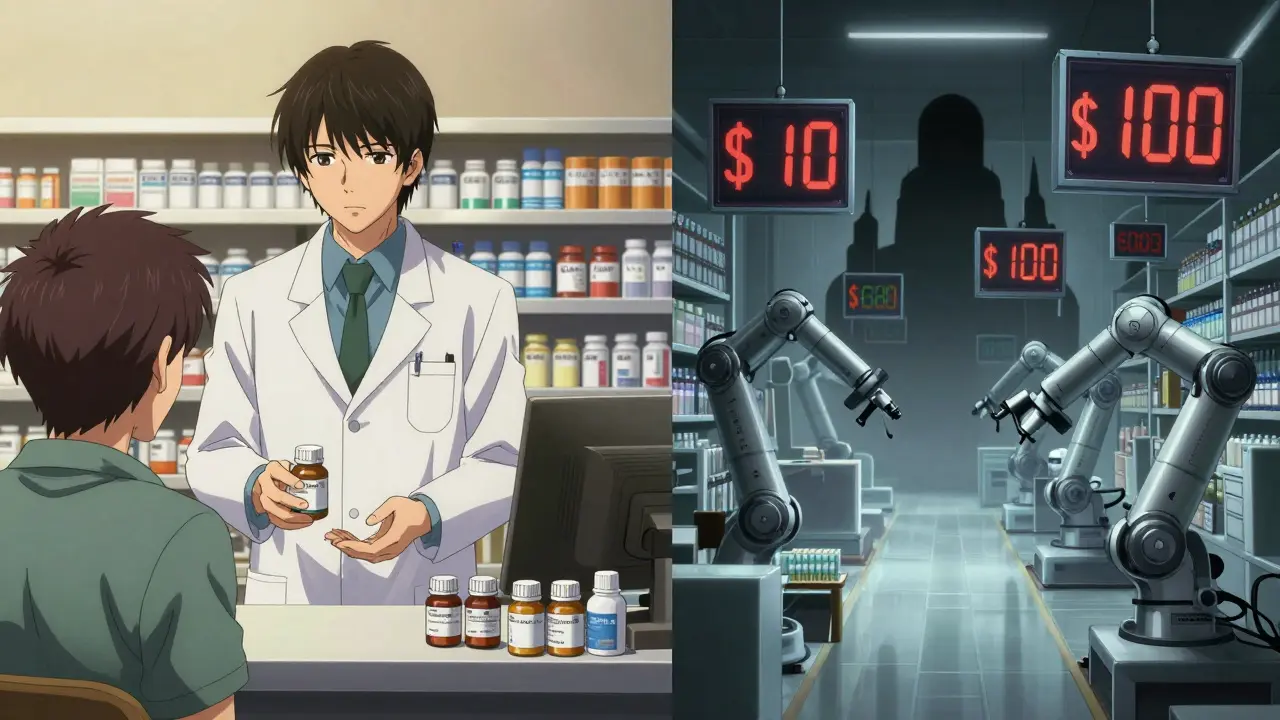
When Convenience Turns Dangerous
Mail-order works best for long-term meds - not emergencies. You can’t wait a week for antibiotics if you have a bad infection. Same with asthma inhalers or epinephrine pens. If you’re sick and need something right away, mail-order is useless. Even worse, people on multiple drugs often end up using different pharmacies to get the best price. One drug comes from your mail-order pharmacy. Another from your local CVS. A third from a discount online site. But now, no single pharmacist can see your full list. That means they can’t check for dangerous interactions. A 2024 study in JAMA Network Open found this fragmentation increases the risk of harmful drug combos - especially for older adults or those on five or more medications. And then there’s the human factor. Sixty-eight percent of users in a Consumer Reports survey said they missed having face-to-face conversations with pharmacists. That’s not just about politeness. Pharmacists catch mistakes. They notice if you’re taking two drugs that cause dizziness. They warn you if your new pill looks different. Mail-order doesn’t offer that. You get a label. A bottle. And a website you have to log into to ask a question.Generic Switching Can Backfire
Generics are supposed to be identical to brand-name drugs. The FDA says so. But they’re not always the same. Different manufacturers use different fillers, dyes, coatings, and shapes. A pill that’s blue and oval one month might be white and round the next. To you, it looks like a different drug. That causes confusion. A 2017 study found patients switching between generic versions of topiramate (used for seizures and migraines) were more likely to end up in the hospital. Why? Because they thought they’d been given the wrong medicine. They stopped taking it. Or took too much. Or mixed it with something else. The anxiety isn’t imaginary. It’s real. And it leads to worse outcomes. This isn’t about quality. It’s about consistency. If your body’s used to one version of a drug, switching randomly can throw off your system - even if the active ingredient is the same.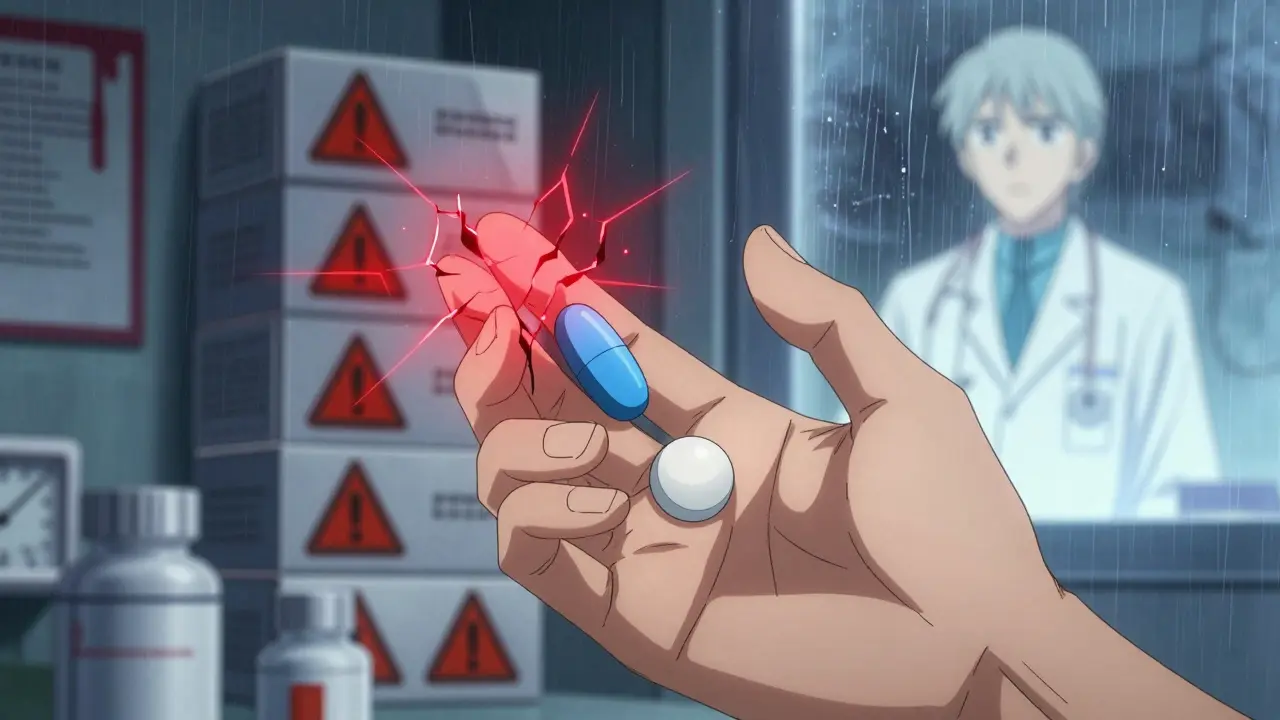
Who Should Use Mail-Order? Who Should Avoid It?
Use mail-order if:- You take a maintenance medication daily (blood pressure, cholesterol, diabetes, thyroid, antidepressants)
- Your insurer offers a $10 or $20 copay for 90-day supplies
- You’re organized and plan ahead
- You don’t need your meds immediately
- You’re on a medication that needs refrigeration (insulin, some biologics, growth hormone) - unless you’re sure the pharmacy uses cold shipping
- You take multiple drugs from different sources - you risk dangerous interactions
- You need quick access (antibiotics, pain meds after surgery, rescue inhalers)
- You’re uninsured or underinsured - mail-order can cost $500/month for drugs like semaglutide
- You’ve had bad experiences with delivery delays or damaged meds
How to Use Mail-Order Safely
If you’re going this route, don’t just sign up and forget it. Here’s how to protect yourself:- Order early. Set up your refill at least two weeks before you run out. Don’t wait until day 28.
- Check the packaging. When your meds arrive, inspect the box. Is it warm? Is the seal broken? Does the pill look different? If something’s off, call your pharmacy immediately.
- Know your meds. Keep a printed list of every drug you take - including dosage and why you take it. Share it with your primary doctor and pharmacist.
- Don’t split pharmacies. Try to get all your chronic meds through one mail-order provider. If you can’t, make sure your main doctor has a full list.
- Ask about cold shipping. If you’re on insulin or anything temperature-sensitive, ask: “Do you use refrigerated packaging? Can you guarantee the temperature stays below 86°F?”
- Track your delivery. Use tracking numbers. If your package is delayed, follow up. Don’t assume it’ll show up.
The Future Is Unclear
Mail-order pharmacy use is expected to hit 45% of chronic medication prescriptions by 2027. That’s up from 31% today. The industry says it’s about convenience and efficiency. But the data tells a different story: rising prices, temperature failures, fragmented care, and lack of transparency. A bill called the Pharmacy Delivery Safety Act is now in committee. It would require temperature monitoring, clear labeling, and better reporting of damaged meds. Until then, you’re on your own. The truth? Mail-order generics aren’t good or bad. They’re a tool. And like any tool, they work best when you understand how they’re made - and what they’re hiding.Are mail-order generics as effective as brand-name drugs?
Yes, by law. The FDA requires generic drugs to have the same active ingredient, strength, dosage form, and route of administration as the brand-name version. They must also meet the same strict manufacturing standards. The only differences are in inactive ingredients - like dyes or fillers - which don’t affect how the drug works. But some people notice side effects or feel the generic doesn’t work as well, often because they’re switching between different generic manufacturers. That’s not because generics are weaker - it’s because your body got used to one version.
Can I get my insulin through mail-order safely?
You can, but it’s risky. Insulin is sensitive to heat. If it’s exposed to temperatures above 86°F for more than 24 hours, it can lose potency. Many mail-order pharmacies don’t guarantee temperature-controlled shipping. If you must use mail-order for insulin, ask the pharmacy: “Do you use cold packs and insulated packaging?” and “Can you guarantee the temperature stays below 86°F during transit?” Always check your insulin when it arrives - if it looks cloudy, clumpy, or discolored, don’t use it. Call your pharmacy and get a replacement.
Why does my mail-order pharmacy send me a different generic each month?
It’s about cost. Mail-order pharmacies and their parent companies (PBMs) switch to the cheapest generic available each time. That’s not your fault - it’s how their contracts work. But if you’re on a drug like topiramate or levothyroxine, switching generics can cause confusion, anxiety, or even reduced effectiveness. If this happens often, ask your doctor to write “Dispense as Written” or “Brand Necessary” on your prescription. That forces the pharmacy to give you the same version each time.
What should I do if my mail-order meds arrive late or damaged?
Don’t wait. Call the pharmacy immediately. If it’s a life-saving drug - like insulin, heart meds, or seizure medicine - go to your local pharmacy and ask for an emergency refill. Many will help, even if you’re not a regular customer. Keep a 7-day supply of critical meds on hand as a backup. Document the damage with photos. Report it to the pharmacy and keep a record. If this happens repeatedly, consider switching providers or using a different delivery method.
Is mail-order cheaper for uninsured people?
Not usually. Mail-order discounts are tied to insurance contracts. Without insurance, you pay the full cash price - which can be way higher than retail. For example, a month’s supply of semaglutide (Ozempic) might cost $500 through a mail-order site, but you can find it for $300-$400 at some retail pharmacies using discount cards like GoodRx. Always compare prices before ordering. Don’t assume mail-order is cheaper just because it’s advertised that way.
Can I switch back to my local pharmacy if I don’t like mail-order?
Absolutely. You’re not locked in. Your insurance plan may encourage mail-order, but you can usually opt out. Call your insurer’s customer service and ask how to change your pharmacy preference. Some plans require you to pay more if you choose retail - but you still have the right to choose. If your doctor supports your decision, ask them to write “Retail Only” on your prescription. That blocks automatic mail-order fills.


Jay Clarke
January 17, 2026 AT 20:20This whole system is a scam wrapped in a barcode. They make you think you’re saving money, but your insurer is getting gouged and you’re just the patsy. I got my insulin delivered in the summer and it looked like melted candle wax. Called them? ‘We’re sorry, next time.’ Next time? I almost ended up in the ER because my blood sugar went nuclear. This isn’t healthcare-it’s corporate roulette.
Stacey Marsengill
January 17, 2026 AT 23:17I don’t even trust the labels anymore. One month my levothyroxine was white and oval, next month it was blue and round. I started doubting if I was even taking the right thing. My anxiety spiked so bad I had to quit my job for a few weeks. They call it ‘generic switching’ like it’s a feature. It’s psychological warfare disguised as cost-cutting.
Aysha Siera
January 18, 2026 AT 08:57They’re testing us. You know who owns those pharmacies? The same people who make the drugs. They want you dependent. They want you too tired to question it. Temperature control? No law? That’s not negligence. That’s intentional. They’re testing how many people will die before Congress acts. And we’re all just scrolling while our meds melt in the mailbox.
rachel bellet
January 19, 2026 AT 18:18The structural inefficiencies are non-trivial. Fragmented pharmacovigilance creates significant polypharmacy risk vectors, particularly in geriatric cohorts with high medication burden. The absence of centralized medication reconciliation protocols in mail-order ecosystems fundamentally undermines the principle of continuity of care. PBMs, as vertically integrated entities, exhibit clear agency conflicts of interest-maximizing margin at the expense of clinical fidelity. This is not a logistical issue. It’s a systemic failure of fiduciary duty in pharmaceutical distribution.
Pat Dean
January 21, 2026 AT 08:38Why are we letting corporations dictate how we get our medicine? This is America. We should be able to walk into a pharmacy and talk to someone who knows our name. Instead, we’re treated like data points in some algorithm. I’m sick of this. If you’re on insulin or anything life-critical, get it locally. Don’t let some warehouse in Ohio decide if you live or die based on a shipping route.
Selina Warren
January 22, 2026 AT 17:23You’re not powerless. You have a voice. You have a right to demand better. If your pharmacy switches your generic every month, tell your doctor to write ‘Dispense as Written.’ If your insulin arrives warm, take a photo, file a complaint with the FDA, and post it online. If your insurer forces mail-order, call them and say ‘I’m opting out.’ They don’t want you to know you have power. But you do. Stop being a passive recipient. Start being a patient warrior.
Robert Davis
January 24, 2026 AT 03:31Yeah, I’ve had my meds arrive in a melted puddle. And yeah, I’ve had my generic switched so many times I don’t know what I’m taking anymore. But I also saved $500 a month. I’ve got two kids in college. I’m not gonna turn down free money just because the system’s broken. I just check the pills. I keep a backup. I don’t let it stress me out. It’s not perfect, but it’s better than choosing between meds and rent.
christian Espinola
January 24, 2026 AT 17:50Incorrect. The FDA requires generics to be bioequivalent, not identical. Bioequivalence allows for up to a 20% variance in absorption rate. That’s not negligible for narrow-therapeutic-index drugs like levothyroxine or phenytoin. Furthermore, the absence of temperature regulation is not an oversight-it’s a regulatory gap enabled by the 2003 Medicare Modernization Act’s exemption of PBMs from direct FDA oversight. This is a legislative failure, not a logistical one.
Andrew Qu
January 25, 2026 AT 17:13Hey, I get it. This stuff is scary. But here’s what you can do right now: write down every med you take, including the color and shape, and keep it in your wallet. If your pill looks different, don’t guess-call the pharmacy and ask for the manufacturer name. Ask for a printout of the prescription history. And if you’re on insulin, always ask for cold shipping-most places will do it if you ask. You don’t need to fight the whole system. Just protect yourself one bottle at a time. You’ve got this.