
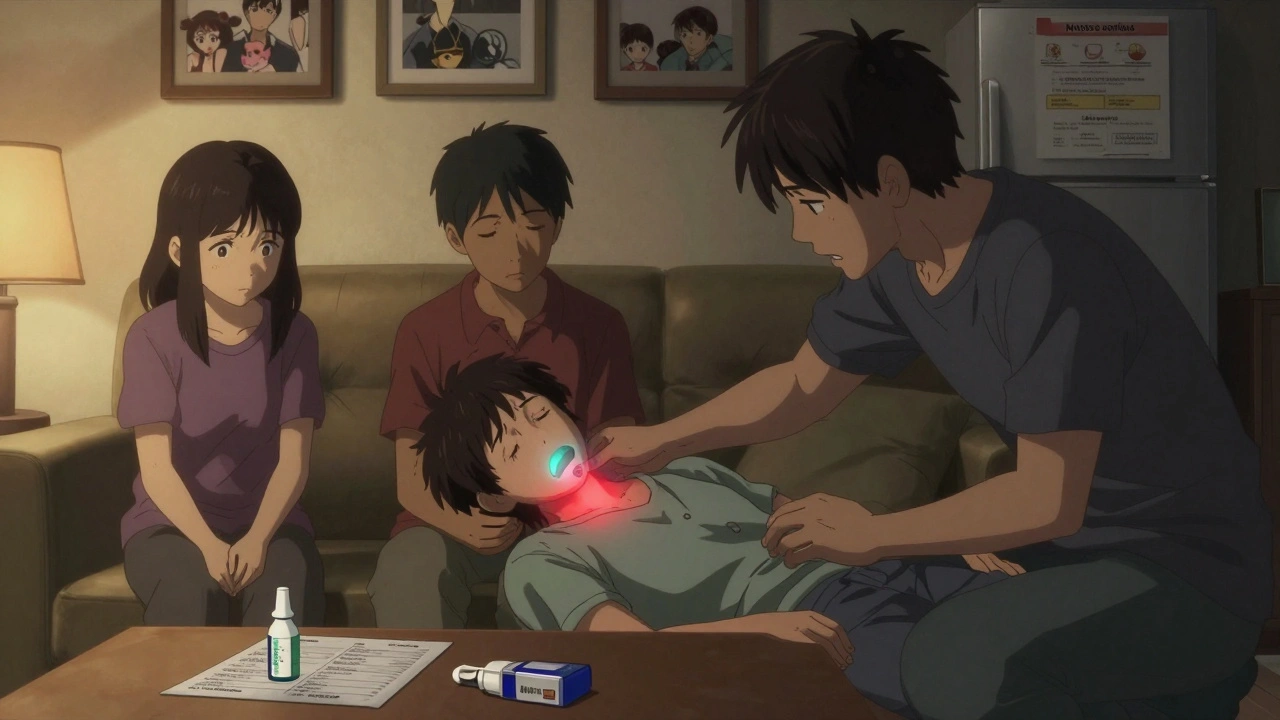
When someone you love is using drugs, you don’t wait for an emergency to learn what to do. You learn how to recognize overdose symptoms before it’s too late. It’s not about fear. It’s about being ready. In Australia, and across the world, most overdoses happen at home - not in hospitals or on the street. That means the first person to notice something’s wrong is often a parent, sibling, partner, or child. And if they know what to look for, they can save a life.
What Overdose Actually Looks Like
People often think an overdose means someone is passed out, drooling, or shaking. But it’s quieter than that. It’s stillness. It’s silence. It’s the absence of movement you expect. For opioids - like heroin, fentanyl, or prescription painkillers - there are three clear signs, called the opioid triad:- Unresponsive: Shout their name. Shake their shoulder. Rub your knuckles hard on their sternum (center of the chest). If they don’t move, react, or open their eyes, that’s a red flag.
- Slow or stopped breathing: Watch their chest. Count breaths. If they take fewer than one breath every five seconds - or stop breathing entirely - it’s an overdose.
- Blue or gray lips and fingernails: This is cyanosis. On lighter skin, it looks blue or purple. On darker skin, it looks gray, ashen, or dull. Don’t wait for blue to appear. Gray is just as dangerous.
- Skin that’s cold and clammy to the touch
- A limp body, like a ragdoll
- Gurgling or snoring sounds - sometimes called the ‘death rattle’
Stimulant Overdose Is Different - And Just as Deadly
Not all overdoses are from opioids. Methamphetamine, cocaine, and even some prescription ADHD meds can cause overdose too. Their signs are the opposite: too much, not too little. Look for:- Body temperature over 40°C (104°F) - skin feels hot, dry, flushed
- Seizures or convulsions
- Chest pain or racing, irregular heartbeat
- Extreme confusion, panic, or hallucinations
- High blood pressure - they might complain of a pounding head or blurred vision
Teaching Family Members: It’s Not About Lectures
You can’t just hand someone a pamphlet and expect them to remember. Studies show that people retain less than half the information from a talk. But when they practice - they remember. Use the Recognize-Respond-Revive method:- Recognize: Go through the signs together. Use photos or videos showing real people (with different skin tones). Point out how cyanosis looks on brown, Black, or Indigenous skin - it’s not always blue.
- Respond: Practice calling emergency services. Role-play: ‘I’m calling 000. My brother isn’t breathing. I think he’s overdosed.’
- Revive: Use a training naloxone kit. These are cheap, safe, and come with a dummy nose and fake spray. Practice on a pillow or a mannequin. Do it three times. Make it normal.
Naloxone Is Not Magic - But It’s Close
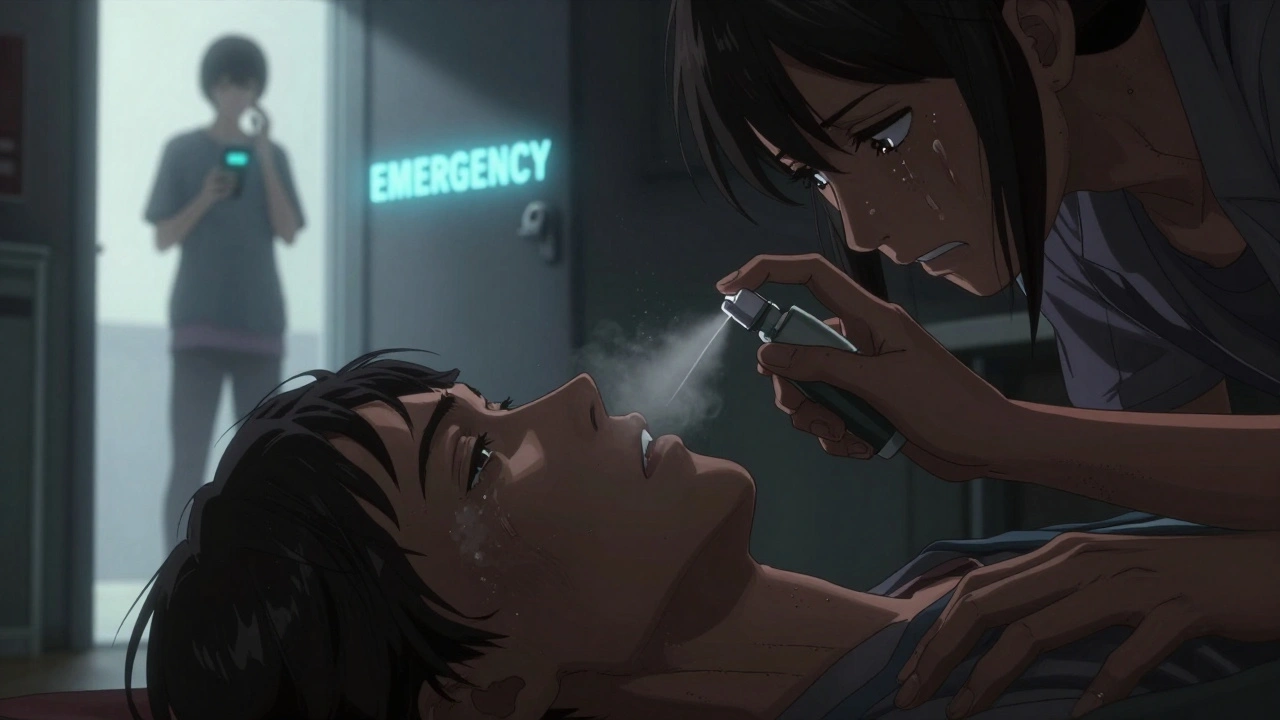
Naloxone (brand name Narcan) reverses opioid overdoses. It doesn’t work on cocaine or meth. But if you’re dealing with opioids - which make up most overdoses - it’s your best tool. It’s safe. It’s easy. You spray it in the nose. No needles. No training needed beyond what you’ll learn in 15 minutes. Get a kit. Keep it in the same place as your keys or wallet. Don’t hide it. Don’t wait until someone’s in crisis to find it. If you have a loved one using opioids, you need this. In Australia, naloxone is available over the counter at pharmacies without a prescription. You don’t need to be a doctor. You don’t need to be a nurse. You just need to be willing to act.Emotional Barriers Are Real - And They Can Be Overcome
Many families avoid this training because they’re scared. They think: ‘If I talk about this, I’m inviting disaster.’ That’s a myth. People who’ve done the training say the opposite: ‘It gave me power.’ One father in Sydney told me, ‘I used to panic every time he went out. After practicing with the kit, I felt like I could handle it. And when I did - I saved his life.’ It’s okay to feel uncomfortable. That’s normal. But discomfort now beats grief later.What to Do When You Suspect an Overdose
If you see the signs - act immediately.- Call 000. Say: ‘I think someone is overdosing. They’re not breathing.’ Don’t wait for an ambulance to arrive before doing anything else.
- Give naloxone. Spray one dose into one nostril. If they don’t respond in 2-3 minutes, give a second dose.
- Start rescue breathing. Tilt their head back, pinch their nose, and give one breath every five seconds. Keep going until they breathe on their own - or help arrives.
- Stay with them. Even if they wake up, they can crash again. Don’t leave them alone.
Where to Get Training and Kits
In Australia, you can get free naloxone kits and training from:- Local needle and syringe programs (NSPs)
- Community health centers
- Pharmacies (ask for the ‘Naloxone Take-Home Program’)
- Online through the NSW Government Overdose Prevention site (and similar state sites)
It’s Not Just About Opioids Anymore
Fentanyl is now in nearly every illicit drug - even pills that look like prescription oxycodone. It’s 50-100 times stronger than morphine. A tiny amount can kill. Fentanyl test strips cost less than $1 each. You can buy them at NSPs or online. Rub a tiny bit of the drug on the strip. If it turns positive - don’t use it. Or use with someone else present, and have naloxone ready. Teach your family how to use these strips too. It’s not about judging. It’s about safety.Why This Matters More Than You Think
Overdose deaths are rising. In 2022, over 107,000 people died from drug overdoses in the U.S. alone. In Australia, the numbers are climbing too. Most of these deaths are preventable. And the people who save lives? They’re not paramedics. They’re moms. Dads. Siblings. Partners. People who learned the signs before it was too late. You don’t need to be an expert. You just need to know what to look for - and what to do. This isn’t about policing someone’s choices. It’s about giving them a chance to live.Can naloxone hurt someone who isn’t overdosing?
No. Naloxone only works if opioids are in the system. If someone is just high or drunk, naloxone won’t hurt them - it just won’t do anything. It’s safe to use even if you’re not sure.
What if I’m afraid to call emergency services because I’m worried about legal trouble?
In Australia, all states have Good Samaritan laws that protect people who call for help during an overdose. You won’t be arrested for possession if you’re calling to save a life. Emergency services are there to help - not to punish.
How long does naloxone last? Can someone overdose again after it wears off?
Naloxone works for 30 to 90 minutes. Many opioids - especially fentanyl - last much longer. So yes, someone can go back into overdose after naloxone wears off. That’s why you must stay with them and call 000. They need medical care, not just one spray.
Can I train my whole family at once?
Yes. Group training is actually better. The more people who know what to do, the higher the chance someone will act. Use a training kit and practice together. Make it part of your family’s safety plan - like fire drills.
What if my loved one refuses to talk about this?
You can still learn. You don’t need their permission to protect them. Keep a naloxone kit handy. Know the signs. Practice the steps. If they’re in danger, you’ll be ready. Sometimes, saving a life is quieter than a conversation.

Aman deep
December 12, 2025 AT 10:41man i never thought about how cyanosis looks on darker skin until i read this
my cousin’s got dark skin and we always assumed blue lips = overdose
turns out gray = just as bad
thanks for putting this out there. i’m printing this out for my mom
she’s scared to talk about it but she’ll read this
john damon
December 14, 2025 AT 08:41omg this is so important 🙏😭 i just got a naloxone kit today from the pharmacy
no joke i cried reading this
my bro’s been using fentanyl-laced pills
we’re doing family practice tonight with the dummy spray
if you’re reading this and haven’t gotten one yet - go do it now 🚨
Monica Evan
December 16, 2025 AT 01:36the part about stimulant overdoses being the opposite of opioid ones is critical
so many people think if someone’s twitching or sweating they’re just high
but that’s a cardiac emergency
heat over 40°C? seizures? racing heart? call 911 immediately
no waiting
no hoping it passes
you’re not overreacting - you’re saving a life
and yes the test strips are cheap
i keep them in my wallet next to my ID
it’s not about judgment - it’s about survival
and if you’re scared to talk to your loved one? do it anyway
they’ll thank you later
if they’re still here
Aidan Stacey
December 17, 2025 AT 11:02THIS. THIS. THIS.
my sister overdosed last year. we didn’t know what we were doing.
we thought she was just passed out. we shook her. we yelled. we waited 12 minutes before calling 911.
she survived. but her brain didn’t.
now i carry two naloxone kits in my car.
i taught my entire extended family how to use them.
we do a mock drill every christmas.
it’s awkward. it’s weird.
but it’s better than the alternative.
if you’re reading this and you’re scared to talk about it - be scared. but do it anyway.
because grief doesn’t care how uncomfortable you are.
Jean Claude de La Ronde
December 19, 2025 AT 05:13so let me get this straight
we’re telling people to spray a drug up their nose to save someone who might’ve just taken a pill that was laced with something they didn’t know about
and the solution is… more drugs?
also why is everyone acting like this is new?
i’ve been telling my cousins to use test strips since 2018
but sure, let’s make a whole blog post about it like it’s revolutionary
also fentanyl test strips are cheaper than coffee
why are we still acting like this is a mystery?
Jim Irish
December 19, 2025 AT 21:07Overdose recognition is a public health imperative.
Family-based intervention reduces mortality.
Naloxone accessibility is proven effective.
Good Samaritan laws exist to remove barriers to emergency response.
Training should be normalized, not stigmatized.
Practical skills save lives.
Knowledge is power.
Act now.
Mia Kingsley
December 21, 2025 AT 10:23wait so now we’re telling people to spray naloxone into strangers noses like its a game
what if they’re just drunk
what if they’re on benzos
what if they’re just sleeping
and now you’re injecting a drug into someone who didn’t ask for it
and you’re telling families to practice this like its a fire drill
but what if they’re not even using opioids
what if they’re just depressed and passed out
are we just turning everyone into amateur paramedics now
who authorized this
who says we need to be ready for every possible scenario
what if i just want to let people make their own choices
and not turn my living room into a medical station
also i heard naloxone can cause withdrawal so bad people scream and punch you
is that true
or is this just fear porn
also i’m pretty sure the cdc data is cherry picked
Katherine Liu-Bevan
December 22, 2025 AT 02:33There is no such thing as over-preparing for an overdose. The statistics are clear: 89% of families who practiced with training kits responded correctly in real emergencies. Naloxone is safe, non-addictive, and only reverses opioid effects. It does not harm someone who hasn’t taken opioids. Stimulant overdoses require different interventions - heat management, immediate transport, no naloxone. But opioid overdoses are silent, and they happen at home. If you’re unsure, act. Call 911. Spray naloxone. Start rescue breathing. You will not hurt them. You might save them. And if you’re afraid of legal consequences - you’re protected by Good Samaritan laws in every state. This isn’t fear. This is responsibility.
Lisa Stringfellow
December 22, 2025 AT 17:56so let me get this straight - you’re telling people to arm their families with drugs and pretend this is normal
but what about the underlying trauma
what about the mental health crisis
what about the fact that people are using because they’re in pain
and now we’re just treating the symptom like it’s the disease
and we’re not talking about housing
or healthcare
or poverty
or how the system failed them in the first place
we’re just giving out spray bottles like it’s a party favor
and pretending we’re heroes
while the real problem keeps growing
also i heard the test strips are unreliable
so now we’re trusting plastic strips with chemicals
to decide if someone lives or dies
is this really the best we can do
Kristi Pope
December 24, 2025 AT 00:24i just got back from the community center and they gave me a free kit + a laminated card for my fridge
my niece saw me practicing with the dummy spray and asked what it was
i said ‘it’s how we keep each other safe’
she hugged me and said ‘i’m glad we’re doing this’
we’re all scared
but we’re doing it anyway
my brother doesn’t want to talk about it
so i keep the kit next to the coffee maker
and i taught my mom how to call 911 without panicking
it’s not perfect
but it’s something
and something is better than nothing
when you love someone
you show up
even if it’s awkward
even if it’s scary
even if you’re not sure you’re doing it right
you do it anyway
because silence kills
and love doesn’t wait