
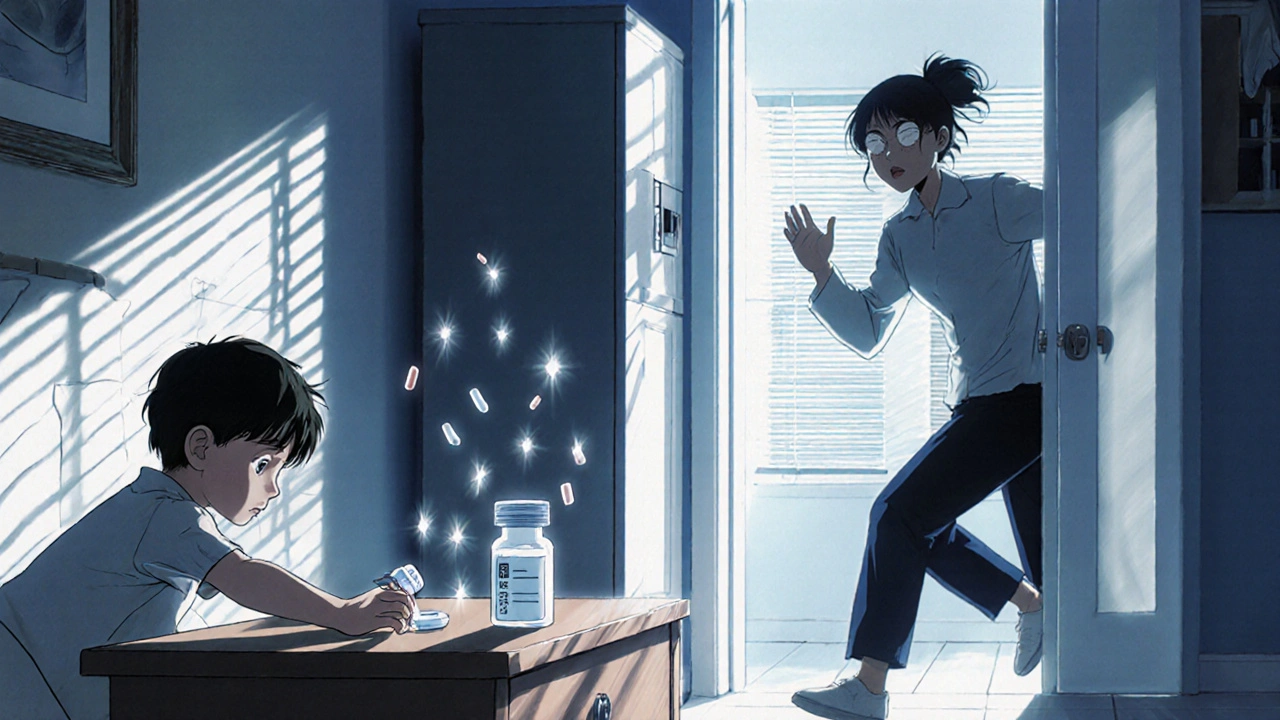
Every year, around 60,000 children under five end up in emergency rooms because they got into medicine they weren’t supposed to. That’s not a rare accident-it’s a preventable crisis. Most of these incidents happen because a pill, liquid, or patch was left within reach, even for just a few minutes. Your medicine cabinet isn’t enough. Your nightstand isn’t safe. Even a purse on the floor can be a danger zone. If you have young kids, medication safety isn’t optional-it’s as essential as locking your doors or covering electrical outlets.
Stop Relying on Child-Resistant Caps
You’ve probably heard that medicine bottles have "child-resistant" caps. That doesn’t mean they’re childproof. Kids as young as 18 months can figure out how to twist open many of these caps, especially if they’ve seen an adult do it. A 2020 JAMA study found that child-resistant caps only reduce access by half-not enough to keep a curious toddler out. And if the cap isn’t tightened after every use, it’s practically useless. One parent leaves the bottle open after giving nighttime medicine? That’s all it takes. The CDC’s "Up and Away and Out of Sight" program says the only reliable protection is keeping medicine completely out of reach and out of sight-not just capped.Where Kids Find Medicine (And Where You Should Store It)
Most accidental ingestions don’t happen in the bathroom. They happen where you least expect it. Over 78% of incidents come from nightstands, dressers, and bedside tables. Another 12% happen because someone left pills on the kitchen counter while cooking. Even 7% occur when pills fall to the floor during dosing and aren’t picked up right away. Your purse? That’s a major risk. About 15% of poisonings happen when kids grab medicine from a bag left on the couch or floor. So where should you store it? The safest spots are:- High kitchen cabinets with lockable doors (effective in 76% of homes that use them)
- The top shelf of a linen closet (used by 45% of families who’ve successfully childproofed)
- A dedicated medication safe (sales up 32% year-over-year as more parents realize their importance)
Visitors Are a Hidden Risk
You might think you’ve got your own medicine locked up. But what about your cousin’s asthma inhaler? Your friend’s painkillers? Or the grandparent’s blood pressure pills? About 28% of medication poisonings involve medicine brought into the home by guests. That’s why it’s smart to make it a habit to ask visitors to leave bags, coats, and purses in a secure spot-like a closed closet or a high cabinet. Don’t assume they know the risks. Most don’t. A simple, polite request like, "Could you put your bag in the bedroom? We’ve got little ones around," goes a long way.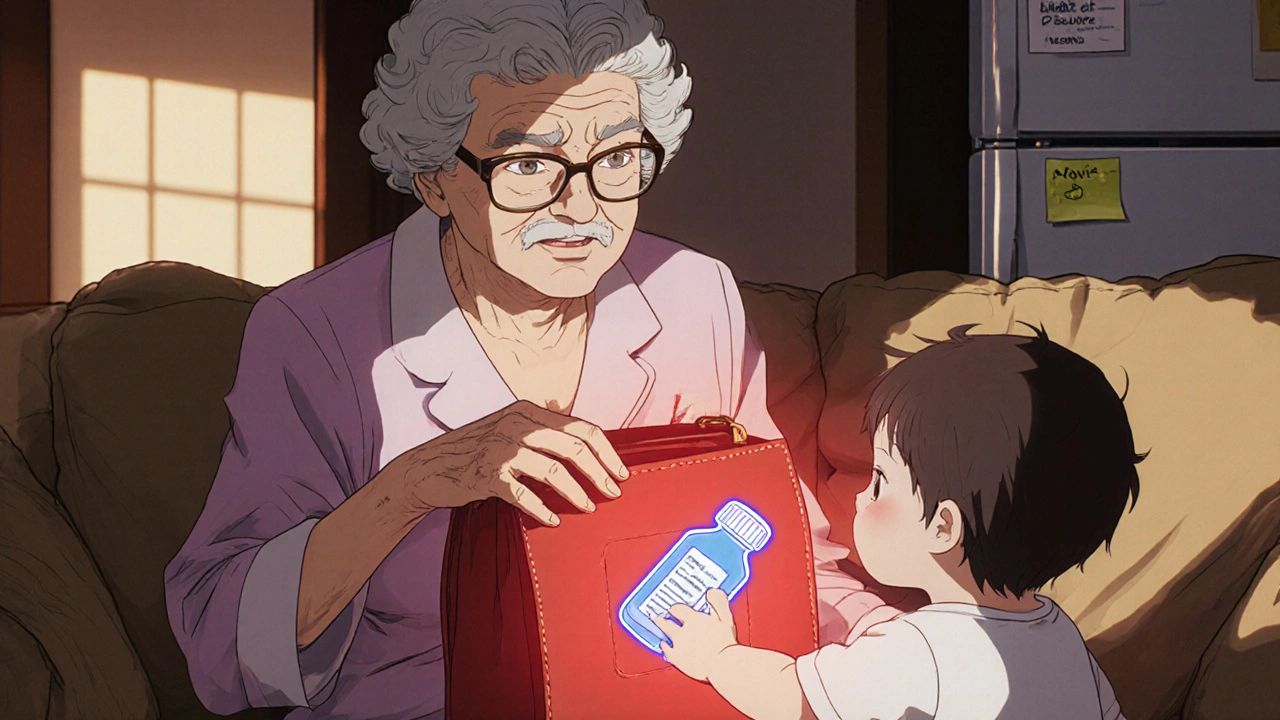
Never Call Medicine "Candy"
This one is surprising but critical. Telling a child, "This is your medicine candy," or letting them see you take pills like snacks, increases the chance of accidental ingestion by 40%. Kids learn by imitation. If medicine looks like candy and adults treat it like a treat, they’ll try to grab it. HealthyChildren.org and the American Academy of Pediatrics both warn against this. Instead, say: "Medicine is not candy. It’s only for when you’re sick, and only grown-ups give it." Use the same language every time. Repetition builds understanding. Studies show kids who hear this message regularly from age 2 are far more likely to leave medicine alone by age 5.Dosing Errors Are Just as Dangerous as Access
Even if your child doesn’t get into the bottle, they can still be harmed by wrong doses. A 2022 University of Michigan study found that kitchen spoons vary wildly in size-from 2.5mL to 7.3mL. That’s a 250% difference. Giving a child 5mL of ibuprofen with a soup spoon could mean giving them 12mL instead. That’s an overdose. Always use the dosing tool that comes with the medicine-a syringe, dropper, or cup marked in milliliters (mL). Never use household spoons. And never guess. If the label says 5mL, measure 5mL. Never assume "a teaspoon" is enough. Also, pay attention to concentration. Infant acetaminophen and adult versions can differ by 300-400%. Reading the label every single time saves lives.Write Down Instructions for Other Caregivers
If your partner, babysitter, or grandparent is giving medicine, don’t just say, "Give him the red one at bedtime." Write it down. Include:- What medicine
- How much (in mL, not teaspoons)
- When to give it
- Why it’s being given
Dispose of Unused Medicine Properly
Don’t keep old pills "just in case." The CDC found that 22% of households keep unused opioids long after they’re needed. That’s a ticking time bomb. The safest way to dispose of expired or unwanted medicine is through a take-back program at a pharmacy or police station. But if that’s not available-especially in rural areas-here’s what to do:- Take the pills out of the bottle.
- Crush them or dissolve them in water.
- Mix them with something unappetizing-used coffee grounds, kitty litter, or dirt.
- Put the mixture in a sealed plastic bag.
- Remove or black out your name and prescription info from the bottle.
- Throw the bag in the trash.
Do a Weekly Safety Sweep
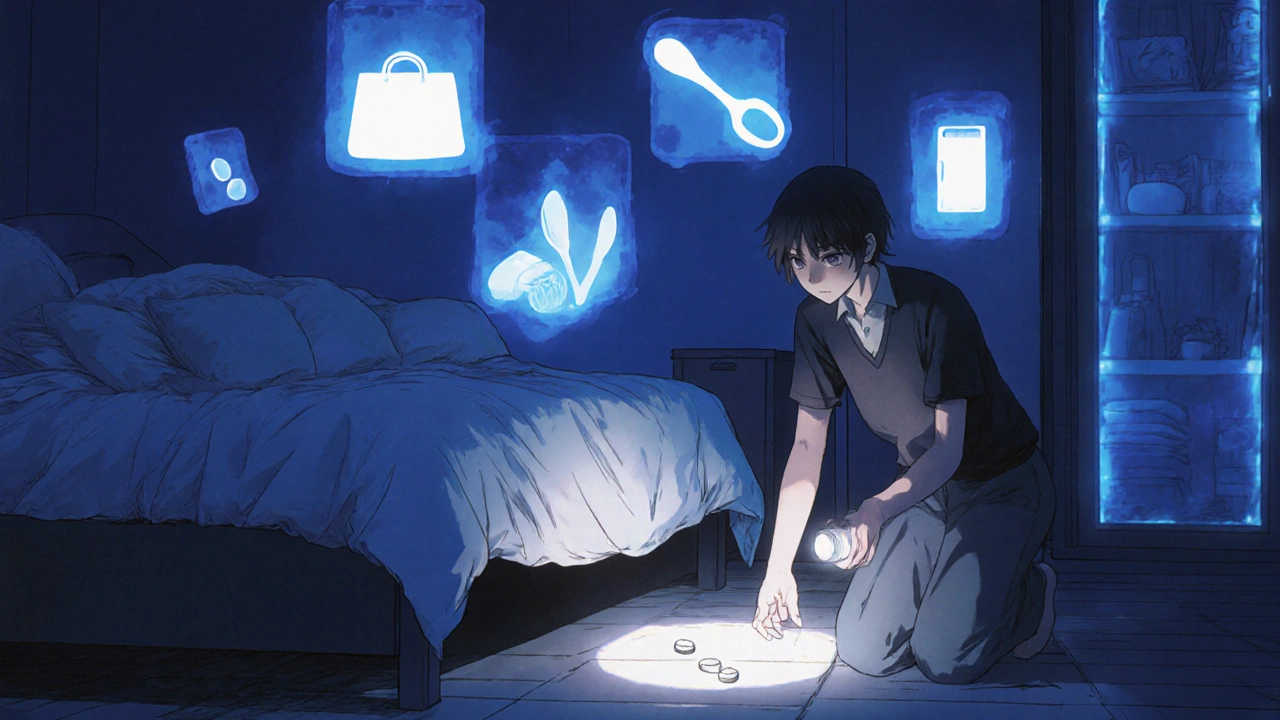
Even the best systems fail if you’re not consistent. Set a reminder every Sunday to walk through your home and check for anything out of place. Look under beds, behind couch cushions, in diaper bags, on nightstands. Did a pill fall when you were giving medicine? Did a visitor leave a bottle? Did your toddler pull a bottle out of a drawer and put it back wrong? These things happen. A five-minute weekly check catches problems before they become emergencies.Start Talking to Your Child Early
You don’t have to wait until your child is five to teach them about medicine safety. AGC Pediatrics recommends starting at age two. Use simple phrases: "Medicine is not food." "Only grown-ups give medicine." "This is for the doctor, not for you." Kids this age understand more than you think. And the earlier you start, the better. Research shows kids who get consistent messages from age 3 recognize medicine dangers 65% better by age 5 than kids who never hear it.Childproofing your home for medication safety isn’t about buying expensive gadgets. It’s about changing habits. Locking cabinets. Putting things away after every use. Saying no to "medicine candy." Writing down instructions. Checking for dropped pills. These small, daily actions add up. They’re not glamorous. But they’re the difference between a child waking up fine and a child being rushed to the ER. You don’t need to be perfect. You just need to be consistent. And that’s something every parent can do.
Are child-resistant caps enough to keep kids safe from medicine?
No. Child-resistant caps are designed to slow down kids, not stop them. Many toddlers can open them after a few tries, especially if they’ve watched an adult do it. The CDC and American Academy of Pediatrics stress that "child-resistant" doesn’t mean "childproof." The only reliable method is storing medicine out of reach and out of sight-preferably in a locked cabinet.
Can I store medicine in the bathroom?
It’s not ideal. Bathrooms are humid and hot, which can weaken medicine over time. More importantly, kids can reach sinks, counters, and cabinets. Even if you think the cabinet is high enough, children climb. Store medicine in a cool, dry place like a high kitchen cabinet or linen closet instead.
What should I do if my child swallows medicine accidentally?
Call Poison Control immediately at 1-800-222-1222. Do not wait for symptoms. Do not try to make your child vomit. Have the medicine bottle on hand when you call-this helps them identify the substance and strength. If your child is unconscious, having trouble breathing, or having seizures, call 911 right away.
Is it safe to use kitchen spoons to measure liquid medicine?
No. Household spoons vary in size by up to 250%. A teaspoon could hold anywhere from 2.5mL to 7.3mL. That means you could give your child three times too much-or not enough. Always use the syringe, dropper, or dosing cup that came with the medicine. Measure in milliliters (mL), not teaspoons or tablespoons.
Can I keep old or expired medicine in the house?
It’s risky. Unused medicine, especially opioids, painkillers, or sedatives, can be dangerous if left accessible. The CDC says 22% of households keep opioids past their needed use. Dispose of expired or unused medicine properly-through a take-back program or by mixing it with coffee grounds or kitty litter, sealing it in a bag, and throwing it in the trash. Never flush pills unless the label says to.
When should I start teaching my child about medicine safety?
Start at age two. Kids at this age begin to understand simple rules. Use clear, consistent phrases like, "Medicine is not candy. Only grown-ups give it." Studies show children who hear this message regularly from age 2-3 recognize medicine dangers 65% better by age 5 than those who don’t.


gerardo beaudoin
November 30, 2025 AT 14:20Just did a quick sweep of our place after reading this. Found three pills under the couch from last week’s cold medicine. Yikes. Now everything’s in the high kitchen cabinet with a lock. No more excuses.
Joy Aniekwe
December 2, 2025 AT 00:09Oh wow, so we’re supposed to treat medicine like it’s nuclear waste now? Next you’ll tell me to lock up water and air. I mean, really. My kid’s never even seen a pill. She thinks the syringe is a toy. But sure, let’s turn every home into a biohazard vault.
Latika Gupta
December 2, 2025 AT 11:40I live in a small apartment and we don’t have a high cabinet. I keep meds in a locked lunchbox on top of the fridge. It’s not perfect, but it’s better than the bathroom. Also, I label everything with sticky notes: ‘NOT CANDY’ in big letters. My 2-year-old ignores it, but at least I feel like I tried.
Sullivan Lauer
December 4, 2025 AT 04:40Let me tell you something-this isn’t just about safety, this is about survival. I’ve seen it. I’ve been there. My cousin’s daughter got into her grandma’s blood pressure pills because they were left on the nightstand for five minutes while she took a shower. Five minutes. Five minutes and her heart stopped. She’s fine now, thank God, but she had to be intubated, and her parents still have nightmares. This isn’t hypothetical. This is real life. Lock it up. Use the syringe. Write it down. Ask visitors to put their bags away. Don’t wait for a tragedy to make you act. Your kid’s life isn’t a gamble. And if you think your kid’s too young to be curious, you haven’t met a toddler. They’re tiny detectives with zero fear and all the time in the world. Do the work. Now.
Sohini Majumder
December 5, 2025 AT 21:35OMG. I can’t believe people still use spoons?! Like… are we in 1998?! And why are we still talking about child-resistant caps?? That’s so last decade. Also, why is everyone so obsessed with locking things? My kid just eats dirt. She’s not gonna care about pills. Also, I think the CDC is just trying to sell more safes. Like, really? A $200 box? For medicine? I’m just gonna… keep it in my purse. It’s fine. 😘
tushar makwana
December 7, 2025 AT 16:25I’m from India and we don’t always have fancy cabinets or safes. But we do have one thing: community. My neighbor watches my kids when I’m at work. I just show her where the meds are, tell her not to leave them out, and we talk about it like it’s normal. No drama. No fear. Just care. My mom used to say, ‘If you teach a child respect, they won’t touch what’s not theirs.’ Maybe we don’t need locks-we need conversations.
Mary Kate Powers
December 8, 2025 AT 23:23This is such an important post! I’m so glad you shared this. I used to keep my son’s medicine on the counter because it was easier-but now I have a small lockbox on the top shelf of the pantry. It’s a game-changer. And I started saying ‘medicine is not candy’ every single time I give him a dose. He’s 3 now and he’ll hand me the bottle and say, ‘You give it, Mommy.’ It’s tiny, but it’s working. Keep spreading this message. You’re saving lives.
Scott Collard
December 9, 2025 AT 02:21Lock it up. Use the syringe. Write it down. Stop being lazy.