
Generic Drug Savings Calculator
How Much Can You Save?
Find out your potential monthly savings by comparing your current brand-name drug cost with the generic alternative.
Your Potential Monthly Savings
$0.00
(0%)
Important: While generics are FDA-approved as therapeutically equivalent for most medications, some drugs like warfarin, levothyroxine, and phenytoin have narrow therapeutic indices where switching manufacturers requires medical supervision. Check with your pharmacist if you're on a high-risk medication.
When you pick up a prescription, you might see two different pills on the counter: one with a familiar brand name, another with a plain chemical label. You might wonder - is the cheaper one just as good? The short answer is yes, for most people, most of the time. But the labels, the colors, the shape - they’re not just random changes. They’re the result of decades of science, law, and regulation designed to make safe, effective medicine affordable. Here’s what you need to know about the real differences between generic and brand name drugs - and why the FDA says they’re therapeutically equivalent.
Same Active Ingredient, Different Name
The core of every pill - the part that actually treats your condition - is the active ingredient. For generic drugs, this is identical to the brand name version. If you’re taking lisinopril for high blood pressure, whether it’s sold as Zestril or as a generic, the molecule doing the work is exactly the same. The FDA requires this. No exceptions. The dosage, the strength, how it’s taken - all match. That’s not marketing. That’s the law.Why Do Generic Labels Look So Different?
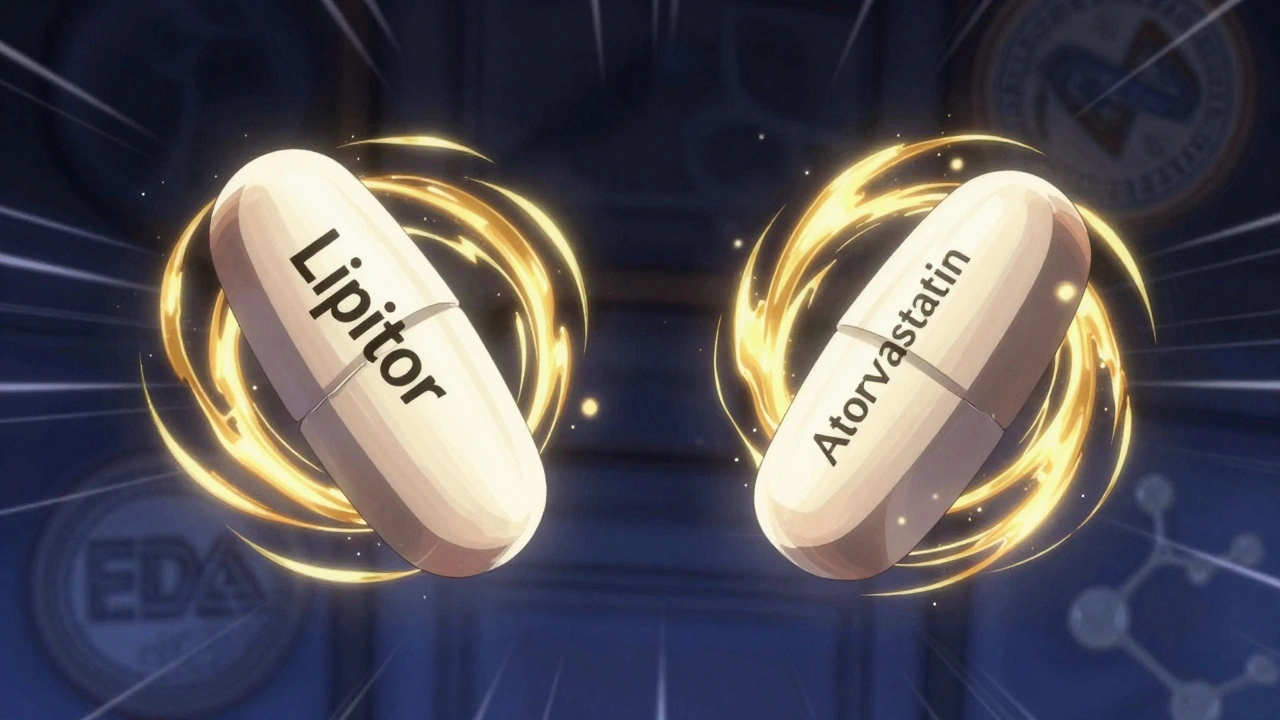
Brand name drugs have names like Prilosec, Lipitor, or Ozempic. These are trademarked. Generic versions can’t use them. Instead, they list the chemical name: omeprazole, atorvastatin, semaglutide. That’s why your pill bottle might say "Atorvastatin Calcium 20 mg" instead of "Lipitor 20 mg." It’s not hiding anything. It’s following trademark rules. The FDA mandates that the prescribing information - warnings, side effects, dosing instructions - must be identical between brand and generic. You’re getting the same safety data, just without the brand logo.What About the Color and Shape?
Ever opened a new refill and thought, "This isn’t the same pill?" You’re not imagining it. Generics are required by law to look different. They can’t copy the color, shape, or imprint of the brand name drug. This isn’t about effectiveness - it’s about avoiding trademark infringement. A blue oval pill isn’t weaker than a white capsule. It’s just a different design. Pharmacists can’t legally give you the exact same-looking pill as the brand. That’s why you might get a different-looking generic each time you refill - even from the same pharmacy. It’s not a mistake. It’s just another manufacturer using a different formulation of inactive ingredients.What Are Inactive Ingredients? And Do They Matter?
Every pill has two parts: the active ingredient and everything else - fillers, binders, dyes, coatings. These are called excipients. Brand name drugs use specific ones. Generics can use different ones. For most people, this makes zero difference. But for a small group - people with rare allergies or sensitivities - a dye or filler in one version might cause a reaction. That’s why pharmacists ask if you have any allergies when you pick up a prescription. The FDA doesn’t require generics to match excipients, but they do require that those differences don’t affect how the drug is absorbed or works in your body. That’s where bioequivalence testing comes in.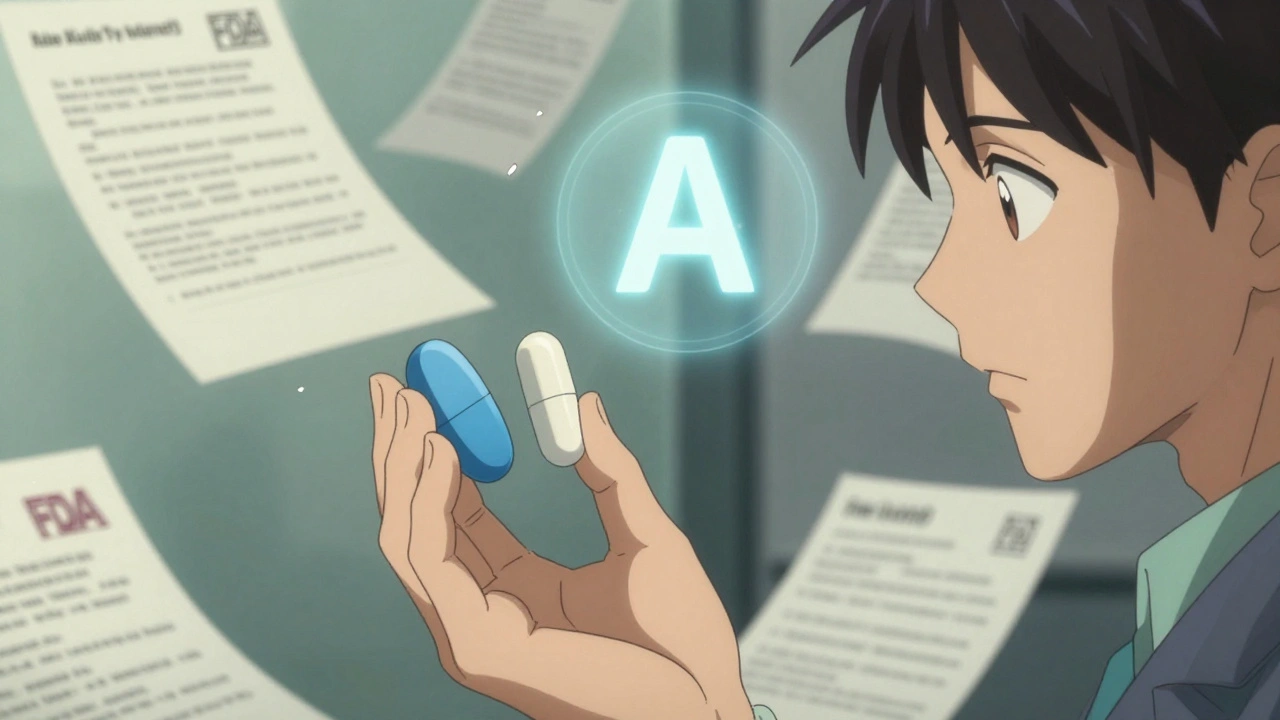
How Do We Know Generics Work the Same?
The FDA doesn’t just take a generic manufacturer’s word for it. They require bioequivalence studies. These are real, controlled tests on healthy volunteers. The drug is given, and scientists measure how much enters the bloodstream and how fast. The generic must deliver the same amount of active ingredient within 80% to 125% of the brand name’s levels. That’s a tight range - tighter than the natural variation between two batches of the same brand-name drug. A 2021 study in JAMA Internal Medicine looked at 2 million patients on generic vs. brand cardiovascular drugs. No difference in heart attacks, strokes, or deaths. The FDA’s own data shows that 90% of generics cost less than $10 per month. And they work.Cost Difference: It’s Not Close
The biggest difference? Price. Atorvastatin (Lipitor) used to cost over $375 a month. Today, the generic at Walmart is $4. That’s not a discount. That’s a revolution. From 2007 to 2016, generic drugs saved the U.S. healthcare system $1.67 trillion. In 2023 alone, they saved $313 billion. That’s money staying in patients’ pockets, not going to insurance deductibles or pharmacy co-pays. The FDA reports that generics make up 90% of all prescriptions filled in the U.S. But they account for only about 25% of total drug spending. That’s the power of competition.When Should You Be Cautious?
Not every drug is simple. Some have what’s called a narrow therapeutic index (NTI). That means even a tiny change in blood levels can cause the drug to stop working - or become toxic. The FDA specifically flags warfarin (blood thinner), levothyroxine (thyroid hormone), and phenytoin (seizure medication) as drugs where switching between brands or generics requires close monitoring. For these, your doctor might write "Dispense as Written" on your prescription. That stops automatic substitution. If you’re on one of these, don’t assume all generics are the same. Stick with the same manufacturer if possible. If you switch, get your blood levels checked.What Do Patients Really Say?
On Drugs.com, generic atorvastatin has a 6.6 out of 10 rating. Lipitor, the brand, has 6.3. Not much difference. On Reddit, pharmacists say they’ve switched thousands of patients to generics with no issues - except for levothyroxine, where they watch TSH levels closely. A Kaiser Permanente survey found 78% of people said generic cost savings helped them actually take their medicine. That’s huge. Many people skip doses because they can’t afford the brand. Generics fix that. The only real complaint? The pill looks different. 12% of patients in one study hesitated at first. But once they understood why, they were fine.
Can Your Pharmacist Switch Your Prescription?
In 49 states, yes - unless your doctor says "Do Not Substitute." Pharmacists are trained to swap generics automatically. It’s legal, safe, and encouraged. The American Medical Association says 94% of doctors are comfortable prescribing generics. You don’t need to ask. But if you’re unsure, ask. Your pharmacist can tell you if the generic you’re getting is rated "A" by the FDA’s Orange Book - meaning it’s therapeutically equivalent. Avoid "B" rated drugs unless your doctor specifically approves them.What About Complex Drugs Like Insulin or EpiPens?
Some drugs are harder to copy. Biologics - like insulin, Humira, or EpiPens - are made from living cells, not chemicals. These aren’t generics. They’re called biosimilars. They’re very similar, but not identical. The FDA has a separate approval process. For now, true generics are mostly for simple, chemical-based drugs. But that’s changing. In 2023, the FDA approved the first generic version of semaglutide (Ozempic). More complex generics are coming. The FDA’s 2024-2028 plan aims to speed up approval of these harder-to-make drugs by 20%.Bottom Line: Trust the Science, Not the Label
The pill you get from the pharmacy - whether it says "Lipitor" or "Atorvastatin" - was tested, reviewed, and approved by the FDA to do the same job. The label is different because of trademark law, not because the medicine is weaker. The color changed because of legal rules, not because it’s less effective. The cost is lower because of competition, not because corners were cut. Generics are not second-rate. They’re the backbone of affordable healthcare. For 90% of prescriptions, they’re the smart, safe, and effective choice. If you’re on a narrow therapeutic index drug, talk to your doctor. Otherwise, take the generic. Save money. Take your medicine. Feel better.Are generic drugs as safe as brand name drugs?
Yes. The FDA requires generic drugs to meet the same strict standards for safety, strength, quality, and purity as brand-name drugs. They undergo the same manufacturing inspections and must prove they work the same way in the body. Post-market surveillance through the FDA’s Adverse Event Reporting System tracks safety for both types equally.
Why do generic pills look different from brand pills?
U.S. trademark laws prevent generic manufacturers from copying the exact appearance - color, shape, size, or markings - of brand-name drugs. These differences are purely cosmetic and have no effect on how the drug works. The active ingredient and dosage are identical. The change in appearance is required by law, not a sign of lower quality.
Can I trust generics for chronic conditions like high blood pressure or diabetes?
Absolutely. Large studies, including one in JAMA Internal Medicine tracking 2 million patients, found no difference in outcomes between generic and brand-name drugs for heart disease, diabetes, and other chronic conditions. For most people, generics are just as effective. The FDA’s Orange Book lists drugs with an "A" rating, meaning they’re therapeutically equivalent.
Why are generics so much cheaper?
Generics cost less because they don’t need to repeat expensive clinical trials. Once a brand-name drug’s patent expires, other companies can apply for approval using the original safety data. This creates competition, which drives prices down. Generic manufacturers also spend less on marketing. As a result, generics typically cost 80-85% less than their brand-name counterparts.
Should I stick with the same generic manufacturer?
For most drugs, switching between generic manufacturers is safe. But for narrow therapeutic index drugs like warfarin, levothyroxine, or phenytoin, small differences in absorption can matter. If you’re on one of these, it’s best to stick with the same manufacturer unless your doctor advises otherwise. Always check your prescription label and ask your pharmacist if you’re unsure.
What does the FDA’s "A" rating mean?
The FDA’s Orange Book assigns therapeutic equivalence ratings to drugs. An "A" rating means the generic is bioequivalent to the brand-name drug and can be substituted without concern. "B" ratings mean there may be potential issues - these are rare and usually apply to complex formulations. Always look for the "A" rating when choosing a generic.

Declan Flynn Fitness
December 1, 2025 AT 16:59Been prescribing generics for 15 years. Saw a guy on warfarin switch brands and his INR went nuts. Not because the drug didn’t work - because his body got used to one filler. Now I tell patients: stick with the same maker if you’re on NTI meds. Otherwise, generics are the real MVP of modern medicine.
Also, the $4 atorvastatin at Walmart? That’s not a sale. That’s justice.
Jaswinder Singh
December 2, 2025 AT 03:51Bro I paid $400 for my blood pressure med last year. Now I pay $5. I don’t care if it’s blue or white or shaped like a dinosaur. It keeps me alive. Stop overthinking it. Your anxiety is more dangerous than the filler.
Courtney Co
December 2, 2025 AT 08:16My aunt took a generic version of her thyroid med and started having panic attacks. She swore it was the dye. She went back to brand and felt like a new person. I don’t care what the FDA says - if your body reacts, it’s not the same. And now she’s in therapy because of it.
Lydia Zhang
December 2, 2025 AT 09:00lol
Michelle Smyth
December 3, 2025 AT 14:29The entire paradigm is a neoliberal fantasy wrapped in regulatory lipstick. The FDA’s bioequivalence thresholds - 80% to 125% - are not scientific rigor, they’re a concession to capital. When you reduce pharmacological identity to statistical tolerance, you’re not ensuring equivalence - you’re commodifying physiology. The pill may contain the same molecule, but the phenomenological experience of ingestion - the psychological scaffolding of brand trust - is not quantifiable by HPLC.
And yet, we’re told to be grateful for the $4 capsule as if it’s a gift from the market gods. The real tragedy isn’t the lack of equivalence - it’s the erasure of medical autonomy in the name of efficiency.
Bee Floyd
December 4, 2025 AT 16:25Love how this post breaks it down without the usual fearmongering. I used to freak out when my generic looked different - until my pharmacist showed me the Orange Book rating. Now I just check for the ‘A’ and move on.
Also, the fact that 90% of prescriptions are generic but only 25% of spending? That’s not magic. That’s competition. And it’s beautiful.
Eric Vlach
December 5, 2025 AT 05:20My pharmacist switched me from brand to generic for my cholesterol med and I didn’t even notice. Then I checked the receipt and nearly fell out of my chair. $375 down to $6. I told my whole family. We’re all on generics now. Save your money. Take your meds. Don’t let marketing make you sick.
Kay Lam
December 5, 2025 AT 22:08I’ve been on levothyroxine for 12 years and I’ve switched generics four times. Each time my TSH went up a little. My endocrinologist told me to stick with the same one. I found a pharmacy that stocks the same manufacturer every time - it’s a pain but worth it. The FDA says it’s fine but your body doesn’t read regulatory documents. It remembers how it felt last time. If you’re on a narrow index drug, don’t treat this like choosing between Cheerios and Frosted Flakes. This is your metabolism we’re talking about. Be careful. Ask questions. Don’t let convenience override your health.
Also, if your pharmacist says ‘it’s the same’ - ask them if they’ve ever had a patient go off the rails after a switch. They’ll tell you yes. They just don’t say it unless you ask.
Matt Dean
December 7, 2025 AT 04:32People who still think brand name drugs are better are either rich or dumb. Or both. You’re paying for a logo, not a molecule. If you’re still paying full price for a generic-available drug, you’re being scammed. Go to GoodRx. Go to Walmart. Stop being a sucker.
Patrick Smyth
December 7, 2025 AT 11:42I had a cousin who died because she switched to a generic blood thinner. They said it was ‘equivalent.’ But she bled out in her sleep. Now I don’t trust anything with a chemical name. If it doesn’t have a fancy label, I won’t take it. And if you tell me otherwise, I’ll cry. I’ve lost too much.
Adrian Barnes
December 8, 2025 AT 23:25The FDA’s bioequivalence standards are a sham. The 80-125% range is statistically absurd - it allows for a 45% variance in exposure. That’s not equivalence. That’s negligence dressed in regulatory language. The fact that this is normalized speaks to the moral decay of pharmaceutical oversight. We are not measuring efficacy. We are measuring profit margins. And we are sacrificing patient autonomy on the altar of cost-cutting. The generic pill may have the same active ingredient - but it does not carry the same ontological weight of trust. And trust, in medicine, is not a variable that can be quantified.
Jeremy Butler
December 9, 2025 AT 10:30It is an empirically verifiable fact that the pharmacokinetic parameters of generic pharmaceuticals, when subjected to rigorous double-blind crossover trials under controlled conditions, demonstrate statistical non-inferiority with respect to the innovator products across the vast majority of therapeutic classes. The regulatory framework established by Title 21 CFR Part 314, Subpart B, codifies this equivalence through a series of bioavailability and bioequivalence benchmarks, which are subject to post-marketing surveillance under the MedWatch program. To assert otherwise is to conflate perceptual variance - induced by cosmetic and nomenclatural differences - with pharmacological dissimilarity. The data are unequivocal. The skepticism is anecdotal. And the cost savings are not merely fiscal - they are existential.