

Every year, millions of people in the U.S. take dietary supplements-vitamins, herbs, fish oil, probiotics, or anything labeled "natural"-thinking it’s harmless. After all, it’s not a prescription. It’s not a drug. It’s just a pill from the shelf. But here’s the truth: supplements can interact with your medications, worsen chronic conditions, and even land you in the emergency room. And the biggest danger? Not the product itself. It’s that you didn’t tell your doctor about it.
Most People Don’t Tell Their Doctors About Supplements
If you’re taking supplements, you’re not alone. Nearly 8 out of 10 American adults use them. But only 1 in 3 tells their doctor. That’s not a small oversight. It’s a blind spot in your care. A 2019 study found that just 33% of people using herbal or dietary supplements disclosed them to their conventional healthcare provider. Even worse? Among people with diabetes, high blood pressure, or heart disease-those most at risk for dangerous interactions-the disclosure rate is only 51%. Why? Many think their doctor won’t care. Or that supplements are "natural," so they’re safe. Others fear being judged. One patient told the AMA Journal of Ethics they didn’t mention ginkgo biloba because they thought, "My doctor doesn’t need to know about natural stuff." That mindset costs lives. Ginkgo can thin your blood. When taken with warfarin, it can cause internal bleeding. You wouldn’t skip telling your doctor about your blood thinner. Why skip telling them about something that does the same thing?Supplements Aren’t Regulated Like Medicines
Here’s what most people don’t realize: supplements aren’t tested for safety or effectiveness before they hit store shelves. Unlike prescription drugs, which go through years of clinical trials, supplements are regulated as food. Under the Dietary Supplement Health and Education Act (DSHEA) of 1994, manufacturers don’t need FDA approval to sell anything-unless it’s proven dangerous after people get hurt. That means you could be buying a product with:- Wrong dosage (too much or too little)
- Contaminants like heavy metals or hidden drugs
- Ingredients not even listed on the label
These Are the Supplements Most Likely to Cause Problems
Not all supplements are equal. Some are far more dangerous when mixed with common medications. Here are the top offenders with shockingly low disclosure rates:- St. John’s wort - Used for mood, but cuts the effectiveness of 57% of prescription drugs, including birth control, antidepressants, and blood thinners. Disclosure rate: just 8.4%
- Ginkgo biloba - Taken for memory, but increases bleeding risk when combined with aspirin, warfarin, or NSAIDs. Disclosure rate: 12.7%
- Garlic - Often taken for heart health, but can thin blood. Disclosure rate: 10.9%
- Glucosamine/chondroitin - Popular for joints, but may interfere with blood sugar control in diabetics. Disclosure rate: 22.3%
- Echinacea - Used for colds, but can trigger immune reactions in people on immunosuppressants. Disclosure rate: 18.9%
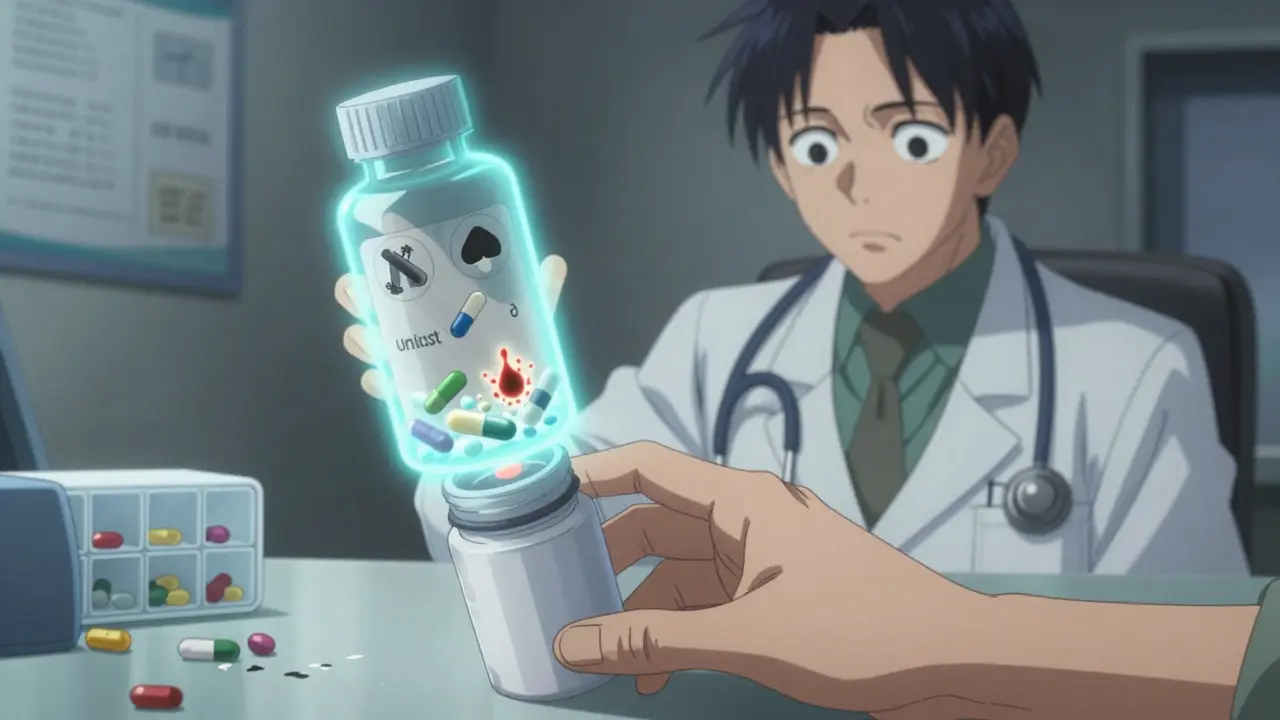
Why Doctors Don’t Always Ask (And How to Fix It)
It’s not just patients who drop the ball. Many providers don’t ask. Medical schools in the U.S. give students an average of just 2.7 hours of training on supplements over four years. That’s less than one lecture. So when a patient says, "I take some vitamins," the doctor might not know what to look for. But here’s the good news: when doctors ask the right way, patients talk. A 2018 study found that when physicians asked, "What supplements or vitamins are you taking that your pharmacist might not know about?"-disclosure jumped from 29% to 72%. Why does this wording work? It normalizes the conversation. It doesn’t sound judgmental. It assumes you’re taking something, and it invites honesty. Nurses and pharmacists are already using this line. You can too.What to Do Before Your Next Appointment
You don’t need to wait for your doctor to ask. Take control. Here’s a simple 3-step plan:- Make a list. Write down every supplement, herb, vitamin, or natural product you take-even if you only use it once a week. Include the brand name, dosage, and how often you take it. Don’t skip the "I only take it when I feel a cold coming on" ones.
- Bring it with you. Don’t rely on memory. Bring the bottles or a printed list. If you use a pill organizer, snap a photo of it.
- Ask the question. Say: "I want to make sure everything I’m taking is safe with my other meds. Can we go over this list?"

What Happens When You Do Disclose
People who talk openly about supplements don’t get scolded. They get helped. A 2022 survey found that 89% of patients felt respected and heard when discussing supplements with naturopathic doctors. But only 34% felt the same with conventional providers. That gap isn’t because naturopaths are better people-it’s because they’re trained to expect it. When you disclose, your doctor can:- Adjust your prescription dose to avoid interaction
- Recommend safer alternatives
- Stop you from wasting money on something that doesn’t work
- Prevent a hospital visit
The Bigger Picture: This Is a System Failure
The problem isn’t just you forgetting to mention your turmeric capsules. It’s that the system doesn’t make it easy to talk about them. Medical records don’t have a standard place to log supplements. Insurance doesn’t pay for time spent reviewing them. Doctors are rushed. Patients feel awkward. But change is coming. The FDA released its Dietary Supplement Ingredient Database (DSID-5) in January 2023, giving clinicians verified ingredient data for over 650 products. Epic Systems, the biggest electronic health record platform, is adding a dedicated supplement module in mid-2024 that will flag dangerous interactions automatically. Still, technology won’t fix this alone. Human communication will.Final Thought: Your Safety Is Your Responsibility
You wouldn’t hide a prescription from your doctor. Don’t hide a supplement either. "Natural" doesn’t mean safe. And silence doesn’t mean harmless. If you’re taking anything outside your prescribed meds-even something you bought online or got from a friend-tell your care team. Write it down. Bring it with you. Ask the question. It’s not about being perfect. It’s about being honest. One conversation could prevent a crisis.Do I really need to tell my doctor about vitamins and supplements if they’re over-the-counter?
Yes. Over-the-counter doesn’t mean safe. Many supplements interact with prescription drugs, affect blood sugar or blood pressure, or increase bleeding risk. Even common ones like vitamin E, fish oil, or garlic can interfere with medications. Your doctor needs the full picture to keep you safe.
What if my doctor dismisses supplements as "just pills"?
It’s frustrating, but common. Many doctors aren’t trained in supplement safety. Try saying: "I’m not asking you to endorse it-I just want to make sure it won’t interfere with my other treatments." If they still dismiss it, consider asking for a referral to a pharmacist or integrative health specialist who understands interactions.
Are natural products safer than synthetic ones?
No. "Natural" is a marketing term, not a safety guarantee. Poison ivy is natural. Arsenic is natural. Many dangerous substances come from plants. Supplements made from herbs can contain active compounds as potent as drugs. Just because something comes from a tree doesn’t mean it’s harmless.
Can supplements cause liver damage?
Yes. In 2022, the FDA reported over 1,000 cases of liver injury linked to dietary supplements. Green tea extract, weight-loss products with hidden stimulants, and some herbal blends are common culprits. Symptoms include jaundice, dark urine, and unexplained fatigue. If you start taking a new supplement and feel unusually tired or yellowish, stop it and see your doctor immediately.
How do I know if a supplement brand is trustworthy?
Look for third-party testing seals like USP, NSF Certified for Sport, or ConsumerLab. These organizations test for purity, potency, and contamination. Avoid brands that make bold claims like "cures arthritis" or "boosts immunity"-those are red flags. The FDA doesn’t approve supplements, so certification from an independent lab is your best protection.
Should I stop taking supplements before surgery?
Yes, most of them. Supplements like ginkgo, garlic, fish oil, and vitamin E can increase bleeding risk. Others, like St. John’s wort, can interfere with anesthesia. Always tell your surgeon and anesthesiologist about everything you take-at least two weeks before surgery. Don’t assume they’ll ask.
Is it okay to take supplements with my prescriptions if I space them out?
Not necessarily. Some interactions happen regardless of timing. St. John’s wort changes how your liver processes drugs-so even if you take it hours apart, it can still reduce your medication’s effectiveness. Other supplements compete for absorption in the gut. The only safe way to know is to talk to your doctor or pharmacist.
What if I’m taking supplements because my doctor won’t help me with my condition?
That’s a common reason people turn to supplements. But hiding them doesn’t solve the problem. Instead, say: "I’ve been trying [supplement] because I’m still struggling with [symptom]. Can we talk about other options?" This opens the door to real solutions-whether it’s adjusting your medication, referring you to a specialist, or exploring evidence-based alternatives. Your doctor can’t help if they don’t know what you’re doing.


Angela Goree
January 4, 2026 AT 11:53Look, I don’t care if it’s ‘natural’-if it’s in a bottle and I’m swallowing it, it’s a drug. My cardiologist didn’t blink when I told him I was taking fish oil; he just said, ‘Good, but cut it to 1g.’ That’s because he knows what’s in it. The FDA doesn’t regulate it? Fine. I’ll regulate MYSELF. And if you’re not telling your doctor, you’re not just being careless-you’re being selfish.
Hank Pannell
January 4, 2026 AT 15:52The epistemological gap here is staggering. We treat pharmacological agents as binary-prescription = regulated = safe, supplement = unregulated = benign. But biochemistry doesn’t care about marketing semantics. The molecular interactions of hyperforin in St. John’s wort with CYP3A4 substrates are identical whether the compound was synthesized in a lab or extracted from a plant. The regulatory framework is archaic, not because supplements are harmless, but because lobbying won over science. We need a paradigm shift from ‘natural vs synthetic’ to ‘pharmacologically active vs inert.’
Lori Jackson
January 6, 2026 AT 01:45Ugh. I can’t believe people still think ‘natural’ means safe. It’s like saying ‘raw milk is healthier’ or ‘cigarettes are fine if they’re organic.’ You’re not a hero for taking ginkgo-you’re a walking liability. And your doctor doesn’t care because they’ve seen 47 patients this week who did the exact same thing. You think you’re being proactive? You’re just another data point in a preventable ER visit. Honestly, if you need a blog post to understand this, maybe you shouldn’t be self-prescribing anything.
Wren Hamley
January 7, 2026 AT 08:27Supplements are the wild west of wellness-gunslingers with gummies, outlaws with omega-3s. I took ashwagandha for stress, thought I was zen-ing my way to calm. Then I got heart palpitations. Turned out the bottle had 3x the labeled dose… and a hidden stimulant. My pharmacist laughed and said, ‘Welcome to the supplement jungle.’ Now I only buy USP-certified stuff. If your bottle doesn’t have a seal, it’s not a supplement-it’s a gamble with your liver.
Sarah Little
January 7, 2026 AT 21:09Can I ask-do you actually write down every supplement you take? Like, in a notebook? Or do you just remember ‘the green one’ and ‘the blue one’? I’ve seen people bring in 12 bottles and say, ‘I think I take the turmeric on Tuesdays.’ If you can’t track it, you’re not managing it. You’re just winging it. And that’s not wellness-that’s chaos.
innocent massawe
January 9, 2026 AT 15:44Peace. I take moringa from my village-no label, no pharmacy. But I tell my doctor. He smiles and says, ‘Tell me how it makes you feel.’ No judgment. Just listening. Maybe we don’t need more rules. Maybe we just need more trust. 🙏
veronica guillen giles
January 11, 2026 AT 09:16Oh, so now we’re blaming patients for doctors’ laziness? Let me guess-your doctor also doesn’t ask about your sleep, your stress, or whether you eat vegetables. But hey, let’s put the whole burden on the person who’s already overwhelmed, stressed, and trying to survive. Meanwhile, medical schools spend 2.7 hours on supplements? That’s not negligence-that’s institutional failure. And you’re mad at the person who didn’t mention their probiotic? Really?
Ian Ring
January 11, 2026 AT 12:10Brilliant post. I’ve been telling my GP about my supplements for years-she finally added a field to her EHR. It’s a small thing, but it matters. I also print a list and bring it every visit. Even if they don’t ask, I say, ‘Here’s what I’m taking-just in case.’ It’s not about being perfect. It’s about being responsible. And yes-I do it even for ‘just vitamin D.’ Because I’ve seen what happens when you don’t. 😌
erica yabut
January 13, 2026 AT 03:56Let’s be real: if you’re taking ‘natural’ supplements, you’re probably the same person who thinks ‘detox teas’ work and buys essential oils for ‘energy vibes.’ You’re not a health enthusiast-you’re a marketing target. And your doctor isn’t ignoring you because they’re uneducated-they’re ignoring you because you’re not actually seeking health. You’re seeking validation from a bottle labeled ‘ancient wisdom.’ Wake up.