
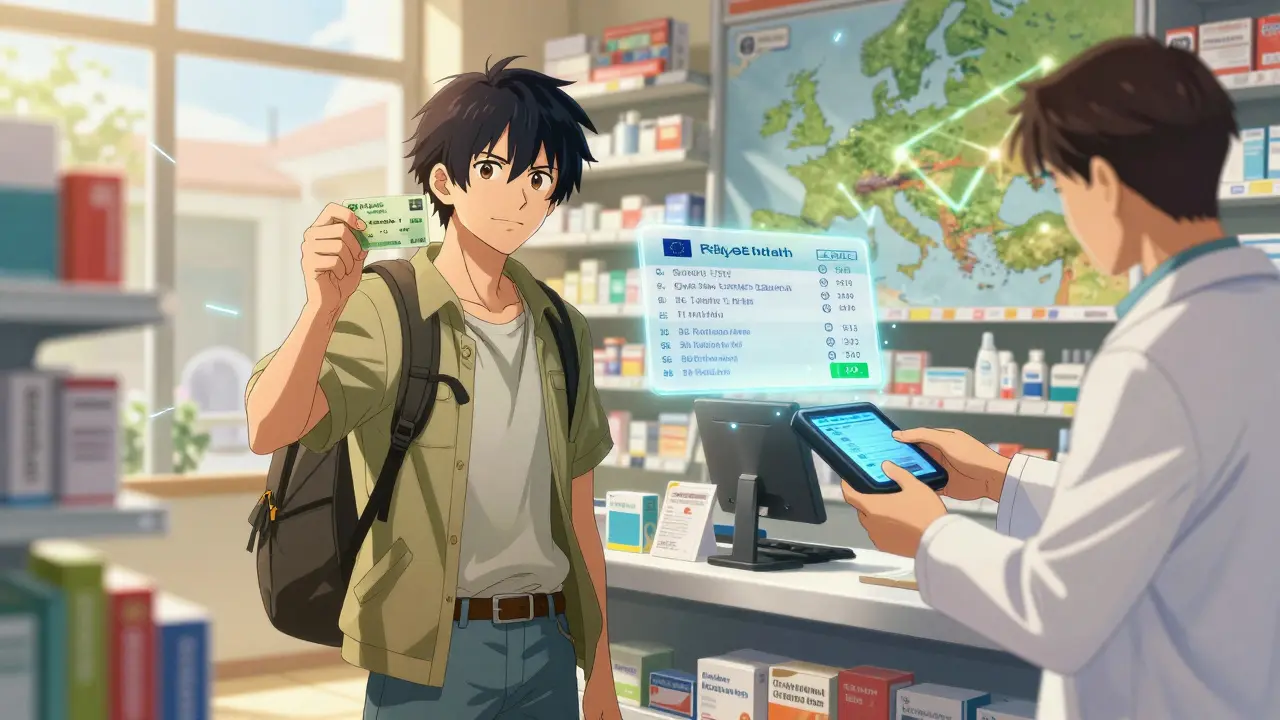
Imagine needing your regular blood pressure medication while on vacation in Italy, but your local pharmacy back home is closed. In the EU, you don’t have to panic. Thanks to a digital system called ePrescription, you can walk into a pharmacy in Rome, show your ID, and get your prescription filled - even if it was issued in Germany, Poland, or Spain. This isn’t science fiction. It’s real, and it’s changing how millions of Europeans access generic drugs across borders.
How the EU’s Cross-Border Pharmacy System Actually Works
The backbone of this system is the eHealth Digital Service Infrastructure (eHDSI), branded as MyHealth@EU. Launched in 2011 under Directive 2011/24/EU, it lets patients use electronic prescriptions issued in one EU country at pharmacies in another. Today, 27 EU and EEA countries are connected. That means if you’re prescribed a generic version of metformin in France, you can pick it up in Austria, Portugal, or Finland - as long as the pharmacy is connected to the system. Here’s how it works in practice:- You get a digital prescription from your doctor at home - no paper needed.
- You log into your national health portal (like Germany’s eGK or Spain’s SNS) and authorize your prescription to be shared abroad.
- You travel to another EU country and visit a participating pharmacy.
- The pharmacist scans your ID or uses your e-Health card to pull up your prescription securely from your home country’s system.
- They dispense the medication - usually a generic version - and the transaction is recorded in both systems.
What Medications Can You Get Across Borders?
The system works for most prescription medications, especially generics. That’s because generics are cheaper, widely available, and have the same active ingredients as branded drugs. Common examples include:- Atorvastatin (for cholesterol)
- Levothyroxine (for thyroid)
- Metformin (for diabetes)
- Omeprazole (for acid reflux)
- Amoxicillin (antibiotic)
Where It Works Best - And Where It Falls Apart
Cross-border pharmacy services work best in border regions. A 2025 survey by Copenhagen Economics found that 78% of patients in the Netherlands-Germany border area successfully filled prescriptions abroad. In contrast, only 42% of people in non-border areas had the same success. Why? Because border towns often have established networks. Pharmacies there are used to handling foreign prescriptions. Pharmacists speak multiple languages. They know how to navigate the system. In places like southern France or northern Italy, cross-border pharmacy use is common. But in countries like Ireland or Greece, the system is less familiar. Ireland has strict rules: prescriptions from outside the EU/EEA - including the UK - are invalid. Even if you got a prescription from a UK telehealth service, Irish pharmacists are legally required to refuse it. That’s because the UK is no longer part of the EU’s health data network. The same goes for non-EU countries like Switzerland or Norway - even though they’re in the EEA, their systems aren’t fully synced yet.
The Regulatory Patchwork: Not All Countries Are Equal
Here’s the biggest problem: the EU sets the rules, but each country implements them differently. Only 8 out of 27 EU countries have clear, detailed rules for how pharmacists should handle cross-border e-prescriptions. That means a pharmacist in Sweden might be trained and confident handling foreign prescriptions. One in Bulgaria might have never seen one before. Training gaps are real. A 2025 EAEP study found pharmacists need about 40 hours of specialized training to handle cross-border workflows. That includes understanding:- Different prescription formats
- Language barriers (medication names vary)
- How to verify prescriber credentials
- How to check if a drug is approved in their country
Why This Matters for Generic Drug Prices
Cross-border mobility isn’t just about convenience - it’s about competition. When patients can easily buy generics from countries where prices are lower, it puts pressure on national drug pricing systems. For example, a 30-day supply of omeprazole might cost €12 in Germany but only €4 in Poland. That’s a huge difference. The European Commission estimates that better cross-border access could reduce overall EU drug spending by up to 15% over the next decade. That’s billions of euros saved - mostly on generics. But it also creates tension. Some national health systems fear losing control over pricing. Others worry about stock shortages if too many patients buy abroad. To address this, the EU introduced the Critical Medicines Act in 2025. It now requires drug makers to report supply and demand data across borders. If a generic drug is running low in one country, the system can redirect supply from another. This is the first time the EU has created a real-time monitoring tool for medicine shortages.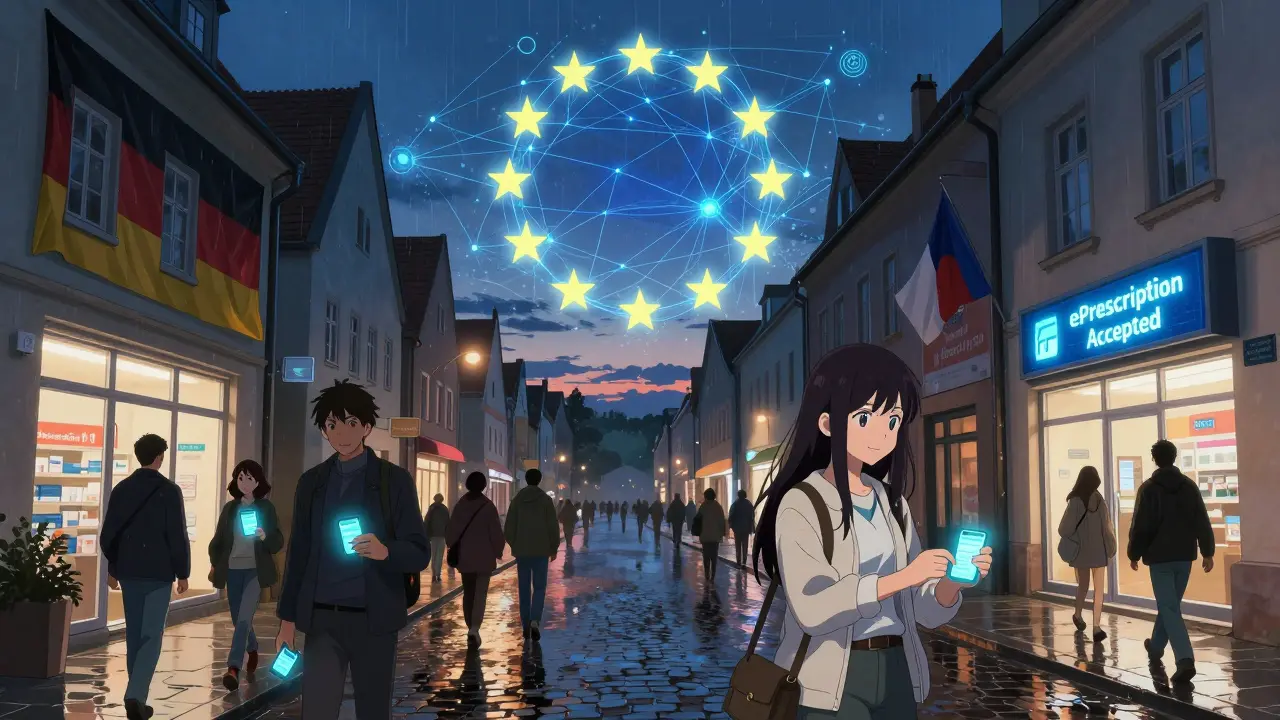
What Patients Need to Know Before Trying It
If you’re thinking of using cross-border pharmacy services, here’s what you need to do:- Confirm your prescription is digital. Paper prescriptions won’t work across borders.
- Check if your country is connected. Use the MyHealth@EU portal to see if your e-prescription can be shared.
- Call the pharmacy ahead. Ask if they accept foreign e-prescriptions and if they stock your specific generic.
- Bring ID and your e-Health card. Some countries require both.
- Know your rights. Under EU law, you’re entitled to get the same medication abroad - even if it’s a different brand or manufacturer.
The Future: What’s Coming Next
By 2027, the MyHealth@EU system will expand to include lab results, hospital discharge summaries, and even medical images. That means if you have a heart condition and need a specialist abroad, your full medical history will be available - not just your prescription. Iceland will complete its integration by August 31, 2025, making the system truly pan-European. The EU is also pushing for standardized reimbursement rules. Right now, if you buy a drug abroad, you might have to pay upfront and then apply for reimbursement later - a messy, slow process. New rules in 2026 aim to fix that. But challenges remain. The EAEP warns that without faster regulatory alignment, digital inclusion will stay uneven. Some countries are moving fast. Others are stuck in paper systems. The goal is clear: no EU citizen should be denied medicine because of a border. But getting there takes more than technology - it takes political will.Frequently Asked Questions
Can I use my EU e-prescription in the UK after Brexit?
No. The UK left the EU’s eHealth infrastructure after Brexit. UK-issued prescriptions are not recognized in EU countries, and EU prescriptions are not accepted in UK pharmacies unless they meet specific UK requirements. If you’re traveling between the UK and EU, carry enough medication for your trip or get a new prescription locally.
Are generic drugs from other EU countries safe?
Yes. All generic drugs sold in the EU must meet the same strict quality, safety, and efficacy standards set by the European Medicines Agency. A generic metformin from Poland is chemically identical to the one from France. Differences in color or shape are only due to inactive ingredients - they don’t affect how the drug works.
What if the pharmacy abroad doesn’t have my medication?
The pharmacy can order it from their wholesaler, but they’re not required to stock every drug. If they can’t fill your prescription immediately, ask if they can transfer it to another nearby pharmacy that does. Some border towns have cooperative networks that share stock.
Do I need to pay upfront for cross-border prescriptions?
Usually, yes. You’ll pay the local price at the foreign pharmacy. Then, you can apply for reimbursement from your home country’s health insurer. The process varies by country - some offer direct billing, others require you to submit receipts. Check with your national health authority before traveling.
Can I get controlled substances like opioids across borders?
Very rarely. Controlled substances are heavily restricted. Most EU countries require special permits or in-person consultations for these drugs. Even with an e-prescription, you won’t be able to pick up opioids or strong sedatives abroad without prior approval from local authorities.

Robin Williams
January 14, 2026 AT 22:59bro this is wild i had no idea you could just walk into a pharmacy in italy with your german script and walk out with your meds like its a vending machine. the eu is basically a magic kingdom for health care and we over here still arguing about whether paper prescriptions are "too old school"
Gregory Parschauer
January 15, 2026 AT 09:39Let me be clear: this isn’t "convenience." It’s systemic pharmaceutical harmonization under the EU’s regulatory hegemony. The eHDSI infrastructure leverages GS1 DataMatrix standards and cross-border interoperability protocols to enforce pharmacovigilance compliance across 27 sovereign states - a feat of bureaucratic engineering that renders national formularies obsolete. You’re not "getting your meds," you’re participating in a supranational pharmacoeconomic ecosystem that prioritizes cost-efficiency over therapeutic individuality. And don’t get me started on the liability fragmentation when a Polish generic with different lactose content triggers an adverse reaction in a French patient. This isn’t progress - it’s regulatory colonization.
laura Drever
January 16, 2026 AT 05:28so u can get metformin in spain but not in ireland? lol. who cares. also why do they even bother with all this tech if half the pharmacists dont know how to scan a qr code
Anny Kaettano
January 17, 2026 AT 05:19This is actually one of the most beautiful things the EU has done. Imagine being a diabetic in rural Poland and your local pharmacy doesn’t stock levothyroxine - but the next town over is in Slovakia, and they do. You don’t have to drive 3 hours, beg your doctor for an emergency script, or risk missing a dose. The system doesn’t just save time - it saves lives. And yes, the pills might look different, but the science is the same. We need more of this, not less. If we can share data across borders for medicine, why can’t we do it for mental health records too?
mike swinchoski
January 18, 2026 AT 09:13you think this is revolutionary? i’ve been to germany. their pharmacists still hand you a paper receipt like it’s 1998. and don’t even get me started on how they pronounce "omeprazole." it’s "oh-meh-prah-zole," not "ohm-pra-zole." you’re not getting medicine, you’re getting a language lesson.
Scottie Baker
January 20, 2026 AT 08:58you ever tried getting a prescription filled in a small town in greece? the pharmacist stares at you like you just asked for a unicorn. they’ve never seen an e-prescription. they think it’s a scam. i had to call my doctor back home and read him the barcode out loud. this system sounds great on paper - in practice, it’s a glitchy mess with 30% failure rates. stop romanticizing bureaucracy.
John Tran
January 20, 2026 AT 11:26Think about it - we’re not just talking about pills. We’re talking about identity. When you walk into a pharmacy in Lisbon and they pull up your prescription from your home country, you’re not just a patient - you’re a digital citizen of Europe. The pill you hold? It’s not just chemistry. It’s data. It’s sovereignty. It’s the quiet revolution of a continent deciding that your health shouldn’t stop at a border. And yet… we’re still arguing over whether a blue pill is the same as a white one. We’re so obsessed with surface differences, we forget the deeper truth: the active ingredient doesn’t care about your passport. It only cares if you’re alive to take it.
Trevor Whipple
January 21, 2026 AT 04:52lol i tried this in portugal last year. pharmacy guy looked at my german script and said "we dont do that here." i showed him the eu website. he shrugged and handed me a bag of gummy bears "for the stress." this system is a myth. 90% of pharmacies dont even know what ePrescription means. they think its a new brand of painkiller. also, why are all the generics in italy shaped like tiny rockets? who approved that?
Avneet Singh
January 22, 2026 AT 11:13Let’s be honest: this is just another EU overreach disguised as patient empowerment. The real motive? To force national drug pricing systems into compliance with low-cost generics from Eastern Europe. You think this is about access? It’s about market consolidation. And the GS1 DataMatrix mandate? That’s not security - it’s vendor lock-in for German tech firms. Meanwhile, pharmacists in Bulgaria are being asked to decode digital prescriptions without training, language support, or even stable internet. This isn’t innovation. It’s exploitation under a humanitarian guise.
Pankaj Singh
January 22, 2026 AT 22:21the only thing this system proves is that the eu is full of bureaucrats who think software fixes everything. you can’t fix a broken healthcare system with a barcode. half these countries can’t even get their own national systems to work. now you want them to talk to each other? good luck. also, why is the uk the only one that got this right? because they said no and went home.
Kimberly Mitchell
January 23, 2026 AT 16:42It’s ironic. We’re told this system promotes equity, yet it disproportionately benefits urban, digitally literate populations. Rural elderly patients? Those without smartphones or eHealth cards? They’re left behind. The EU touts this as inclusive, but the infrastructure assumes a baseline of tech fluency that simply doesn’t exist for millions. And the reimbursement chaos? You pay upfront in Poland, wait 12 weeks for Germany to process your claim, then get denied because your receipt didn’t have the right VAT code. This isn’t patient-centered care - it’s bureaucratic theater dressed in EU blue.
Vinaypriy Wane
January 23, 2026 AT 20:25I appreciate the intent behind this system - truly. But let’s not pretend it’s flawless. My aunt in Croatia got a prescription for omeprazole in Slovenia - the pill looked completely different. She panicked, thought it was counterfeit, and threw it out. She didn’t know the active ingredient was identical. That’s not the system’s fault - it’s a communication failure. We need multilingual patient guides, visual aids in pharmacies, and mandatory training. Not just tech. Human understanding. We’re treating patients like data points, not people. Let’s fix that before we expand to lab results.
Diana Campos Ortiz
January 24, 2026 AT 20:32my mom’s in her 70s and she just used this system in france last month. she didn’t know what "ePrescription" meant, but the pharmacist held her hand, showed her the screen, and said "same medicine, different color." she cried. not because it worked - because someone cared enough to explain. this isn’t about tech. it’s about dignity. the system’s imperfect, but it’s making people feel seen. that’s worth fighting for.
Jesse Ibarra
January 26, 2026 AT 07:55YOU THINK THIS IS GOOD? LET ME TELL YOU ABOUT THE REAL TRAGEDY. A MAN IN SPAIN HAD A HEART ATTACK BECAUSE HIS E-PRESCRIPTION FOR ATORVASTATIN WASN’T RECOGNIZED IN A BORDER PHARMACY. THE PHARMACIST SAID "I’VE NEVER SEEN THIS FORMAT." HE DIED WAITING. THE EU’S SYSTEM ISN’T A MIRACLE - IT’S A GARBAGE FIRE WITH A FANCY LOGO. AND NOW THEY WANT TO ADD LAB RESULTS? WHAT’S NEXT - DIGITAL FUNERALS?