
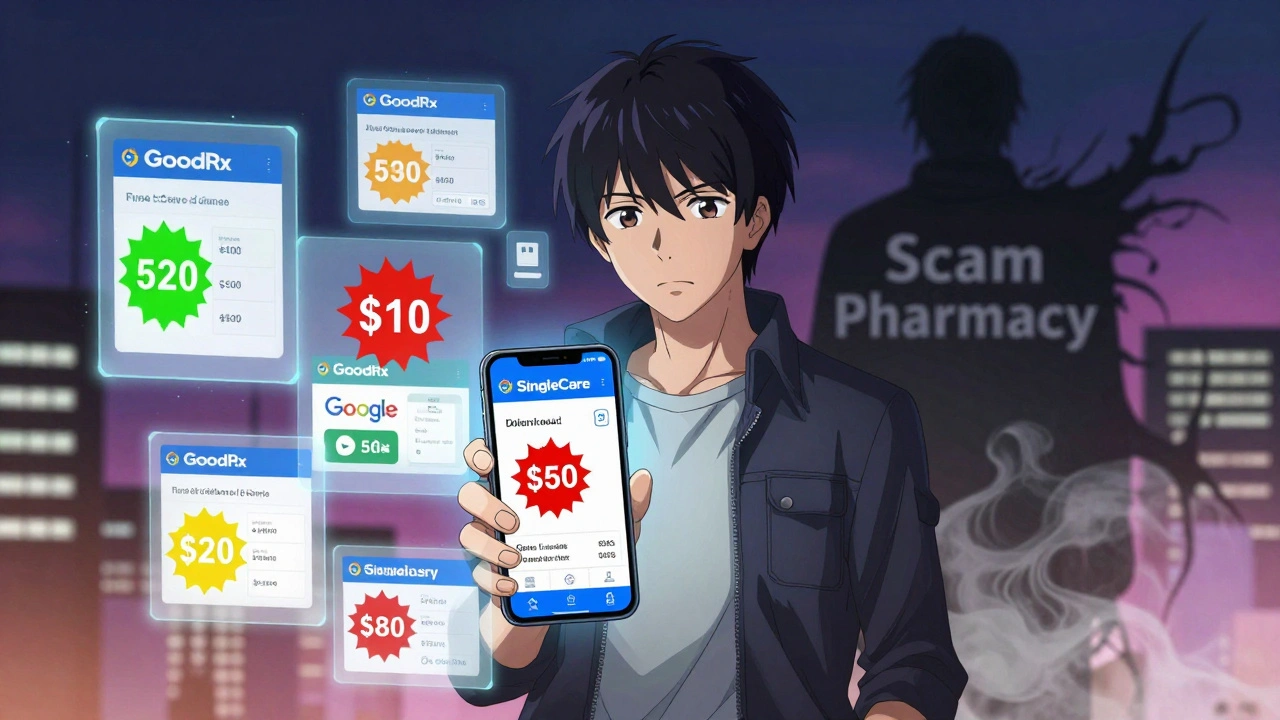
Buying generic medications online can save you hundreds of dollars a year-but only if you know where to look. Many people assume all online pharmacies offer the same prices for common drugs like metformin, lisinopril, or simvastatin. That’s not true. The difference between the highest and lowest price for a 30-day supply of the same generic pill can be more than 300%. And it’s not just about which site looks professional or has the fastest shipping. It’s about knowing which comparison tools actually show you real prices, which ones hide fees, and which ones are trustworthy.
Why Generic Drug Prices Vary So Much Online
Generic drugs are supposed to be cheaper because they don’t carry the research and marketing costs of brand-name versions. But when you search for generic medication prices online, you’ll find wildly different numbers. Why? One pharmacy might list 100 mg of metformin for $4. Another charges $17. The difference isn’t always about quality. It’s about overhead, location, supply chains, and whether the pharmacy is part of a big retail chain or a small independent online seller. Some sites include free shipping. Others add $10 for express delivery. Some charge for prescription verification. Others bundle it in. And many don’t clearly state if the price is per pill or per bottle. A 2025 study by Consumer Reports tracked 25 common generic prescriptions across 42 U.S.-based online pharmacies. They found prices varied by up to 412% for the same drug, same dosage, same quantity. The cheapest option was often a pharmacy that operated out of a warehouse with low overhead, not necessarily a big-name retailer.How Comparison Shopping Engines Work for Medications
Comparison shopping engines (CSEs) like Google Shopping, Shopzilla, and PriceRunner were built for electronics and clothing. But they’ve expanded into healthcare-though not always reliably. These platforms pull product data from pharmacy websites and display side-by-side prices. Sounds simple, right? But here’s the catch: not all pharmacies feed their drug prices into these systems. Many avoid it because of strict regulations around how medications are advertised online. So the list you see might be incomplete. Worse, some CSEs prioritize pharmacies that pay for top placement. That means the cheapest option might not even show up on page one. Google Shopping dominates the space with over 1.7 million monthly users searching for health products. But its algorithm favors large retailers like CVS, Walgreens, and Amazon Pharmacy because they submit clean, verified product feeds with GTINs and MPNs. Smaller, independent pharmacies often don’t have the technical setup to do this. So you’re not seeing the full market-you’re seeing the ones who can afford to play the game.The Best Tools for Finding Real Generic Drug Deals
If you’re serious about saving money on prescriptions, don’t rely on Google alone. Use a mix of tools:- GoodRx - Not a CSE, but the most reliable for U.S. users. It aggregates prices from local pharmacies and mail-order providers. It shows you the cash price (no insurance needed) and often includes printable coupons. For a 30-day supply of generic atorvastatin, GoodRx regularly shows prices under $5.
- SingleCare - Similar to GoodRx, but sometimes offers deeper discounts on certain drugs. It partners with over 60,000 pharmacies nationwide.
- DrugBank - A database used by pharmacists and researchers. It doesn’t sell anything, but it shows average market prices and lists which pharmacies report the lowest costs. Great for verifying if a deal is real.
- Google Shopping - Use it, but cross-check. It’s good for spotting big retailers, but miss out on niche sellers.
- PriceRunner - If you’re in Europe, this is your best bet. It accounts for local taxes, shipping, and pharmacy licensing rules in Sweden, Norway, Denmark, and Finland.
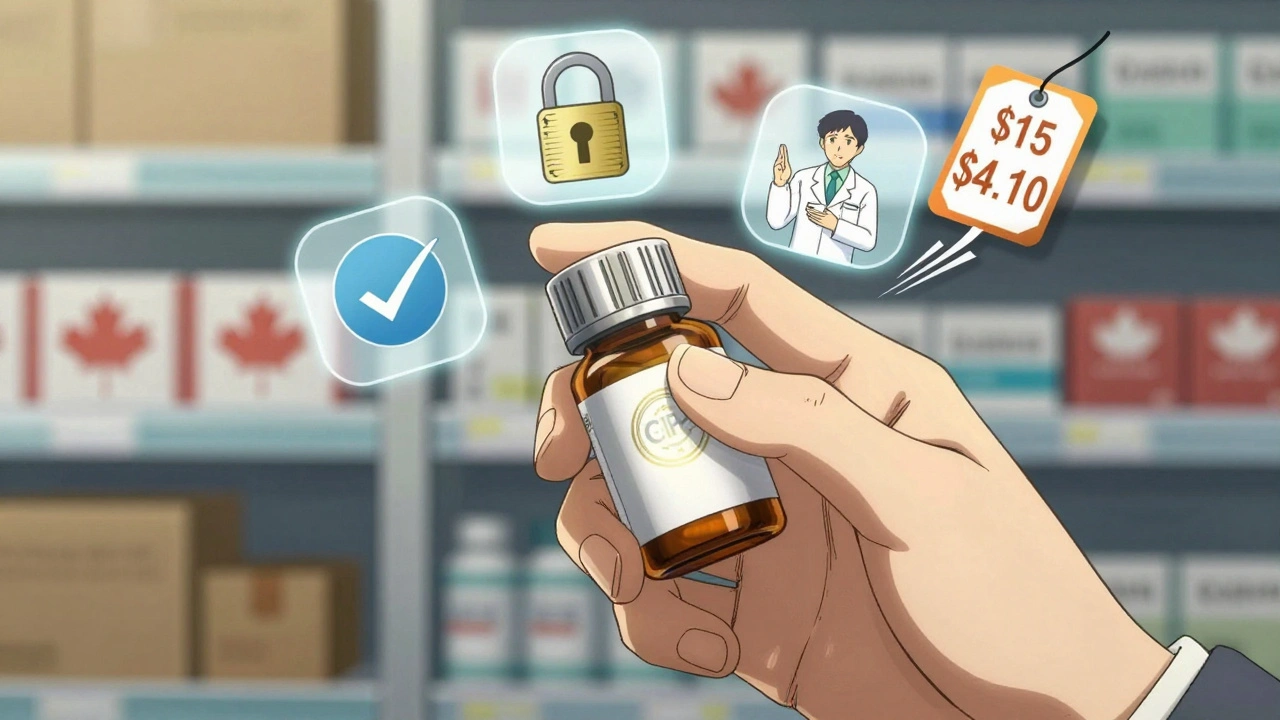
Red Flags That Mean a Pharmacy Isn’t Safe
Saving money shouldn’t mean risking your health. The FDA and Health Canada warn that nearly 50% of online pharmacies selling medications without a prescription are illegal. Here’s how to spot them:- No licensed pharmacist available to answer questions
- No physical address or phone number listed
- Offers “miracle cures” or drugs not approved in your country
- Prices that are too good to be true (e.g., $1 for a 30-day supply of insulin)
- No verification process for your prescription
- Requests payment only via cryptocurrency or wire transfer
How to Verify a Pharmacy Before You Buy
Before you click “Buy Now,” take two minutes to verify the seller:- Go to nabp.net and use their pharmacy checker.
- Search the pharmacy’s name on Trustpilot or the Better Business Bureau.
- Look for reviews mentioning actual medication delivery-not just customer service.
- Check if the site uses HTTPS and has a valid SSL certificate.
- Call their customer service line. A real pharmacy will have someone who can answer clinical questions.
Why Your Insurance Might Not Help (And What to Do Instead)
Many people assume insurance will always give them the best price. It doesn’t. Some plans have high deductibles, narrow networks, or step therapy requirements that make paying cash cheaper. In fact, a 2025 analysis by the Kaiser Family Foundation found that 42% of Medicare Part D enrollees paid less out-of-pocket using GoodRx than their insurance copay. If your insurance doesn’t cover the drug, or your copay is high, always ask the pharmacy for the cash price. Then compare it to what GoodRx or SingleCare shows. Sometimes, the discount card gives you a lower price than your insurance.
Setting Up Price Alerts for Your Medications
Prices for generics can drop suddenly-especially after new manufacturers enter the market. Set up alerts so you don’t miss a deal.- On GoodRx, click “Save This Drug” and turn on price drop notifications.
- Use browser extensions like Honey or Rakuten to automatically apply coupon codes at checkout.
- For international purchases, sign up for email alerts from verified Canadian or Indian pharmacies that regularly update their inventory.
What the Future Holds for Generic Drug Shopping
The market is changing. More pharmacies are joining comparison platforms. AI tools are starting to predict price drops based on FDA approvals and generic manufacturer releases. Some platforms now include sustainability ratings-like carbon footprint of shipping-and ethical sourcing data. But the biggest shift? Transparency. Thanks to new regulations like the EU’s Digital Markets Act and U.S. price disclosure laws, pharmacies are now required to show final prices upfront-including shipping and fees. That’s making it easier to compare apples to apples. Still, the burden is on you to use the right tools and ask the right questions. Don’t assume the first result is the best. Don’t trust a site just because it looks professional. And never skip verification.Generic drugs save lives. Finding the best price doesn’t have to be a gamble.
Can I trust online pharmacies that offer generic drugs for less than $1 per pill?
No, not without verification. A $1 price for a drug like metformin or lisinopril is almost always a scam. Legitimate generic drugs cost at least $3-$5 for a 30-day supply, even from international suppliers. If a site offers prices far below market rate, it’s likely selling counterfeit, expired, or unregulated products. Always check for NABP VIPPS or CIPA accreditation before purchasing.
Is GoodRx better than using my insurance for generics?
Sometimes yes. GoodRx shows the cash price, which can be lower than your insurance copay-especially if you have a high deductible or the drug isn’t on your plan’s formulary. Many Medicare Part D users save money using GoodRx. Always compare the GoodRx price with your insurance copay before paying at the pharmacy.
Why do prices for the same generic drug vary so much between pharmacies?
Because there’s no national pricing system for generics. Each pharmacy negotiates its own wholesale price with distributors. Some buy in bulk from international manufacturers. Others pay more for faster delivery or local distribution. Overhead costs, location, and whether they’re part of a chain all affect the final price. That’s why comparison tools are essential.
Are Canadian online pharmacies safe for buying generic medications?
Yes-if they’re accredited by CIPA (Canadian International Pharmacy Association). CIPA-certified pharmacies follow strict standards for licensing, storage, and prescription verification. Many Australians use them to save up to 80% on prescriptions. Always verify the pharmacy’s CIPA status on their official website before ordering.
Can I use comparison engines like Google Shopping to find the best price for prescriptions?
You can, but it’s limited. Google Shopping shows mostly large retailers like CVS or Amazon Pharmacy. Many smaller, lower-priced pharmacies don’t participate because of complex drug listing rules. Use Google Shopping as a starting point, but always cross-check with GoodRx, SingleCare, or DrugBank for the full picture.
What should I do if I receive the wrong medication from an online pharmacy?
Stop taking the medication immediately. Contact the pharmacy for a return and refund. Then report the incident to your local health authority-like the TGA in Australia or the FDA in the U.S. Keep all packaging and receipts. If you suspect counterfeit drugs, file a report with the National Association of Boards of Pharmacy (NABP) or your country’s equivalent.


James Kerr
December 3, 2025 AT 10:13Just used GoodRx for my metformin and saved $40 this month 🤯
sagar bhute
December 5, 2025 AT 03:52These so-called savings are a scam. You think some random website in India is selling real meds? You’re just buying poison with a nice label. And don’t even get me started on GoodRx-big pharma owns them anyway. Wake up.
Cindy Lopez
December 5, 2025 AT 22:23The article uses inconsistent punctuation. For example, ‘$1 for a 30-day supply of insulin’-should be ‘$1 for a 30-day supply of insulin.’ Also, ‘NABP VIPPS’ needs consistent capitalization throughout. Sloppy editing undermines credibility.
shalini vaishnav
December 6, 2025 AT 12:25Why are Americans so desperate for cheap medicine? In India, we know real healthcare-no gimmicks, no coupons. You people pay $15 for a pill that costs 2 rupees here, and still complain. At least we don’t need a spreadsheet to buy insulin.
vinoth kumar
December 7, 2025 AT 03:39Really helpful breakdown! I just started using SingleCare last month and saved over $60 on my blood pressure med. The key is checking both GoodRx AND SingleCare side by side-sometimes one’s way cheaper than the other. Also, don’t forget to ask your local pharmacy if they’ll match the price. They will, if you’re polite.
bobby chandra
December 8, 2025 AT 10:20Let me tell you something: this isn’t just about saving money-it’s about reclaiming your right to live without being held hostage by corporate greed. You’re not ‘shopping’-you’re fighting back. Every time you use GoodRx, you’re middle-fingering Big Pharma. And yeah, I’m talking to you, the guy who paid $120 for lisinopril last month. You’re doing it wrong.
Archie singh
December 10, 2025 AT 05:00Don’t trust any of these sites. They’re all fronts. The FDA doesn’t regulate them. The WHO doesn’t track them. And the ‘VIPPS seal’? That’s a joke. I’ve seen fake seals on phishing sites. You think your $4 metformin is real? It’s probably ground-up chalk from a basement in Shanghai.
Gene Linetsky
December 11, 2025 AT 05:34Ever notice how every single ‘trusted’ pharmacy is owned by the same 3 conglomerates? Google Shopping shows CVS and Amazon because they pay for placement. GoodRx? Owned by the same investors who run the big insurers. You think you’re saving money? You’re just moving your cash from one pocket to another in a different color suit.
Ignacio Pacheco
December 11, 2025 AT 05:54So let me get this straight-you’re telling me I should trust a Canadian pharmacy with a .ca domain that doesn’t even have a live chat? But I shouldn’t trust Amazon? The irony is thicker than my insulin.
Jim Schultz
December 11, 2025 AT 10:47Wait, wait, wait-you’re telling me to use ‘DrugBank’? That’s a research database, not a shopping site! You’re not a pharmacist, you’re not a data scientist-you’re just a guy with a credit card. This whole thing is a recipe for disaster. One wrong pill and you’re in the ER. GoodRx? Sure. But the rest? No. Just… no.
Kidar Saleh
December 11, 2025 AT 13:38In the UK, we have the NHS-so we don’t need this. But I admire your hustle. I’ve seen friends in America pay more for pills than their rent. It’s tragic. If you ever come to London, I’ll buy you a cuppa and show you how a real healthcare system works. No coupons needed.
Joykrishna Banerjee
December 12, 2025 AT 06:00Of course you’d recommend GoodRx-because you’re too lazy to do the real work. Real price transparency requires understanding wholesale distribution networks, formulary tiers, and international pharmacoeconomic models. You’re not saving money-you’re performing performative frugality. Also, the term ‘generic’ is misused 92% of the time in this context. It’s not ‘generic’ if it’s not bioequivalent. And how do you verify that? You don’t. You just click ‘Buy’.
Myson Jones
December 13, 2025 AT 19:47Thank you for sharing this thoughtful and well-researched guide. I appreciate how you’ve emphasized both affordability and safety. For those who may feel overwhelmed, I encourage you to take it one step at a time-start with one medication, compare two sources, and verify the pharmacy. Small steps lead to big changes. You’ve got this.