
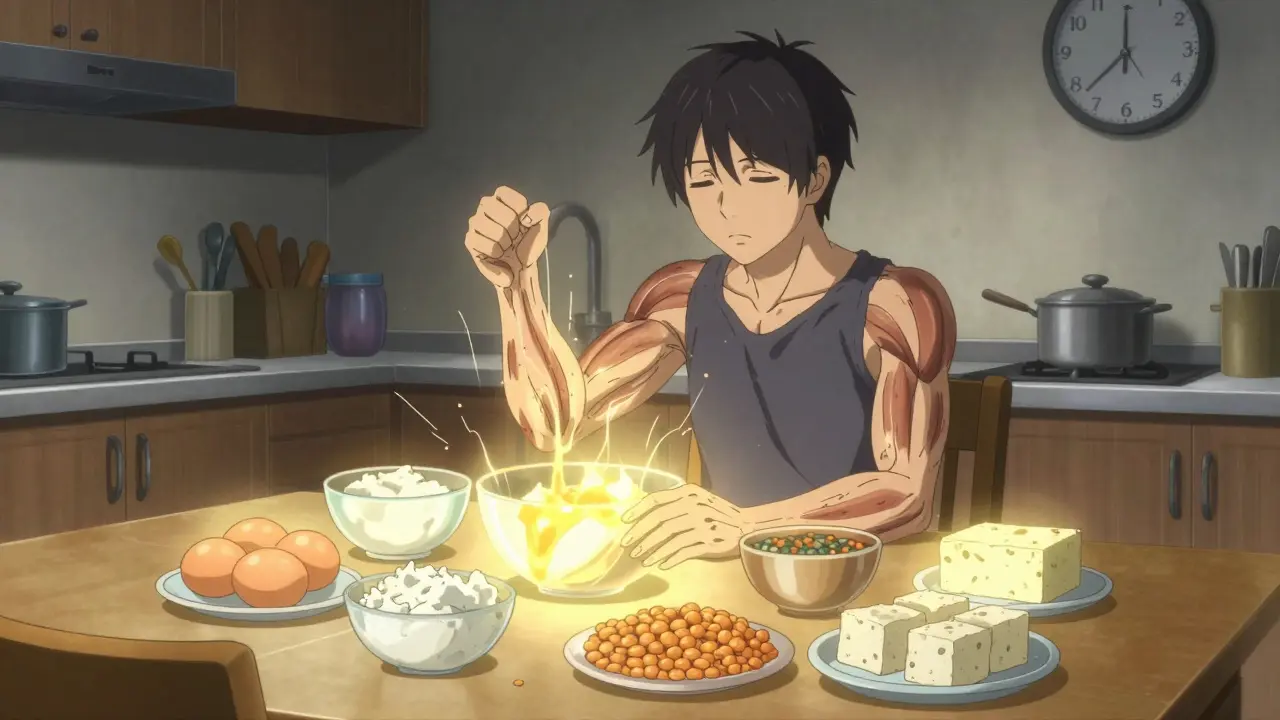
When your liver is damaged by cirrhosis, your body doesn’t just struggle to filter toxins-it starts breaking down your own muscle just to stay alive. This isn’t a slow decline. It’s a silent, accelerating loss of strength, energy, and survival odds. And the most common mistake doctors and patients still make? Cutting back on protein. That’s not just outdated-it’s dangerous.
Why Protein Isn’t the Problem-It’s the Solution
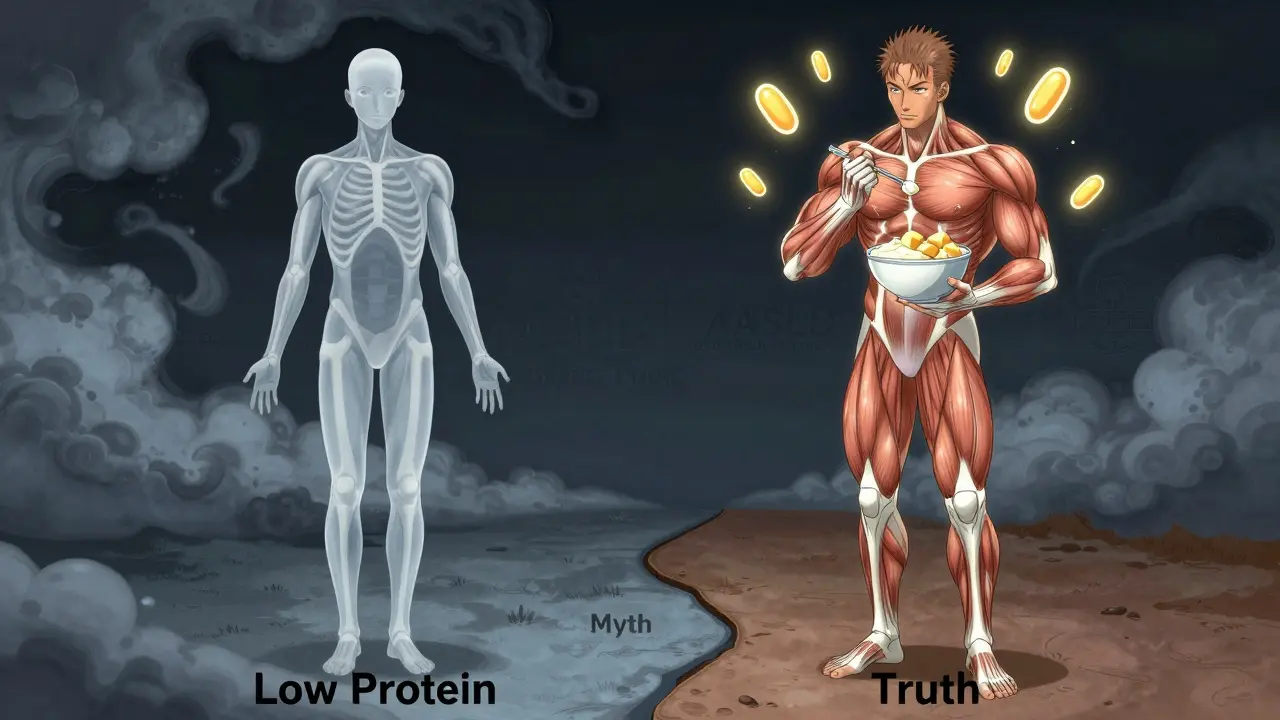
For decades, people with cirrhosis were told to eat less protein. The logic seemed simple: your liver can’t process waste from protein, so less protein means less ammonia, which means less confusion or brain fog (hepatic encephalopathy). But here’s the truth: protein restriction doesn’t stop brain fog-it makes muscle loss worse, and muscle loss kills.
A landmark 2004 study changed everything. Researchers gave 30 patients with cirrhosis either a very low protein diet (0.5 grams per kilogram of body weight) or a normal amount (1.2 grams per kg). The low-protein group didn’t get better. They got weaker. Their bodies started chewing up their own muscles just to find energy. Meanwhile, the normal-protein group showed no increase in brain fog. That study didn’t just challenge old advice-it buried it.
Today, the American Association for the Study of Liver Diseases (AASLD), the British Liver Trust, and leading clinics from Sydney to Boston all agree: protein restriction is harmful. If you’re not getting enough protein, you’re not protecting your liver-you’re starving your body.
How Much Protein Do You Actually Need?
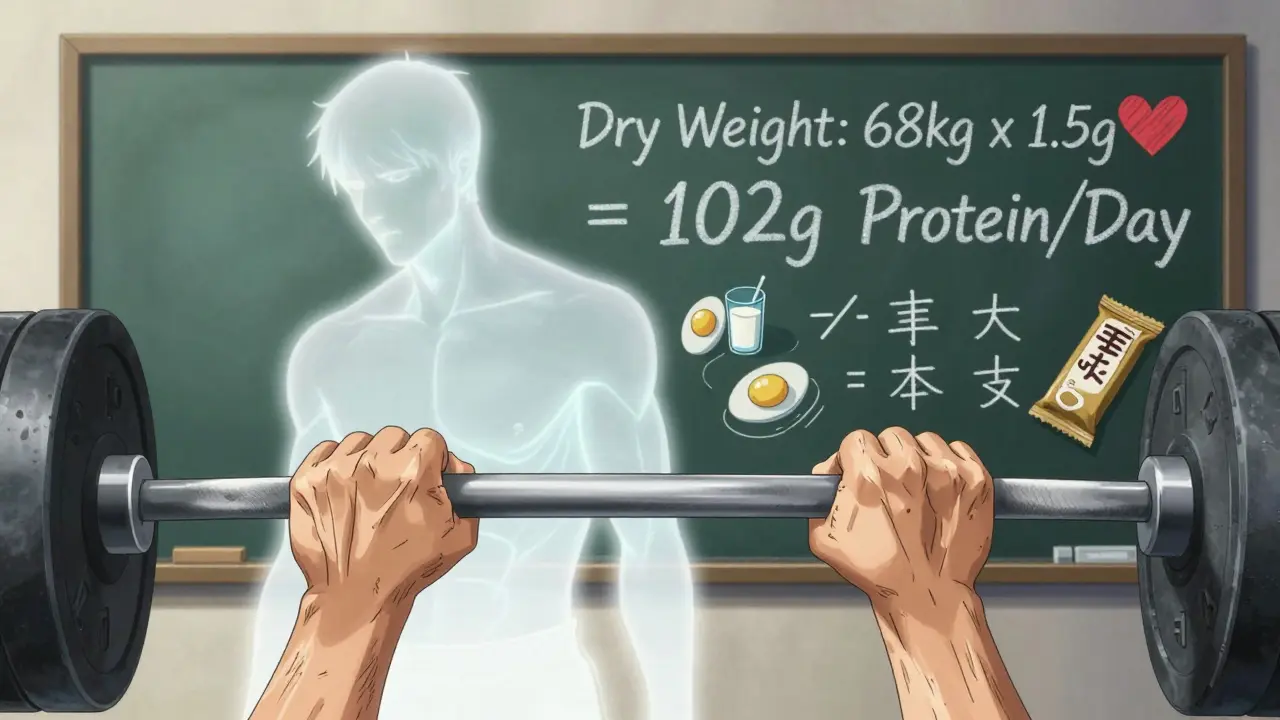
Forget counting chicken breasts. You need to think in grams per kilogram of your dry weight. That’s your weight without the extra fluid most cirrhosis patients carry. If you’re bloated, your scale lies. Your real weight is lower.
- For most stable patients: 1.2 to 1.5 grams of protein per kilogram of dry body weight per day
- If you’re losing muscle (sarcopenia): 1.5 grams per kg
- If you’re very ill or hospitalized: 1.2 to 2.0 grams per kg
Example: A 70 kg person (about 154 lbs) needs between 84 and 105 grams of protein daily. A 60 kg person (132 lbs) needs 72 to 90 grams. That’s not a lot. It’s about two eggs, a cup of lentils, a small chicken breast, and a glass of milk.
And don’t forget calories. You need 35 kcal per kg if you’re at a normal weight. If you’re overweight, you still need 25-35 kcal per kg. Your body isn’t just burning energy-it’s burning muscle because it has no other fuel.
Not All Protein Is Equal-Choose Wisely
It’s not just about how much-you need the right kind. Meat isn’t evil, but it’s harder to tolerate if you have brain fog. Plant and dairy proteins are gentler on your system.
- Best choices: Eggs, yogurt, cottage cheese, tofu, tempeh, lentils, beans, peas, nuts, oatmeal, soy milk, edamame
- Use sparingly: Red meat, chicken, fish (fine if you tolerate them, but not first-line)
Why? Plant and dairy proteins have more branched-chain amino acids-exactly what your muscles need to rebuild. They also produce less ammonia during digestion. A single large egg gives you 6 grams of protein. A cup of cooked lentils? 18 grams. A 3-ounce serving of tofu? About 10 grams. These aren’t just alternatives-they’re upgrades.
And here’s a practical tip: If you’re struggling to get enough, try protein-fortified snacks. Nature Valley Protein bars (40g protein) or Clif Builder’s Bars (68g protein) can be lifesavers when appetite is low. Talk to your doctor or dietitian about prescription supplements if you’re falling short.
Timing Matters More Than You Think
It’s not enough to eat protein during the day. Your body doesn’t pause digestion when you sleep. In fact, overnight fasting turns your body into a muscle-eating machine.
Experts now recommend:
- Eating every 3-4 hours while awake
- Having at least 3-5 meals a day
- Adding a late-night high-protein snack 1-2 hours before bed
That snack could be a small bowl of cottage cheese, a hard-boiled egg with whole-grain toast, or a protein shake. It keeps your body from breaking down muscle overnight. Studies show this simple habit improves nitrogen balance-the key marker of muscle preservation.
Some clinics even recommend a 50g carbohydrate snack at bedtime to help your body use protein for muscle repair instead of energy. Think: a banana with peanut butter, or a slice of whole-grain bread with honey.
Sarcopenia Is the Silent Killer
Up to 70% of people with cirrhosis lose muscle mass. This isn’t just about looking weak. It’s about surviving. A 2019 study in Hepatology found that patients with sarcopenia on the liver transplant waiting list were 2.8 times more likely to die than those with normal muscle mass.
Muscle isn’t just for lifting. It’s your body’s protein reserve. When you’re sick, your liver can’t make enough protein. Your muscles step in. If you don’t feed them, they vanish-and with them, your chances of recovery.
Signs you’re losing muscle:
- Feeling weak when climbing stairs or getting up from a chair
- Clothes fitting looser around the arms and legs, even if you’re bloated
- Getting tired faster during daily tasks
If you notice these, talk to your doctor. A simple handgrip strength test or bioimpedance scan can measure muscle loss before it’s too late.
Don’t Ignore the Micronutrients
Protein is the star, but it can’t work alone. Cirrhosis messes with how your body uses vitamins and minerals. Common deficiencies include:
- Zinc: Helps with taste, healing, and immune function. Many patients benefit from 50mg of oral zinc daily.
- Thiamine (B1), Niacin (B3), Pyridoxine (B6), Folate: All support energy and nerve function.
- Magnesium: Often low due to diuretics and poor intake.
But be careful: Too much vitamin A or D can be toxic. And if you have hemochromatosis, vitamin C can make iron overload worse. Always check with your doctor before taking supplements.
Fluids, Sodium, and the Tough Trade-Off
Most cirrhosis patients have fluid buildup-ascites. Doctors tell you to cut salt. But if you cut salt too hard, you lose appetite and can’t eat enough. That’s a trap.
The AASLD says: If you can’t meet your protein and calorie goals because of strict salt limits, liberalize sodium restriction. You can’t afford to starve. A little more salt might mean you can eat a full meal. That’s worth it.
Work with your dietitian. Use herbs, lemon, garlic, and spices instead of salt. Choose low-sodium versions of cheese, yogurt, and broth. But don’t let sodium rules stop you from eating.
What to Do If You Can’t Eat Enough
Loss of appetite? Early fullness? Taste changes? These are real. You’re not failing. Your disease is working against you.
Try these tricks:
- Choose high-calorie, high-protein foods: Whole milk over skim, full-fat yogurt, nut butter, avocados
- Add protein powder to smoothies, soups, or oatmeal
- Drink your calories: Protein shakes between meals
- Small, frequent meals: 5-6 mini-meals beat 3 big ones
If you’re still falling short, ask your doctor about oral nutritional supplements. These are specially formulated for liver disease-higher in protein, lower in ammonia-producing amino acids. They’re not magic, but they’re often the difference between surviving and deteriorating.
Final Thought: Protein Is Life, Not a Risk
The old idea that protein causes brain fog? It’s been disproven. The truth is: not enough protein causes muscle loss-and muscle loss causes death.
If you or someone you love has cirrhosis, stop worrying about protein. Start planning for it. Eat every few hours. Prioritize eggs, dairy, beans, and tofu. Add a snack before bed. Track your weight and strength. Talk to a dietitian who knows liver disease.
This isn’t about following a diet. It’s about fighting for your body’s last defense-your muscle. And that defense starts with what you put on your plate.
Should I avoid meat if I have cirrhosis?
No, you don’t need to avoid meat completely. But plant-based and dairy proteins are better tolerated, especially if you have hepatic encephalopathy. Try to get most of your protein from eggs, yogurt, tofu, lentils, and beans. If you eat meat, choose lean cuts like chicken or fish in moderation. Red meat is harder to digest and may worsen symptoms in some people.
Can protein make hepatic encephalopathy worse?
No, not if you’re eating the right amount and type. Early studies in the 1980s suggested protein worsened confusion, but those were flawed. Modern research, including a major 2004 trial, shows normal protein intake does not increase episodes of hepatic encephalopathy. In fact, protein restriction leads to muscle loss, which increases the risk of complications and death. Current guidelines from AASLD and the British Liver Trust strongly recommend adequate protein for all cirrhosis patients, even those with encephalopathy.
How do I calculate my protein needs if I have fluid retention?
Use your dry weight-not your scale weight. Dry weight is your ideal body weight without extra fluid. For most people, that’s about 10-15% less than your current weight. If you weigh 80 kg but have ascites, your dry weight might be around 68-72 kg. Multiply that by 1.2-1.5 g/kg to find your daily protein target. A dietitian can help estimate this using height, gender, and frame size. Don’t rely on the scale alone.
Is a protein shake safe for someone with cirrhosis?
Yes, but choose wisely. Many commercial protein shakes are high in sugar or artificial additives. Look for ones with whey or plant-based protein, low sodium, and no added vitamin A or D. Some are specially formulated for liver disease with balanced amino acids. Ask your doctor or dietitian for a recommendation. Prescription supplements are often the best option because they’re designed for your needs.
What if I can’t eat enough protein even with snacks and shakes?
Talk to your healthcare team. You may need enteral nutrition (tube feeding) if oral intake is insufficient. This is common in advanced cirrhosis. Don’t wait until you’re severely malnourished. Early intervention with a dietitian can prevent irreversible muscle loss. Many hospitals have liver-specific nutrition programs that can help you set up a feeding plan tailored to your condition.
Alex Brad
March 2, 2026 AT 09:33Protein restriction is a myth. I’ve seen patients decline because doctors still push outdated guidelines. Muscle loss is silent, deadly, and 100% preventable with proper intake. No more excuses.
Renee Jackson
March 3, 2026 AT 04:15Thank you for sharing this evidence-based, life-affirming guidance. The shift from fear-based dietary advice to empowerment through nutrition is long overdue. Every patient deserves access to this knowledge.
RacRac Rachel
March 3, 2026 AT 10:04OMG this is so important!! 🙌 I’ve been telling my dad for months to eat more eggs and Greek yogurt-he thought protein would ‘fry his liver.’ Now he’s eating cottage cheese before bed and actually has energy to walk the dog. Thank you for the clarity!! 🥚🧀
Jane Ryan Ryder
March 4, 2026 AT 22:00Of course the medical establishment got this wrong again. They’d rather keep people weak so they keep coming back for pills and procedures. Real healing? It’s in the food. Not in their textbooks.
Callum Duffy
March 5, 2026 AT 23:01A thoughtful and meticulously referenced piece. The emphasis on dry weight, timing of intake, and the distinction between protein sources is clinically significant. I shall be sharing this with my colleagues in hepatology.
Chris Beckman
March 7, 2026 AT 03:52u/alexbrad is right but i think you should just eat meat and not overthink it. i had a cousin with cirrhosis and he ate steak every night and lived for 7 years. protein shakes are for losers.
Levi Viloria
March 7, 2026 AT 11:46As someone who grew up in a household where food was never a priority, this hits differently. I didn’t realize muscle loss was happening until I couldn’t lift my own suitcase. The late-night snack tip? Game changer. I started with a hard-boiled egg and now I’m eating tofu stir-fry before bed. Small steps.
Richard Elric5111
March 8, 2026 AT 20:12One cannot help but reflect upon the epistemological rupture in clinical nutrition paradigms over the past four decades. The dogma of protein restriction was not merely misguided-it was ontologically violent, reducing the human body to a biochemical reactor rather than an integrated, adaptive organism. The reclamation of protein as a life-sustaining agent represents not only a therapeutic correction but a philosophical reawakening.
Dean Jones
March 9, 2026 AT 02:53Let’s be honest-this isn’t just about nutrition. It’s about how society treats chronic illness. We’re told to rest, to conserve, to be careful. But we’re not told to fight. And fighting means eating-even when you’re tired, even when your appetite is gone, even when the world tells you to be quiet. Muscle isn’t vanity. It’s your last line of defense. Every gram of protein you consume is a declaration: I am not ready to die yet. I am still here. And I will eat. I will move. I will survive. The liver doesn’t heal itself. The body does. But only if you feed it. Not with fear. Not with restriction. With food. Real food. Regular food. And if you’re too weak to cook? Then get the protein shake. Then get the tube feed. Then get the help. Because you deserve to live longer than the outdated guidelines say you should.