Beta-Blocker & Asthma Safety Checker
Disclaimer: This tool is for educational purposes only. Always consult your cardiologist and pulmonologist before starting or changing medications.
Select a medication below to check its compatibility and risk level for asthma patients:
Non-Selective Blockers
Cardioselective Blockers
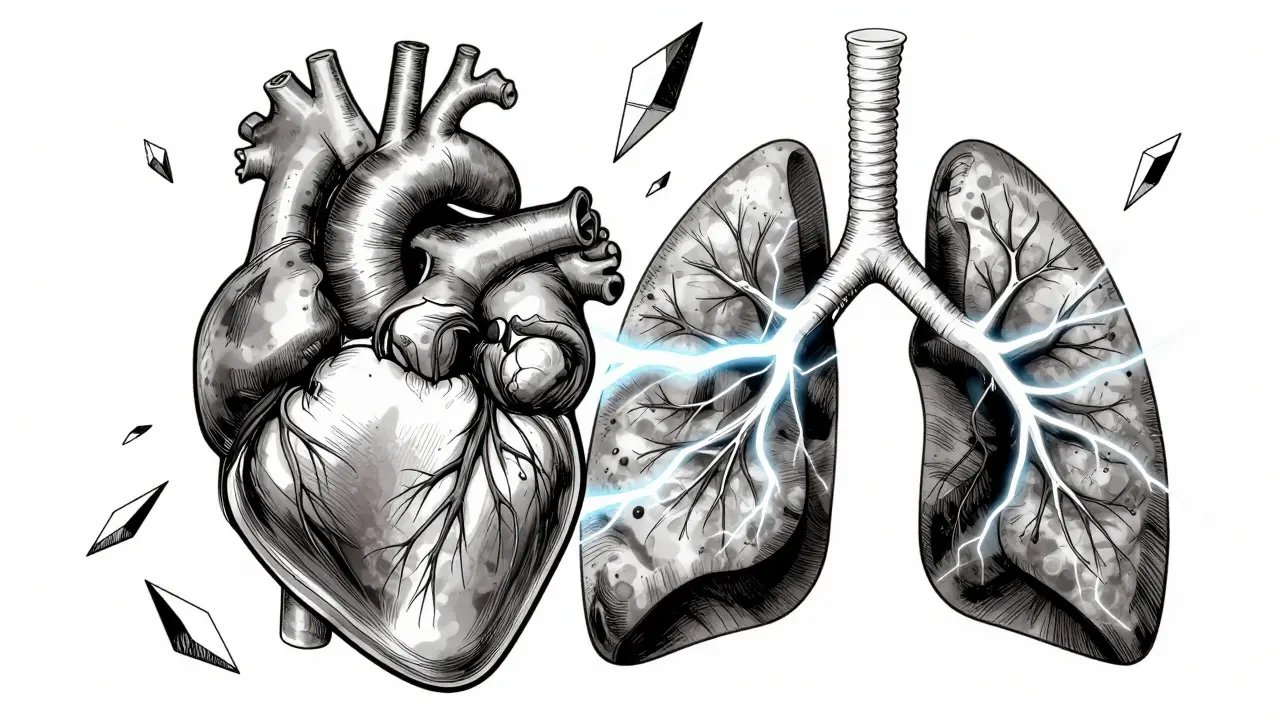
The core problem lies in how our receptors work. Your body has beta-1 receptors (mostly in the heart) and beta-2 receptors (mostly in the lungs). When a drug blocks those beta-2 receptors, it stops the lungs from relaxing, which can lead to a Bronchospasm-a sudden, restrictive narrowing of the bronchial tubes. This is why non-selective drugs are often off-limits for asthmatics.
The Danger of Non-Selective Beta-Blockers
Not all heart medications are created equal. Non-selective beta-blockers are like a blunt instrument; they block both beta-1 and beta-2 receptors indiscriminately. Drugs such as Propranolol, Nadolol, and Timolol fall into this category. Because they hit the beta-2 receptors in the lungs, they can cause immediate airway constriction.
The risk isn't just about starting an attack; it's about how you fight one. Most rescue inhalers use Albuterol, which is a beta-agonist designed to open the airways. If a non-selective beta-blocker is occupying those receptors, your rescue inhaler essentially has nowhere to bind to. It's like trying to unlock a door when someone has jammed a piece of metal into the keyhole. This can make a routine asthma flare-up significantly more dangerous and harder to treat.
A Smarter Choice: Cardioselective Beta-Blockers
The good news is that science has developed Cardioselective Beta-Blockers. These are designed to be "picky." They have a much stronger affinity for beta-1 receptors in the heart, meaning they leave the beta-2 receptors in the lungs mostly alone. In fact, some of these agents are over 20 times more selective for the heart than the lungs.
Common examples include Atenolol, Metoprolol, and Bisoprolol. For patients with mild to moderate asthma, these drugs are often safe and can be life-saving for those recovering from a heart attack. Research shows that while they might cause a slight drop in lung function (measured by FEV1), this effect is usually minor and easily reversed with standard asthma medication.
| Feature | Non-Selective Beta-Blockers | Cardioselective Beta-Blockers |
|---|---|---|
| Target Receptors | Beta-1 and Beta-2 | Primarily Beta-1 |
| Lung Impact | High risk of bronchospasm | Low risk (in mild/moderate asthma) |
| Rescue Inhaler Efficacy | Significantly reduced | Generally maintained |
| Example Drugs | Propranolol, Nadolol, Labetalol | Atenolol, Metoprolol, Bisoprolol |

Which Selective Drug is Best?
Even within the "safe" category, some drugs perform better than others. In head-to-head studies, Atenolol has often come out on top for people with asthma. One study comparing it to Metoprolol found that patients on Atenolol had fewer asthma attacks, more asthma-free days, and less frequent wheezing, despite both drugs lowering blood pressure equally.
Then there's Celiprolol. This drug is interesting because it doesn't just avoid the lungs-some evidence suggests it might actually inhibit the bronchoconstriction caused by non-selective blockers. This makes it a highly specialized tool for doctors managing complex cardiac and respiratory needs.
How to Transition Safely
If you have asthma but need a beta-blocker for your heart, you can't just pick one up at the pharmacy. This requires a coordinated effort between your cardiologist and your pulmonologist. The goal is to minimize the risk of a respiratory crisis while maximizing heart protection.
- Assess Stability: Your asthma must be well-controlled. If you are currently struggling with frequent flares, any beta-blocker could be risky.
- Start Low: Doctors will typically start with the lowest possible dose of a cardioselective agent to see how your lungs react.
- Baseline Testing: Before starting, a pulmonary function test (PFT) to measure your FEV1 (Forced Expiratory Volume in one second) is crucial. This gives the doctor a benchmark to compare against.
- Close Monitoring: In the first few weeks, keep a close eye on your peak flow rates and the frequency of your rescue inhaler use.

The Risk-Benefit Trade-off
Why take the risk at all? For some, the alternative is far worse. After a myocardial infarction (heart attack), beta-blockers can reduce cardiovascular mortality by up to 34%. That is a massive survival benefit that often outweighs the theoretical risk of a mild asthma flare-up.
Interestingly, some long-term data suggests a "biphasic" response. While a single dose might cause a slight increase in airway sensitivity, long-term use of certain beta-blockers may actually have an anti-inflammatory effect on the airways. This suggests that for some patients, the body adapts to the medication over time, making it safer the longer they stay on it.
Avoiding Common Pitfalls
One of the biggest mistakes is assuming that "natural" or "over-the-counter" versions of these drugs are safe. Always check the labels of eye drops used for glaucoma-many contain Timolol, a non-selective beta-blocker. Even though it's applied to the eye, it can be absorbed into the bloodstream and trigger a systemic bronchospasm in sensitive asthma patients.
Another pitfall is failing to inform your emergency room doctors about your beta-blocker use. If you are having a severe asthma attack and you're on a beta-blocker, the standard dose of albuterol might not work. Doctors need to know this immediately so they can use alternative bronchodilators, like anticholinergics, to open your airways.
Can I use any beta-blocker if my asthma is mild?
No. Even with mild asthma, non-selective beta-blockers like Propranolol can trigger a sudden bronchospasm. You should only use cardioselective beta-blockers (like Atenolol or Bisoprolol) and only under a doctor's supervision.
Do beta-blockers make my rescue inhaler stop working?
Non-selective beta-blockers can significantly block the receptors that albuterol needs to work, making your inhaler less effective. Cardioselective beta-blockers have a much lower impact on this process, but it's still something your doctor should monitor.
What is the safest beta-blocker for someone with asthma?
Based on clinical studies, Atenolol is often cited as one of the preferred cardioselective agents due to its low incidence of bronchospasm and minimal impact on peak flow rates compared to other options.
What should I do if I experience shortness of breath after starting a heart med?
Contact your healthcare provider immediately. Do not stop taking your heart medication abruptly, as this can cause a dangerous rebound effect on your blood pressure or heart rate. Your doctor can help you switch to a more selective alternative.
Are eye drops for glaucoma dangerous for asthmatics?
Yes, they can be. Many glaucoma drops contain Timolol, a non-selective beta-blocker. Even in small amounts, these can enter the bloodstream and cause respiratory issues in people with asthma.