
Cholesterol Treatment Calculator
Your Treatment Profile
Your personalized treatment recommendation will appear here...
Disclaimer: This tool is for informational purposes only. Always consult your healthcare provider before making treatment decisions.
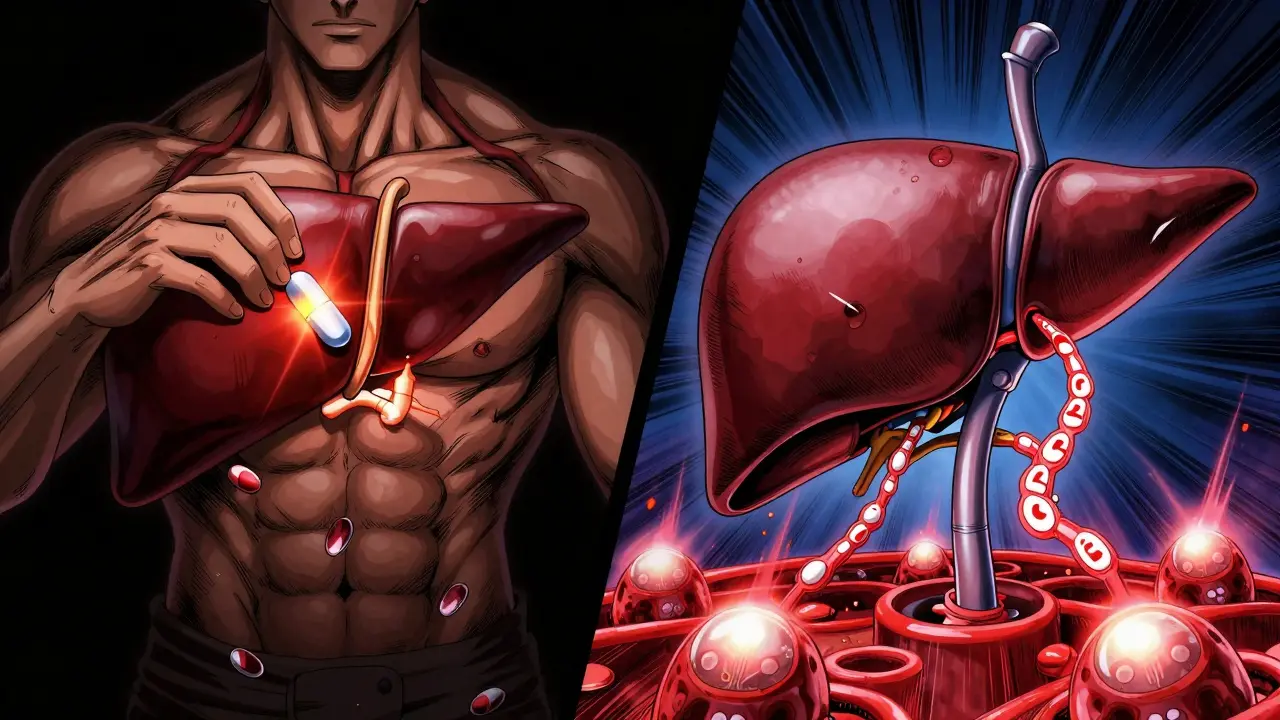
When it comes to lowering LDL cholesterol, two major players dominate: statins and PCSK9 inhibitors. Both work to reduce heart attack and stroke risk, but they’re fundamentally different in how they work, what side effects they cause, and who they’re best for. If you’ve been told you need to lower your cholesterol-and you’re wondering whether to stick with a daily pill or try an injection-you’re not alone. Let’s cut through the noise and compare them honestly, based on real-world data from 2024.
How They Work: Two Different Paths to Lower Cholesterol
Statins have been around since the late 1980s. They work by blocking an enzyme in your liver called HMG-CoA reductase. That enzyme is how your body makes cholesterol. When you slow it down, your liver pulls more LDL (bad cholesterol) out of your blood to use for other tasks. That’s why statins typically lower LDL by 30% to 50%.
PCSK9 inhibitors work differently. They’re injectable drugs-alirocumab and evolocumab-that block a protein called PCSK9. This protein normally tells your liver to destroy LDL receptors. When you block it, your liver keeps more receptors on its surface. More receptors mean more LDL gets pulled out of your blood. The result? LDL drops by 50% to 61%. That’s often more than what even the strongest statins can do.
Think of it this way: statins reduce cholesterol production. PCSK9 inhibitors help your body clear out what’s already there. That’s why doctors often add a PCSK9 inhibitor to a statin instead of replacing it. Together, they can slash LDL by 75% or more.
Side Effects: What You’re Really Likely to Experience
Statins are the most prescribed cholesterol drug in history. Over 40 million Americans take them. But they’re not without problems. The most common complaint? Muscle pain. Studies show 5% to 10% of users report muscle aches, weakness, or cramps. In rare cases, this can lead to serious muscle damage. Memory issues and brain fog are also reported-though the science on this is mixed. Some people swear they felt foggy; others notice zero change.
PCSK9 inhibitors, on the other hand, are much cleaner in terms of side effects. Clinical trials and real-world data show almost no muscle-related complaints. In fact, many patients switch from statins to PCSK9 inhibitors specifically because their muscle pain vanished. The most common side effects? Minor injection site reactions-redness, itching, or slight swelling. About 1 in 5 people report this, and it usually fades within a day.
Here’s a key safety difference: statins slightly increase the risk of hemorrhagic stroke (bleeding in the brain) in certain people, especially those with high blood pressure or a history of stroke. A 2023 UCLA study found a 22% higher risk. PCSK9 inhibitors? No increased risk in any of the 36 major trials reviewed. For patients at higher risk of brain bleeds, this isn’t a small detail-it’s a deciding factor.
Outcomes: Do They Actually Prevent Heart Attacks?
It’s not just about lowering numbers. What matters is whether those lower numbers translate into fewer heart attacks, strokes, or deaths.
Statins have decades of proof. They cut heart attack risk by 25% to 35% and reduce death from heart disease by about 20%. That’s why they’re still the first choice for most people.
PCSK9 inhibitors don’t just match statins-they often beat them in high-risk patients. The FOURIER trial showed that adding evolocumab to a statin cut heart attacks, strokes, and heart-related deaths by 15% over two years. The ODYSSEY trial showed similar results with alirocumab. For patients who already had a heart attack or have diabetes plus heart disease, the benefit was even stronger: a 27% drop in events.
And here’s something surprising: a 2024 meta-analysis found that PCSK9 inhibitors delivered the same level of cardiovascular protection as statins-but without the muscle pain, liver enzyme spikes, or diabetes risk that some statins carry. That’s why experts now say: if you can’t tolerate statins, or if your LDL is still above 70 mg/dL after maxing out on statins, PCSK9 inhibitors aren’t just an option-they’re a game-changer.

Cost and Access: The Hidden Barrier
Let’s be real: cost matters. Statins? You can get generic atorvastatin for $4 to $10 a month. Even brand-name versions rarely cost more than $30. PCSK9 inhibitors? They cost $5,000 to $14,000 a year. That’s $400 to $1,200 a month.
Insurance won’t cover them unless you’ve tried and failed on at least two statins-or if you have a genetic condition like familial hypercholesterolemia. Eighty-seven percent of U.S. insurers require documentation of statin intolerance before approving PCSK9 inhibitors. That means you might need a letter from your doctor, lab results showing your LDL is still too high, and proof that you tried and couldn’t handle the side effects.
Some patients still can’t get coverage. Others get approved but face $300 copays. That’s why only about 1.2 million people in the U.S. are on PCSK9 inhibitors, compared to 40 million on statins. But things are shifting. Drugmakers now offer patient assistance programs. Some insurers have lowered copays to under $50. And if you have a family history of early heart disease or very high LDL, your odds of approval are much better.
Who Gets What? Real-Life Scenarios
Not everyone needs the same treatment. Here’s how it breaks down:
- You’re 58, have high cholesterol, and no heart disease. Start with a statin. If your LDL drops below 100, you’re good. If not, add ezetimibe. Only consider PCSK9 if you still can’t get there and you have other risk factors.
- You’re 45, have familial hypercholesterolemia, and your LDL is 280. Statins alone won’t cut it. You’ll likely need a PCSK9 inhibitor from day one-or at least after trying a high-dose statin.
- You’re 62, had a heart attack last year, and your LDL is still 95 on high-dose atorvastatin. Add a PCSK9 inhibitor. You’re in the group that benefits most from extra LDL lowering.
- You tried three statins and got muscle pain every time. PCSK9 inhibitors are your best option. They don’t touch muscles. Many patients say it’s the first time in years they’ve felt normal.
- You’re worried about bleeding in the brain. If you’ve had a prior stroke or have uncontrolled high blood pressure, PCSK9 inhibitors are safer. Statins carry a small but real risk here.

What’s Next? The Future of Cholesterol Treatment
PCSK9 inhibitors aren’t the end of the story. In December 2021, the FDA approved inclisiran (Leqvio), a PCSK9-blocking drug you only need to inject twice a year. That’s a huge win for people who hate needles or struggle with consistency.
Even more exciting? Oral PCSK9 inhibitors are in late-stage trials. Merck’s MK-0616, tested in early 2024, lowered LDL by 60% with once-daily pills. If approved, this could change everything-making the power of PCSK9 inhibitors accessible without injections or sky-high costs.
Meanwhile, statins are getting smarter. New formulations aim to reduce muscle side effects, and combination pills with ezetimibe or bempedoic acid are becoming more common. But for now, if you need serious LDL reduction without muscle pain, PCSK9 inhibitors are still the most powerful tool we have.
Bottom Line: Which One Is Right for You?
Statins are the foundation. They’re cheap, proven, and work for most people. If you can tolerate them and your LDL is under control, stick with them.
But if you’ve got high-risk heart disease, genetic cholesterol problems, or can’t handle statin side effects, PCSK9 inhibitors are not just an alternative-they’re often the better choice. They lower LDL more, have fewer muscle-related side effects, and don’t increase stroke risk. Yes, they’re expensive. But for many, the health payoff is worth fighting for.
The key? Talk to your doctor. Bring your latest lab results. Ask: “Is my LDL still too high? Have I tried enough statins? Am I at risk for muscle pain or brain bleeds?” Your answer might not be obvious, but with the right data, you’ll know what’s next.
Can I switch from statins to PCSK9 inhibitors on my own?
No. You should never stop or switch cholesterol medications without medical supervision. Statins and PCSK9 inhibitors work differently, and stopping statins suddenly can cause LDL to rebound. Your doctor will need to monitor your cholesterol levels, check for interactions, and help you transition safely. Most patients start on a PCSK9 inhibitor while still taking a low-dose statin, then adjust based on response.
Do PCSK9 inhibitors cause weight gain or diabetes?
No. Unlike some statins, PCSK9 inhibitors have not been linked to weight gain or new-onset diabetes. In fact, clinical trials show no significant change in blood sugar levels. This makes them a better option for people with prediabetes or metabolic syndrome who need aggressive cholesterol control.
Are PCSK9 inhibitors safe for long-term use?
Yes. Five-year follow-up data from the FOURIER and ODYSSEY trials show sustained LDL reduction with no increase in serious side effects. There’s no evidence of liver damage, kidney issues, or immune system problems. Long-term safety is one of their biggest advantages over statins, which can rarely cause muscle or liver problems over decades of use.
How often do I need to inject PCSK9 inhibitors?
Most PCSK9 inhibitors are injected every two weeks (alirocumab) or every four weeks (evolocumab). Inclisiran (Leqvio), a newer option, is injected only twice a year. Injections are done under the skin-usually in the thigh, abdomen, or upper arm. Most patients learn to self-inject after one or two training sessions with a nurse or pharmacist.
What if my insurance denies coverage for PCSK9 inhibitors?
Denials are common, but they’re not final. Most drugmakers offer patient assistance programs that can reduce or eliminate costs. Your doctor can submit a letter of medical necessity, often with lab results and a history of statin intolerance. Many patients get approved on appeal. If you’re in a high-risk group-like having had a heart attack or familial hypercholesterolemia-your chances of approval are much higher.


rafeq khlo
March 10, 2026 AT 08:00Statins are a pharmaceutical marvel of the 20th century, fundamentally altering the trajectory of cardiovascular morbidity across global populations. The mechanism of HMG-CoA reductase inhibition is not merely pharmacological-it is a paradigm shift in lipid homeostasis management. PCSK9 inhibitors, while elegant in their targeted protein blockade, remain adjunctive at best, lacking the longitudinal epidemiological validation that statins have accumulated over three decades. The cost-benefit analysis, when viewed through the lens of public health economics, is unequivocal: statins remain the only viable first-line intervention for mass population screening. Any deviation from this standard without documented intolerance constitutes an unjustified escalation in resource allocation.
Morgan Dodgen
March 10, 2026 AT 20:45Let’s be real-Big Pharma is just using PCSK9 inhibitors to milk the rich while the working class gets stuck with statins that make their muscles scream 😤. Did you know the FDA approved these drugs after lobbying from the same people who gave us OxyContin? 🤡 The real side effect? Trust in medicine. And don’t even get me started on how they hide the real stats behind ‘clinical significance.’ 15% reduction? That’s a marketing number. The real number is 0.8% absolute risk reduction. They’re selling hope like it’s a luxury brand.
Jazminn Jones
March 11, 2026 AT 03:06The assertion that PCSK9 inhibitors are superior in outcome metrics is misleading without context. The FOURIER and ODYSSEY trials, while statistically significant, enrolled highly selected populations with pre-existing cardiovascular disease. The absolute risk reduction in these cohorts-though clinically meaningful-is not generalizable to primary prevention populations. Furthermore, the cost per quality-adjusted life year (QALY) for PCSK9 inhibitors exceeds $200,000 in most models, far exceeding accepted thresholds for cost-effectiveness in the United States. To recommend them as first-line in the absence of statin intolerance is not evidence-based medicine-it is therapeutic inflation.
Stephen Rudd
March 12, 2026 AT 13:25Everyone here is acting like statins are the holy grail but let’s not forget that 40 million people on statins means 40 million people with side effects being ignored. Muscle pain? That’s not a side effect-that’s your body screaming you’re poisoning yourself. I’ve seen patients go from being active to wheelchair-bound after six months on atorvastatin. And now you want to push an injection that costs more than a car? The system is rigged. You think this is about health? It’s about patents and profit margins. The fact that inclisiran exists and no one talks about it tells you everything.
Erica Santos
March 12, 2026 AT 15:36Oh wow, another ‘let’s compare cholesterol drugs’ essay like it’s a TED Talk. You know what’s really revolutionary? Not needing drugs at all. Diet, movement, sleep, stress management-none of that made it into your 2000-word op-ed. Why? Because it’s not profitable. You’re not comparing treatments-you’re comparing how well Big Pharma can sell a pill versus a shot. The real bottom line? You’re not sick because your LDL is high. You’re sick because you live in a society that monetizes your fear.
George Vou
March 12, 2026 AT 18:43statins are just fine for most people but if you got muscle pain like i did then you know its not just in your head. i tried 3 diff ones and every time i felt like my legs were made of wet cement. switched to alirocumab and now i can hike again. also the insurance fight was insane but my doc wrote a letter and they approved it after 3 appeals. worth it. no more foggy brain either.
Scott Easterling
March 14, 2026 AT 05:28Wait, wait, wait. Let me get this straight. You’re telling me that a $10,000-a-year injection is safer than a $5 pill? And you’re not even considering that the ‘clean’ side effect profile of PCSK9 inhibitors is based on 2-year trials? What about 10, 20 years? We don’t know. Statins have 40 years of data. PCSK9 inhibitors have marketing brochures. Also-why is no one talking about the fact that lowering LDL below 40 may be harmful? There’s a reason our bodies make cholesterol. You’re not just lowering a number-you’re interfering with cell membranes, hormone production, brain function. This isn’t medicine. It’s obsession.
Mantooth Lehto
March 15, 2026 AT 23:10I’m so tired of people acting like statins are harmless just because they’re cheap. My mom was on Lipitor for 8 years and ended up with rhabdo. She’s 65 now and can’t walk up stairs. I switched to evolocumab after she got out of the hospital and I’ve never felt better. No more brain fog. No more cramps. I’m 42 and I have energy again. Yeah, it’s expensive-but my life? Priceless. 💕
Nicholas Gama
March 17, 2026 AT 11:38Statins reduce mortality. PCSK9 inhibitors reduce LDL. One saves lives. The other reduces a lab value. That’s the entire argument.
Mary Beth Brook
March 18, 2026 AT 01:27PCSK9 inhibitors are a global health threat disguised as innovation. The U.S. is spending $50 billion annually on these drugs while developing nations can’t afford basic aspirin. This isn’t medicine-it’s imperialist healthcare. If you’re advocating for these injections, you’re complicit in medical colonialism. Statins are the people’s drug. The rest is corporate theater.
Neeti Rustagi
March 18, 2026 AT 02:59As a clinician who has managed lipid disorders for over 15 years across diverse populations in India and the U.S., I can attest that the decision between statins and PCSK9 inhibitors must be individualized. In patients with familial hypercholesterolemia, the latter is often life-saving. In elderly patients with polypharmacy, statins remain the cornerstone. The narrative of ‘one size fits all’ is dangerous. What matters is not the drug, but the patient’s clinical context, genetic profile, and social determinants of health. We must move beyond binary thinking in lipid management.
Dan Mayer
March 19, 2026 AT 09:58statins cause diabetes? yeah right. and pcsk9 inhibitors are totally safe? lol. i read a study once that said the real cause of heart disease is sugar and they dont want you to know that. also my cousin’s neighbor’s dog got sick after a shot like this. coincidence? i think not.
Janelle Pearl
March 19, 2026 AT 12:12I just want to say-thank you for writing this. I’ve been terrified to ask my doctor about switching from statins because I felt like I was being ‘difficult.’ But after reading this, I finally felt seen. I’ve had muscle pain for two years and thought I just had to live with it. I didn’t know PCSK9 inhibitors were even an option. I’m going to bring my labs in next week. I’m so glad there’s a path forward. 🙏