
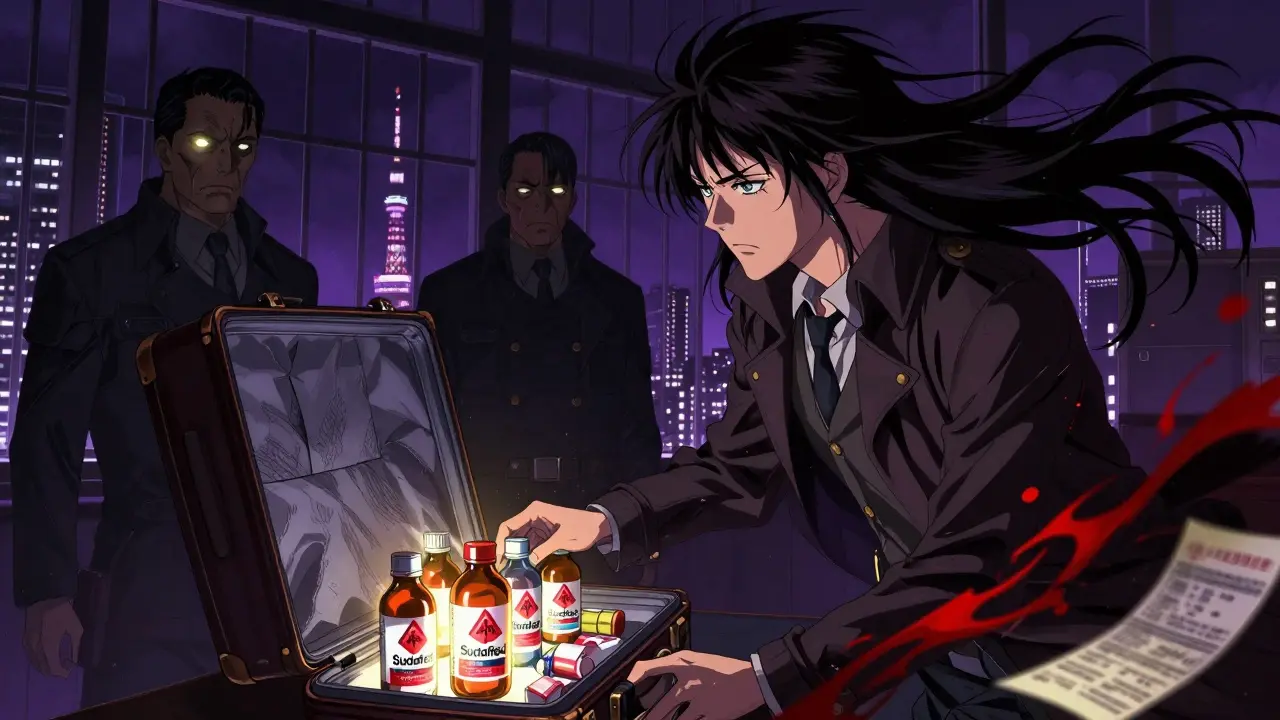
Many travelers assume that if a medication is sold over the counter at home, it’s fine to pack in their suitcase. That’s a dangerous assumption. Countries around the world have completely different rules about what’s legal in a medicine cabinet - and what can land you in jail.
Why Your Medicine Cabinet Isn’t Global
Just because you can buy Sudafed at your local pharmacy doesn’t mean you can bring it into Japan, Mexico, or the UAE. What’s considered harmless in the U.S. - like pseudoephedrine, diphenhydramine, or codeine - is classified as a controlled substance elsewhere. These aren’t random bans. They’re based on national drug control laws, often tied to preventing abuse or illegal manufacturing. The International Narcotics Control Board (INCB) tracks these rules, but only 78 out of 195 countries have officially shared their regulations. That means in places like Indonesia, Pakistan, or Thailand, you’re flying blind.The U.S. Centers for Disease Control and Prevention (CDC) started warning travelers about this in 2016. Since then, over 200 Americans have been detained or arrested for carrying OTC meds abroad. In 2022 alone, the U.S. Embassy in Japan reported 217 cases of travelers caught with banned medications. Most didn’t realize they were breaking the law.
The Top 5 Medications That Get You in Trouble
- Pseudoephedrine - Found in Sudafed, Claritin-D, and many cold remedies. It’s banned outright in Japan, Mexico, and Singapore. In Japan, possession can lead to up to five years in prison. Even small amounts are confiscated. This is the most common reason travelers get detained.
- Diphenhydramine - The active ingredient in Benadryl. Japan requires a doctor’s note for any amount, and Zambia limits you to 30 tablets. In 2022, customs officials in Zambia seized over 1,800 Benadryl products from travelers.
- Codeine - Present in cough syrups and some pain relievers like Tylenol 3. It’s tightly controlled in 14 countries, including the UAE, Japan, Greece, and Indonesia. In the UAE, carrying codeine without a permit can mean 1 to 3 years in prison. Even a single bottle can trigger a detention.
- Zolpidem (Ambien) - A sleep aid. Banned in Egypt, Saudi Arabia, and the UAE. In France, you need special permission before arrival. In 2022, 83 travelers were detained in France just for having Ambien in their luggage.
- ADHD Medications (Adderall, Ritalin) - These contain amphetamines. They’re illegal in 22 countries, including Sweden, Japan, and Switzerland. Sweden detained 147 travelers with ADHD meds in 2021. A valid U.S. prescription means nothing there.
Even common things like lidocaine patches or herbal supplements with ephedra are banned in Japan. The Japanese Ministry of Health, Labour and Welfare lists 26 U.S.-legal medications that are completely prohibited. Over 90% of the cases they handle involve travelers with Sudafed or Benadryl.
Japan: The Strictest Country in the World
Japan has the most aggressive enforcement of any country. They don’t care if you have a prescription. They don’t care if it’s OTC. If it’s on their banned list, it’s illegal. That includes:- Pseudoephedrine
- Diphenhydramine (Benadryl)
- Lidocaine patches over 4%
- Any product with ephedra
- Codeine and zolpidem
To bring in any of these, you need a Yunyu Kakunin-sho - an import certificate. The process takes 4 to 6 weeks. You apply online through the Ministry of Health, Labour and Welfare. In 2023, only 68% of first-time applicants got approved. And you can’t apply until you have a confirmed travel date.
Japan’s customs officials are trained to spot U.S. medications. They scan luggage for brand names like “Sudafed” or “Benadryl.” Even if you think you’re hiding it in a pill organizer, they’ll find it. And they will take it - and possibly arrest you.

Other Countries with Surprising Rules
- United Arab Emirates - Any sedative (Xanax, Valium), codeine, or ADHD medication without a permit leads to mandatory 2-4 years in prison. They don’t negotiate. They don’t ask for a doctor’s note. You’re detained on the spot.
- Mexico - Pseudoephedrine is banned, but prescription-strength lidocaine is allowed if you have documentation. Don’t assume “nearby” means similar rules.
- Thailand - Even if a medication is legal there, you still need a doctor’s note for any controlled substance. They logged over 1,200 traveler incidents in 2022 - almost all could’ve been avoided with paperwork.
- Philippines - One of the few exceptions. They allow up to a 30-day supply of most OTC meds without paperwork. But don’t assume this applies everywhere else.
- Indonesia - No official rules published to the INCB. But in 2022, 89 travelers were detained for carrying codeine. No warning. No notice. Just arrest.
How to Avoid Getting Arrested
This isn’t about being paranoid. It’s about being prepared. Here’s exactly what you need to do:- Check each destination’s rules - Go to the U.S. State Department’s travel site or the INCB’s online database. Don’t rely on Google. Use official sources.
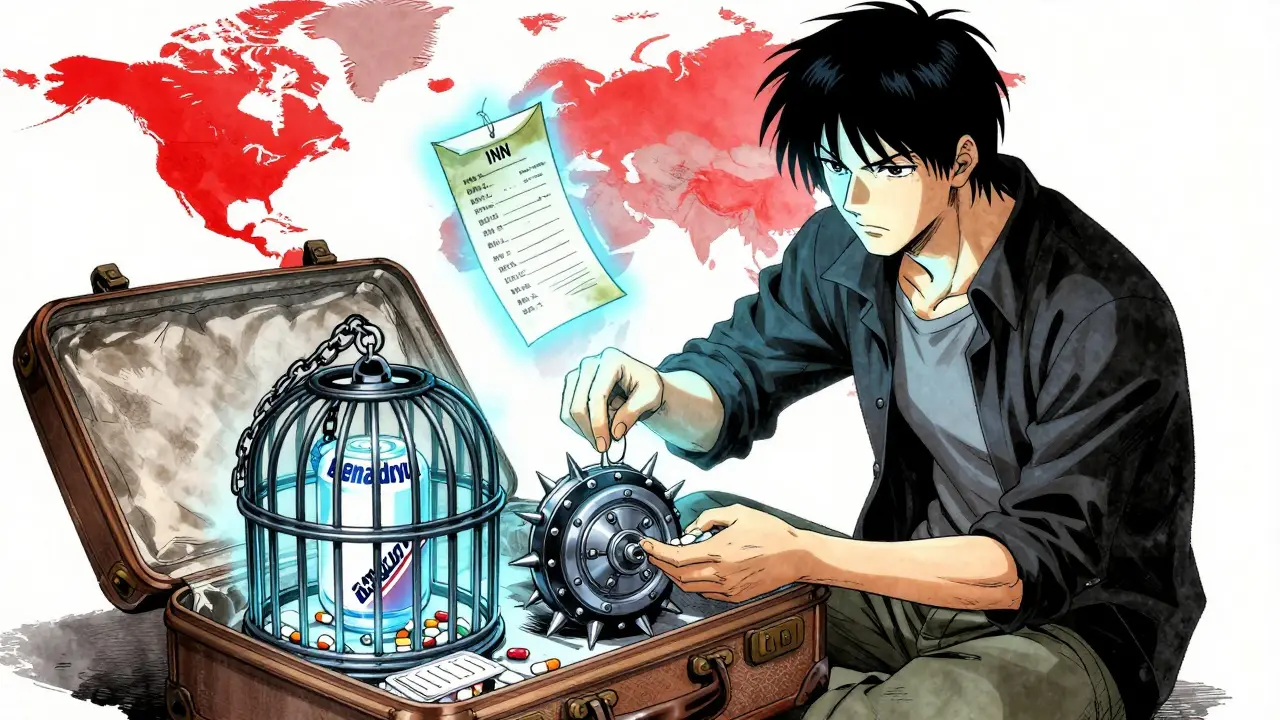
- Carry meds in original containers - Pharmacy labels with your name, dosage, and prescription info are critical. If you transfer pills to a pill organizer, you’re risking detention.
- Get a doctor’s letter - Ask your doctor to write a letter on letterhead listing the medication’s International Nonproprietary Name (INN), not the brand name. For example: “Diphenhydramine hydrochloride 25 mg” - not “Benadryl.” This avoids confusion.
- Don’t exceed the allowed quantity - Japan allows up to two months’ supply without a certificate. Other countries have stricter limits. If you’re bringing a 90-day supply, you’re asking for trouble.
- Apply for permits early - Japan’s certificate takes 6 weeks. Start 12 weeks before you leave. Email [email protected] for questions. They respond within 72 hours.
- Don’t assume OTC = safe - 67% of all medication-related arrests happen because travelers thought, “It’s just a cold pill.” It’s not.
Also, avoid carrying anything labeled “natural” or “herbal.” Many countries ban supplements containing ephedra, kava, or stimulant herbs. Even melatonin is restricted in some places.
What to Do If You’re Detained
If you’re stopped at customs:- Stay calm. Do not argue.
- Do not lie or try to hide anything.
- Ask to speak to your embassy immediately.
- Do not sign anything without legal advice.
The U.S. Embassy can’t get you out of jail. They can’t override local laws. But they can help you find a lawyer, notify family, and ensure you’re treated fairly. Don’t wait until you’re arrested to find their number. Save it in your phone before you leave.
Travel Insurance and New Tools
Most major travel insurance policies now cover medication-related legal issues - up from 41% in 2019 to 73% in 2023. But check your policy. Not all cover arrest or detention.New tools are helping. The IATA Travel Pass now includes a medication module for 65 destinations. Japan’s “MediSafe Japan” app lets you check if your meds are allowed and even download a printable import certificate template. Download it before you fly.
Still, only 28% of travel agencies mention medication rules to clients. And 61% of travelers don’t know OTC meds can be illegal abroad. Don’t be one of them.
Final Warning: Your Prescription Doesn’t Protect You
This can’t be said enough: a U.S. prescription means nothing in Japan, the UAE, or Sweden. In Q1 2023, Japan detained 17 Americans who had valid prescriptions. They still got arrested.Traveling with medication isn’t like packing clothes. It’s like carrying a legal document. If you don’t follow the rules of the country you’re entering, you’re breaking their law - no matter how harmless it seems to you.
Check the rules. Get the paperwork. Carry the right labels. And don’t assume your medicine cabinet travels with you.
Can I bring Benadryl to Japan?
No, not without a doctor’s note and prior approval. Diphenhydramine is a controlled substance in Japan. Even a single tablet can be confiscated. You must apply for a special import certificate from the Japanese Ministry of Health, Labour and Welfare. Without it, you risk detention.
Is Sudafed banned in Mexico?
Yes. Pseudoephedrine is completely banned in Mexico. It’s classified as a precursor for illegal drug manufacturing. Even if you’re carrying it for a cold, customs will seize it. You may be questioned or detained. There are no exceptions for travelers.
What happens if I have Adderall in the UAE?
Adderall contains amphetamine, which is illegal in the UAE without a special permit. Possession can lead to mandatory imprisonment of 2 to 4 years. Even if you have a U.S. prescription, it won’t protect you. Many travelers have been arrested for carrying ADHD meds. Do not bring them.
Can I bring codeine cough syrup to Greece?
Codeine is a Schedule II controlled substance in Greece. You need a special permit from the Greek Ministry of Health before arrival. Without it, you risk arrest and confiscation. Even small amounts are treated seriously. Apply for permission at least 8 weeks before your trip.
Do I need a doctor’s letter for OTC meds?
Yes - for any medication that could be considered controlled, even if it’s OTC at home. A doctor’s letter should include the generic name (like “diphenhydramine”), dosage, reason for use, and your diagnosis. Brand names like “Benadryl” can cause confusion. This reduces the chance of detention by 89%, according to CDC data.
Are there apps to check if my meds are allowed?
Yes. Japan’s “MediSafe Japan” app lets you search your medications and download required forms. The IATA Travel Pass includes medication rules for 65 countries. Both are free and updated regularly. Use them before you pack.
What if my country doesn’t publish medication rules?
If your destination hasn’t shared rules with the INCB - like Indonesia, Pakistan, or Thailand - assume everything is risky. Contact the embassy directly. Ask for a written list of prohibited substances. Even if they say “it’s fine,” get it in writing. Many travelers have been arrested in places with no public rules.
Can I mail my meds ahead of time?
It’s not recommended. International mail is subject to the same customs rules as luggage - and often more scrutiny. Many countries prohibit mailing controlled substances entirely. Even if you think it’s safer, you’re adding another layer of risk. Carry them with you, properly documented.

Bret Freeman
December 23, 2025 AT 16:10This is the kind of thing that gets Americans killed overseas. You think your little Benadryl is harmless? In Japan, they treat it like you're smuggling heroin. And yet people still pack it like it's a souvenir. No one's teaching this in high school. No one's warning you until you're in a cell with no lawyer. This isn't about freedom-it's about respecting laws you didn't bother to learn.
And don't even get me started on the UAE. They don't care if you're diabetic, asthmatic, or just tired. If it's on their list, you're guilty. No exceptions. No mercy. No 'I didn't know.' That's not cruelty-that's sovereignty.
Stop acting like your prescription is a magic wand. It's not. It's a piece of paper that means nothing outside your country. If you can't be bothered to check before you fly, you deserve what you get.
I've seen people cry in embassy waiting rooms because they thought 'OTC' meant 'universal.' It doesn't. It means 'your problem, not theirs.' Stop being naive. Start being responsible.
And if you're one of those people who says 'It's just a cold pill,' you're the reason this article had to be written in the first place.
Austin LeBlanc
December 25, 2025 AT 03:23You people are so clueless it's pathetic. I work in airport security and I see this every single week. Someone's got a bottle of Benadryl in their carry-on like it's toothpaste. They look at me like I'm the villain when I confiscate it. Like I'm the one breaking the rules.
Here's the truth: you're not a victim. You're a liability. You cost taxpayers thousands in detention, legal fees, and diplomatic headaches. And you still don't get it.
Next time, Google it. Or better yet-don't bring it at all. You think the Japanese care that you're from Ohio? No. They care that you broke their law. And they will make you pay.
Stop acting like you're entitled to bring your American medicine everywhere. You're not. You're a guest. Act like one.
niharika hardikar
December 25, 2025 AT 23:19The regulatory asymmetry in pharmaceutical governance presents a profound challenge to transnational mobility. The absence of harmonized pharmacopeial standards across sovereign jurisdictions creates a high-risk environment for inadvertent contraband possession. The INCB’s data lacuna-particularly in jurisdictions such as Indonesia and Pakistan-exacerbates this vulnerability.
Furthermore, the conflation of OTC status with non-regulated status reflects a fundamental epistemological error in traveler preparedness. The pharmacological classification of substances like pseudoephedrine and diphenhydramine as controlled precursors in certain jurisdictions is not arbitrary-it is rooted in national drug control frameworks designed to mitigate illicit synthesis pathways.
Travelers must adopt a risk-based compliance model: assume all non-prescription pharmaceuticals are restricted unless explicitly validated via official state channels. The CDC’s 2016 advisory was a necessary but insufficient intervention. What is required is institutionalized pre-departure pharmaceutical vetting protocols, integrated into airline booking systems and passport application workflows.
Until such systemic reforms are implemented, the burden remains disproportionately on the individual traveler-a deeply inequitable arrangement.
John Pearce CP
December 27, 2025 AT 11:57Let me be perfectly clear: if you can't be bothered to learn the laws of a country before you visit, you don't deserve to be there. The United States is not the center of the world. Just because you can buy Sudafed at CVS doesn't mean the rest of the planet has to bend to your convenience.
Japan has every right to ban pseudoephedrine. They've seen what happens when these chemicals leak into underground labs. The UAE has every right to lock people up for codeine. They've lost citizens to addiction. You think your little cold medicine is more important than their national security?
And don't give me that 'I didn't know' nonsense. You had Google. You had the State Department. You had the CDC. You chose ignorance. Now you sit in a foreign jail. That's not a tragedy-it's a consequence.
Stop blaming the countries. Start blaming yourself. And if you're still dumb enough to pack Benadryl, don't bother calling your embassy. They're not coming to bail you out of your own stupidity.
Andrea Di Candia
December 28, 2025 AT 11:43I get why this feels overwhelming. I used to think, 'It's just a pill,' too-until my friend got detained in Thailand for carrying melatonin. She didn't even know it was restricted. We were all shocked.
But here's the thing: this isn't about fear. It's about awareness. We can make travel safer without turning it into a minefield. Learn the basics. Keep meds in original bottles. Ask the embassy. Use the apps. It takes 10 minutes.
And if you're traveling with someone who has a chronic condition? Talk to your doctor. Get that letter. It's not bureaucracy-it's protection.
We're all just trying to get from point A to point B without breaking the law. A little prep goes a long way. You don't need to be paranoid. Just prepared.
And hey-if you're reading this and you're about to fly? Go check the IATA app right now. Seriously. Do it. Your future self will thank you.
Joseph Manuel
December 28, 2025 AT 21:37The CDC's assertion that 67% of arrests stem from 'I thought it was OTC' is statistically misleading. The real failure is institutional. Airlines do not screen for pharmaceutical compliance. Travel agencies do not educate. Customs agencies do not provide multilingual, accessible databases. The burden is entirely outsourced to the individual.
This is not a behavioral issue-it is a systemic failure of governance. The U.S. government does not mandate pre-travel pharmaceutical vetting. The FAA does not require it. The Department of Homeland Security does not integrate it into passport checks.
Meanwhile, foreign governments are left to enforce laws that their own citizens barely understand, let alone foreign travelers. The result? A global patchwork of punitive enforcement targeting the most vulnerable: tourists with chronic illness, elderly travelers, and those with cognitive disabilities.
Until there is a binding international framework for pharmaceutical travel compliance, this will continue. And the victims will keep being Americans who thought their pharmacy was a global authority.
Andy Grace
December 29, 2025 AT 13:47I traveled to Japan last year with my anxiety meds. I had the letter, the original bottles, everything. Still, I was nervous. The officer just looked at me, nodded, and waved me through. Didn't even ask for the paperwork.
But I knew the risks. I did the research. That's all I'm saying.
Don't panic. But don't ignore it either. Most people who get caught didn't even try. I'm not saying it's easy-but it's doable. Just take the time. It's not that hard.
Delilah Rose
December 30, 2025 AT 08:38I think we need to talk about the emotional weight of this. It's not just about legal risk-it's about dignity. Imagine being a diabetic, traveling with insulin, and having a customs officer stare at you like you're smuggling weapons because you have a vial labeled 'NovoLog.' You didn't choose to be sick. You didn't choose the brand. You just need to live.
And then there's the elderly-grandparents who take Benadryl for sleep. They're not trying to break the law. They're trying to rest after a long flight. But they're treated like criminals because their medication has a chemical name that sounds like a drug cartel ingredient.
It's not just about rules. It's about how we treat people who are already vulnerable. We're not just talking about pills. We're talking about trust. About compassion. About whether we see travelers as people-or as potential threats.
Maybe the real question isn't 'What can't you bring?' but 'Why do we make it so hard for people to just be human while traveling?'
I don't have the answers. But I know we can do better than this.
Spencer Garcia
December 30, 2025 AT 15:00Use the MediSafe Japan app. It's free. Takes 2 minutes. Type in your meds. It tells you if they're banned or need paperwork. Done.
Also, keep pills in original bottles. Always. No pill organizers. No ziplocks.
And if you're on Adderall? Don't bring it. Just don't. There are alternatives. You'll be fine.
Simple. No drama. Just do it.
Abby Polhill
December 31, 2025 AT 04:38As someone who’s lived in five countries, I’ve learned this: what’s ‘normal’ in one place is ‘dangerous’ in another. In India, we have codeine cough syrup on every corner. But if I brought it to Dubai? Jail. In Japan, they don’t even let you bring ibuprofen if it’s branded as ‘Advil’-they want the generic name.
It’s not about being right or wrong. It’s about adapting. Like learning to drive on the left side of the road. You don’t complain-you adjust.
And honestly? The fact that Japan even has an app for this? That’s impressive. Most countries don’t bother. They just arrest you and call it a day. Japan gives you a chance to comply. That’s not tyranny-that’s clarity.
So if you’re going somewhere new? Treat your meds like your passport. Check them. Respect them. Don’t assume. Ask. Then go.
Pankaj Chaudhary IPS
January 1, 2026 AT 03:20As an Indian citizen who has traveled extensively, I must say this: the West assumes its pharmaceutical norms are universal. They are not. In India, we have strict controls on pseudoephedrine and codeine precisely because of rampant abuse and illicit manufacturing. We do not ban these because we are oppressive-we ban them because we are responsible.
Travelers from the U.S. often react with outrage when their 'over-the-counter' meds are confiscated. But outrage is not a legal defense. What is needed is humility.
India does not publish its full list to the INCB because we have seen how easily these lists are weaponized by black-market vendors. So yes, if you bring codeine here without documentation, you will be detained. Not because we hate you-but because we protect our people.
Do your research. Respect our laws. It’s not a privilege to bring your medicine-it’s a responsibility.
Aurora Daisy
January 2, 2026 AT 22:21Oh wow, a whole article about how Americans can't bring their junk to other countries. Shocking. I bet if a Japanese person tried to bring matcha-flavored pseudoephedrine into the U.S., the FDA would have a press conference.
But no, of course not. We're the land of the free, where every pill is sacred and every law is optional. Meanwhile, other countries are like, 'Hey, maybe we shouldn't let people turn cough syrup into meth?' And you're like, 'But it's OTC in Walmart!'
Enjoy your prison cell. I'm sure the Wi-Fi is free.
Katie Taylor
January 3, 2026 AT 01:57Stop being scared. You think the world is out to get you because you have a cold? No. The world just wants you to follow the rules. And if you can't do that, then maybe you shouldn't be traveling.
But here's the good news: you can fix this. Right now. Go to the State Department website. Type in your meds. Print the list. Put it in your wallet. Done.
You don't need to be perfect. You just need to try.
I'm not mad. I'm just telling you how to survive. You're not a criminal. You're just unprepared. And that's fixable.
Payson Mattes
January 4, 2026 AT 05:29Wait… have you ever wondered why only the U.S. and a few other countries have so many banned OTC meds? Coincidence? I don’t think so. The INCB? That’s a front. The real reason? Big Pharma doesn’t want you accessing cheap generics from abroad. That’s why they lobbied to make even Benadryl a 'controlled substance' in places like Japan-so they can charge $40 for a bottle of 'equivalent' medicine.
And don’t tell me it’s about drug manufacturing. If that were true, why is codeine legal in Canada and the UK? Why do they have it on every pharmacy shelf? It’s not about safety-it’s about profit.
They’re using 'national security' as a cover to control your access. And you’re falling for it. You’re scared of your own medicine. That’s not a law problem. That’s a corporate manipulation problem.
Next time you see a customs officer take your Sudafed… ask them: 'Who benefits from this?'
I’ve seen the documents. This isn’t about safety. It’s about control.
Bret Freeman
January 5, 2026 AT 22:13And yet here we are, five years after the CDC’s first warning, and 61% of travelers still don’t know this is a thing. That’s not ignorance. That’s willful neglect. You don’t need a PhD to Google 'banned medications Japan.' You need to care enough to try.
It’s not about the pills. It’s about the attitude. You think the world owes you your American pharmacy. It doesn’t. It owes you respect. And if you can’t give that, then stay home.