
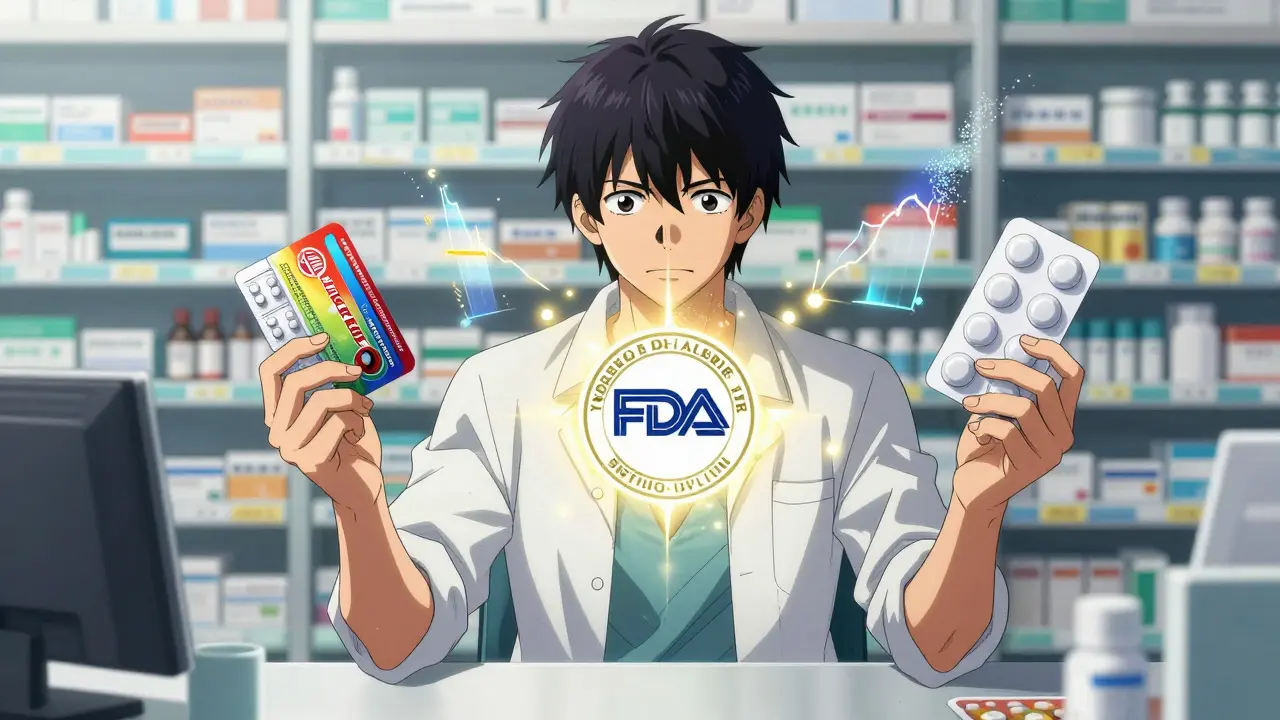
When you walk into the pharmacy to pick up your prescription, you might see two options: the familiar brand-name pill in its colorful packaging, or a smaller, plain tablet with a different name and a much lower price. Many patients wonder - is the cheaper one just as good? The answer isn’t always simple, but the data is clear: generic medications work the same as brand-name drugs in nearly every case - and they save you hundreds, sometimes thousands, of dollars a year.
What Exactly Is a Generic Drug?
A generic drug is the exact same medicine as the brand-name version, just without the marketing budget. It contains the same active ingredient, in the same strength, and works the same way in your body. The FDA requires that generics meet the same strict standards for quality, purity, and effectiveness as the original brand. The only differences are in the inactive ingredients - things like dyes, fillers, or coatings - and the shape, color, or size of the pill. These changes don’t affect how the drug works, but they can cause confusion.
For example, if you’ve been taking a blue, oval-shaped sertraline tablet for depression, and your pharmacy switches you to a white, round one labeled "Zoloft generic," it might feel like a different drug. But it’s not. The active ingredient - sertraline hydrochloride - is identical. The FDA’s bioequivalence rules require that generics deliver the same amount of medicine into your bloodstream within the same time frame as the brand. Studies show the actual difference in absorption is typically less than 4% - far smaller than the natural variation your body experiences from day to day.
Why Are Generics So Much Cheaper?
Brand-name drugs cost more because the company that developed them spent years and hundreds of millions of dollars on research, clinical trials, and marketing. Once the patent expires - usually 20 years after the drug was first filed - other companies can make copies. They don’t need to repeat expensive trials. Instead, they prove bioequivalence through simpler, cheaper tests. That’s why a 30-day supply of atorvastatin (Lipitor) can cost $0.10 per pill as a generic versus $4.50 for the brand. Or why pregabalin (Lyrica) dropped from $650 a month to $15 when the generic arrived.
The savings aren’t just personal. Over the last decade, generic drugs saved the U.S. healthcare system more than $1.67 trillion. That’s $265 saved per person, every year. For seniors on fixed incomes, or people without good insurance, that difference can mean the difference between taking your medicine or skipping doses.
When Do Generics Not Work as Well?
Most of the time, generics are just as effective. But there are exceptions - and they matter.
Some medications have a narrow therapeutic index, meaning the difference between a helpful dose and a harmful one is very small. For these, even tiny variations in how the drug is absorbed can be risky. The most common examples are:
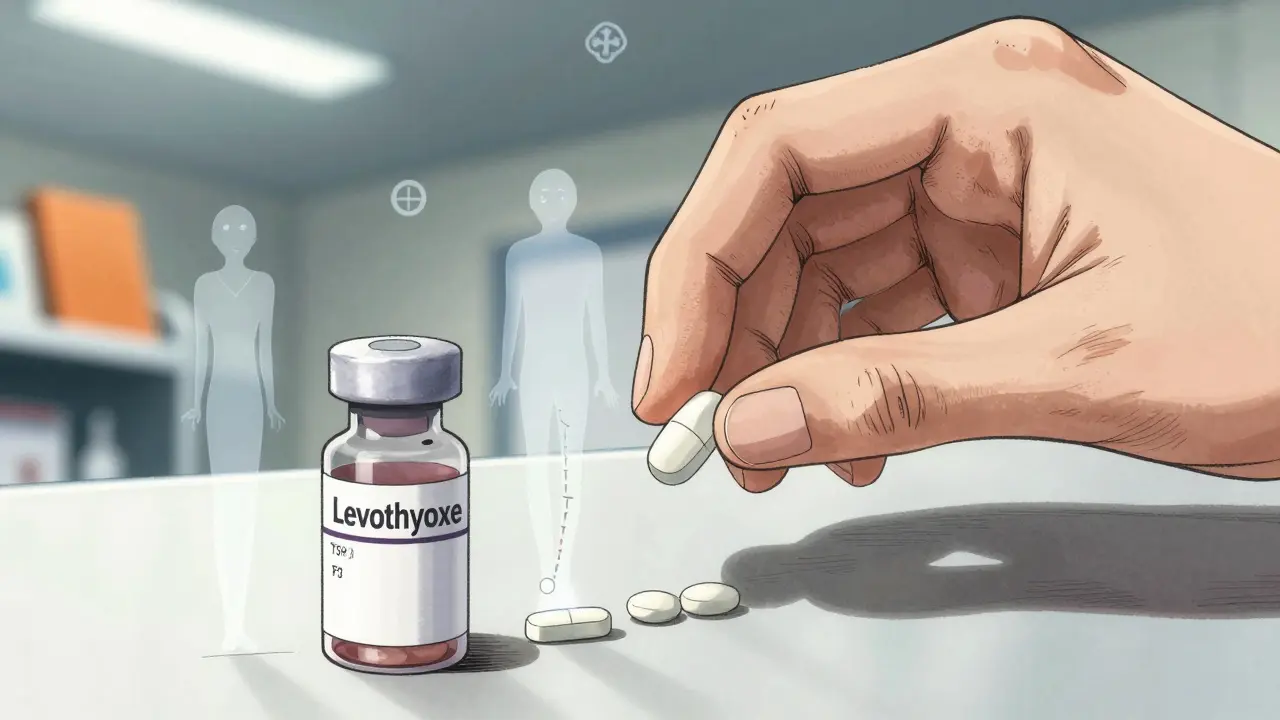
- Levothyroxine (for thyroid conditions): The FDA recommends sticking with the same brand or generic because even small changes in absorption can affect your TSH levels. Some patients need to be monitored more closely if they switch.
- Warfarin (a blood thinner): While large studies of over 100,000 patients found no increase in blood clots or bleeding with generic warfarin, some doctors still prefer consistency - especially when starting treatment.
- Carbamazepine and phenytoin (for seizures): There have been rare reports of breakthrough seizures after switching generics. It’s not because the drug is less effective - it’s because of how the body reacts to slight changes in absorption.
Another tricky area is complex delivery systems. Drugs like Advair Diskus (an inhaler) or Transderm Scop (a patch) rely on how the medicine is delivered to your body. A generic inhaler might have the same active ingredients, but if the device doesn’t release the powder the same way, you might not get the full dose. A 2016 study found 12% of patients had trouble using a generic inhaler correctly, even though the medicine inside was identical.
What Do Real Patients Say?
Looking at over 15,000 reviews on Drugs.com, 82% of people reported being satisfied with generics - just 3% lower than brand-name users. The biggest complaint? Appearance changes. People get confused when their pill looks different, especially if they take multiple medications. One Reddit user wrote: "I take five pills a day. One changed color and I thought I was taking something else. I almost skipped my dose."
On the other hand, positive reviews often highlight cost. "Switched from brand-name Wellbutrin XL to generic bupropion - saved $500 a month. Still works fine," wrote one user. But there’s a catch: 41% of negative reviews about generic bupropion XL mention reduced effectiveness. The FDA issued a warning in 2012 about this specific formulation, and some manufacturers still haven’t fully fixed the issue. That’s why pharmacists now check which generic version they’re dispensing - not all are created equal.
What Should You Do?
Here’s how to make the smart choice:
- Ask your pharmacist if your prescription has a generic. Most do. If they say no, ask why - sometimes it’s just because the pharmacy didn’t stock it.
- Check the FDA’s Orange Book (online or through your pharmacist). Look for "AB" ratings - those mean the generic is approved as interchangeable.
- Stick with one generic manufacturer if possible. If your pharmacy switches from one generic to another, your body might react. Ask them to keep you on the same one.
- Watch for side effects after switching. If you feel different - more tired, more anxious, worse pain - tell your doctor. It might be the generic, or it might be something else.
- Use price tools like GoodRx. Sometimes the brand-name drug is cheaper than the generic if you use a coupon - especially for newer medications still under patent.
Also, know your state’s rules. In 49 states, pharmacists can automatically switch you to a generic unless your doctor writes "dispense as written." In 28 states, they must notify you if you’re being switched for a narrow therapeutic index drug like levothyroxine.
What About "Branded Generics"?
Some companies make "authorized generics" - exact copies of the brand-name drug, sold under a different label. For example, Eli Lilly sells an authorized generic version of Humalog insulin. It’s the same formula, same factory, same packaging - just cheaper. These often cost 20-30% less than the brand and are a good middle ground if you’re worried about switching to a totally unknown generic.
Bottom Line: Generics Are Safe - Unless They’re Not
For 98.5% of prescriptions, generics are just as safe and effective as brand-name drugs. They’re not a compromise - they’re the standard. The FDA doesn’t approve them unless they work the same. The only reason to avoid them is cost, appearance confusion, or a specific medical need.
If you’re on a chronic medication like blood pressure, cholesterol, or antidepressants, switching to a generic is one of the smartest financial moves you can make for your health. But if you’re on a drug with a narrow therapeutic index, or you’ve had trouble with generics before, talk to your doctor before switching. Don’t assume the cheapest option is always the best - but don’t assume the most expensive one is always better, either.
Medicine isn’t about brands. It’s about results. And for most people, generics deliver exactly what they need - at a price they can afford.
Are generic drugs as effective as brand-name drugs?
Yes, for the vast majority of medications, generic drugs are just as effective. The FDA requires them to have the same active ingredient, strength, dosage form, and bioequivalence as the brand-name version. Studies show that generics perform identically in 98.5% of cases across conditions like high blood pressure, diabetes, and depression. The only differences are in inactive ingredients, color, or shape - none of which affect how the drug works in your body.
Why are generic drugs cheaper than brand-name drugs?
Generic drugs are cheaper because their manufacturers don’t have to repeat expensive clinical trials. The original brand company spent years and hundreds of millions developing the drug and proving its safety. Once the patent expires, other companies can produce the same medicine using a faster, cheaper approval process called an ANDA. They only need to prove their version works the same way - not that it’s new. This cuts costs dramatically, which is why generics typically cost 80-85% less than brand-name drugs.
Can switching to a generic drug cause side effects?
For most people, no. But in rare cases, switching can cause issues - especially with drugs that have a narrow therapeutic index, like levothyroxine, warfarin, or seizure medications. Even tiny differences in how the body absorbs the drug can matter. Also, some people react to inactive ingredients like dyes or fillers. If you feel different after switching - more tired, anxious, or with worsening symptoms - tell your doctor. It’s not common, but it happens.
Should I always choose the generic version?
For most prescriptions, yes - unless your doctor advises otherwise. Generics are safe, effective, and save you money. But if you’re taking a drug with a narrow therapeutic index, or you’ve had problems with generics before, stick with the brand. Also, if you’re on a complex delivery system like an inhaler or patch, make sure the generic is designed the same way. Always talk to your pharmacist or doctor if you’re unsure.
How do I know if my generic is safe?
Check the FDA’s Orange Book online or ask your pharmacist. Look for an "AB" rating - that means the generic is approved as interchangeable with the brand. Also, make sure you’re getting it from a reputable pharmacy. Avoid buying generics from unknown online sellers. If your pill looks different from last time, ask your pharmacist if it’s the same manufacturer. Consistency matters, especially for long-term medications.
Do insurance plans prefer generics?
Yes. Nearly all insurance plans, including Medicare Part D, automatically prefer generics. They often have lower copays - sometimes $5 instead of $50. Some plans won’t cover the brand-name drug at all unless your doctor proves you need it. This isn’t just to save money - it’s because generics are proven to work just as well.
Can I ask my doctor to prescribe a brand-name drug?
Yes, you can. But your doctor may ask why. If you’re concerned about effectiveness, or have had a bad reaction to a generic before, they can write "dispense as written" on the prescription. Some conditions - like thyroid disease or epilepsy - may require brand-name drugs for stability. But for most people, the generic is the better choice - especially if cost is a barrier to taking your medicine regularly.
What to Do Next
Next time you get a prescription, ask: "Is there a generic?" If the answer is yes, ask: "Which one?" Then ask your pharmacist to explain any changes in appearance. Keep a list of the medications you take - including the generic name and manufacturer - so you can spot changes. Use tools like GoodRx to compare prices. And if you’re worried about switching, talk to your doctor before you make the change. You don’t have to accept the first option you’re given.
Medicine isn’t about logos. It’s about what works - and what you can afford. Generics aren’t second-best. They’re the standard. And for most people, they’re the smartest choice.


Diana Stoyanova
January 8, 2026 AT 14:51Okay but let’s be real - generics saved my life. I was on $800/month for my antidepressant before switching to the generic. Now I pay $12. I didn’t feel any difference in mood, energy, or side effects. The only thing that changed? My bank account stopped crying. People freak out over pill color like it’s a magic spell, but your body doesn’t care if it’s blue or white - it cares if the chemistry works. And it does. Every time.
Gregory Clayton
January 9, 2026 AT 00:53Typical corporate propaganda. The FDA? More like FDA-Pharma Inc. They let generics in because Big Pharma wants you hooked on cheap meds so they can upsell you on supplements and weird wellness crap later. I stick with brand-name. I don’t trust some factory in India making my pills with ‘inactive ingredients’ that could be anything. My health isn’t a budget spreadsheet.
Catherine Scutt
January 9, 2026 AT 06:16Wow. Just… wow. You’re telling me people actually believe this? The fact that you think generics are ‘just as good’ proves you’ve never actually read the fine print. That 4% absorption difference? That’s enough to throw off someone on warfarin. And don’t even get me started on bupropion XL - the FDA warned about it for a reason. People die because they’re switched without warning. This isn’t about money. It’s about negligence disguised as savings.
Darren McGuff
January 10, 2026 AT 21:08As a pharmacist for 22 years, I’ve seen it all. Generics? 95% of the time, they’re perfect. But I’ve had patients who swore their seizure meds ‘stopped working’ after switching - and when we switched them back to the original generic manufacturer, boom, stability returned. It’s not about the active ingredient. It’s about the *delivery system*. The fillers, the coating, the dissolution rate - tiny things, but your body notices. Always ask your pharmacist: ‘Which manufacturer?’ And stick with it.
Alicia Hasö
January 11, 2026 AT 08:18To everyone who says generics are ‘just as good’ - I applaud your optimism. But let’s not romanticize the system. The FDA’s AB rating is a starting point, not a guarantee. For patients on levothyroxine, consistency isn’t a luxury - it’s a medical necessity. I’ve helped seniors navigate pharmacy switches where their TSH levels spiked 30% after a generic change. This isn’t theoretical. It’s real. And if your doctor doesn’t talk to you about this, find a new one. Your health deserves more than a cost-cutting algorithm.
Ashley Kronenwetter
January 11, 2026 AT 08:37I appreciate the thorough breakdown. However, I must emphasize that while generics are statistically equivalent, individual biological variance is not accounted for in large-scale studies. Patients with complex polypharmacy or metabolic disorders may experience clinically significant fluctuations. A standardized approach to medication substitution is insufficient without individualized monitoring. I recommend all patients maintain a medication log, including manufacturer and lot number, especially for narrow-therapeutic-index drugs.
Aron Veldhuizen
January 12, 2026 AT 11:24You say generics are ‘the standard’ - but who defined that standard? The same corporations that own the brand-name patents and then license the generic versions to their own subsidiaries. Ever heard of ‘authorized generics’? They’re the same pill, same factory, same everything - but sold under a different label for 30% less. So why does the brand cost $4.50 and the ‘generic’ cost $0.10? Because the ‘generic’ is still owned by the same company. You’re not saving money from Big Pharma - you’re just paying them in a different color box. The real villain? Patents. Not generics. The system is rigged.
Micheal Murdoch
January 12, 2026 AT 23:02Hey - I get it. You’re scared of change. I used to be too. I took brand-name Zoloft for years. Then I switched to generic sertraline because my insurance made me. I was nervous - but nothing changed. Not my mood, not my sleep, not my anxiety. I saved $400/month. That’s a vacation. That’s groceries. That’s not buying coffee for a month. The pill looks different? So what. Your body doesn’t care about branding. It cares about whether you take it. And if you can’t afford the brand? You won’t take it at all. Generics aren’t a compromise. They’re the only way most people get treated.
Drew Pearlman
January 13, 2026 AT 05:10Just wanted to say - thank you for writing this. I’m a nurse and I see so many people skip doses because they can’t afford their meds. I had a 72-year-old woman tell me last week she was cutting her Lipitor in half because the brand was $180. I showed her the generic - $12. She cried. Not because she was sad - because she realized she didn’t have to suffer anymore. This isn’t about pills. It’s about dignity. Generics aren’t ‘lesser.’ They’re justice. Keep sharing this. People need to hear it.
Lindsey Wellmann
January 13, 2026 AT 16:32OMG I JUST REALIZED I’VE BEEN TAKING A WHITE PILL FOR 3 MONTHS AND I THOUGHT I WAS ON A DIFFERENT MEDICATION 😭 I WAS SO STRESSED OUT I ALMOST STOPPED TAKING IT 😭 BUT THEN I CHECKED THE NAME AND IT WAS THE SAME 😭 THANK YOU FOR THIS POST I FEEL SO MUCH BETTER NOW 💖💖💖
Jerian Lewis
January 15, 2026 AT 15:00People who take generics are just lazy. If you can’t afford your medicine, you shouldn’t be taking it. There are charities, programs, sliding scales - but you don’t want to go through the effort. You want the cheap pill. That’s not responsibility. That’s entitlement. And now you’re blaming the system instead of fixing your own life.
Kiruthiga Udayakumar
January 16, 2026 AT 19:52As someone from India where generics are the ONLY option - I can tell you this: we don’t have a choice. And guess what? We’re not dying. We’re living. My mom takes levothyroxine from a local manufacturer - her TSH is perfect. My brother takes generic metformin - his sugar is stable. Your fear is a luxury. We don’t have the privilege to choose brand-name. We choose life. And it works.
tali murah
January 16, 2026 AT 21:21Let me guess - you’re the kind of person who thinks ‘FDA approved’ means ‘safe.’ Cute. The FDA has a revolving door with pharma execs. They approved Vioxx. They approved OxyContin. They approved 500+ generics with bioequivalence studies done in 12 patients. You think that’s science? It’s a loophole. And you’re celebrating it. Congratulations. You helped kill someone’s kidney because you didn’t want to pay $50 more. You’re not saving money. You’re gambling with biology.
Aron Veldhuizen
January 17, 2026 AT 20:28Wow. So the ‘authorized generic’ is still owned by the original company? That’s not a generic - that’s a corporate shell game. You’re not getting a ‘cheaper alternative’ - you’re getting the same pill with a different sticker. And you’re calling that ‘saving money’? That’s not a win. That’s a PR stunt. The real savings come from true competition - when multiple independent manufacturers enter the market. Until then, you’re just paying the same company, just with a different invoice.