

When a medication triggers a severe allergic reaction, time isn’t just important-it’s life or death. Anaphylaxis from drugs like antibiotics, NSAIDs, or contrast dyes doesn’t wait for a doctor’s appointment. It hits fast, often within minutes, and can shut down breathing, drop blood pressure, and stop the heart. If you or someone around you is having this reaction, knowing exactly what to do in the first five minutes can save a life.
Recognizing the Signs-Even When They’re Subtle
Anaphylaxis doesn’t always start with a rash or hives. In fact, up to 20% of medication-induced cases show no skin symptoms at all. That’s why waiting for a visible reaction is dangerous. Look for trouble with the ABCs: airway, breathing, and circulation.- Swelling of the tongue or throat-so bad that speaking or swallowing becomes impossible
- Noisy, wheezing, or labored breathing
- Hoarse voice or a feeling that your throat is closing
- Dizziness, fainting, or sudden collapse
- Pale, clammy skin-especially in children
- Rapid heartbeat or a sense of impending doom
Step One: Lay Them Flat-No Standing, No Sitting Up
The single most important thing you can do right away is to lay the person flat on their back. Don’t let them stand. Don’t let them sit up. Don’t let them walk to the bathroom. Even if they feel fine, moving around can trigger sudden cardiovascular collapse. Data shows that 15-20% of fatal anaphylaxis cases happen because the person was allowed to stand or walk after symptoms began. If they’re unconscious or pregnant, roll them onto their left side. This keeps the airway open and prevents the baby from pressing on major blood vessels. If they’re having trouble breathing, let them sit with their legs stretched out-this helps blood return to the heart. For kids, hold them flat, not upright. Positioning isn’t optional-it’s part of the treatment.Step Two: Give Epinephrine Immediately
Epinephrine is the only medication that reverses anaphylaxis. Antihistamines like Benadryl? They help with itching. Steroids? They might reduce swelling later. But only epinephrine opens airways, tightens blood vessels, and supports the heart. Use an auto-injector-EpiPen, Auvi-Q, or Adrenaclick-into the outer thigh. You don’t need to remove clothing. Just jab it in and hold for 10 seconds. The dose is 0.3 mg for adults and kids over 30 kg. For children between 15-30 kg, use the 0.15 mg version. Don’t wait for a diagnosis. Don’t ask if it’s “really” anaphylaxis. If you’re unsure, give it. Australian data shows that hesitation caused 35% of preventable deaths between 2015 and 2020. The mantra is simple: IF IN DOUBT, GIVE ADRENALINE.Step Three: Call for Emergency Help-Right Now
Epinephrine works fast-within 1 to 5 minutes-but it doesn’t last long. Its effects wear off in 10 to 20 minutes. That’s why calling emergency services (000 in Australia, 911 in the US) is non-negotiable. Even if the person seems better after the shot, they’re not out of danger. About 20% of people have a second wave of symptoms hours later-called a biphasic reaction. That’s why hospital observation for at least 4 hours is required. For medication-induced cases, some experts now recommend 6-8 hours because the risk is higher than with food allergies.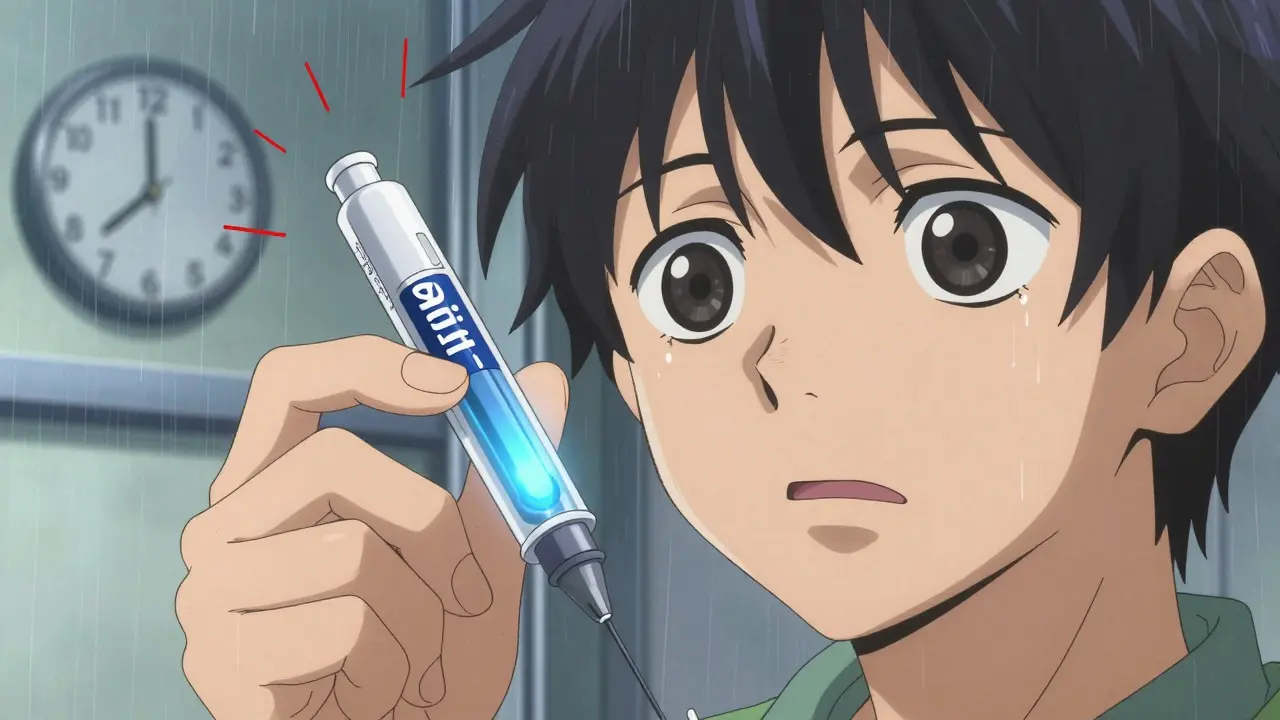
Step Four: Be Ready for a Second Dose
If symptoms don’t improve-or get worse-after 5 minutes, give a second dose of epinephrine. Same spot. Same technique. Some guidelines say you can repeat it every 5-10 minutes if needed. Don’t wait for an ambulance to arrive before giving a second shot. Emergency responders might be minutes away. The patient can’t wait. In rare cases, even two doses won’t be enough. That’s called refractory anaphylaxis. It happens in 5-10% of cases. These patients need IV epinephrine and fluids, which only trained medical teams can give. That’s why getting to a hospital isn’t optional-it’s the next step.What Not to Do
There are a lot of myths about treating anaphylaxis. Here’s what doesn’t work-and what can hurt:- Don’t use antihistamines alone. They do nothing for breathing or blood pressure. Relying on them delays real treatment.
- Don’t give steroids routinely. They were once standard, but new guidelines say they don’t improve survival. Save them for complex cases.
- Don’t inject into the arm or buttocks. The thigh is the only reliable spot. Other areas absorb epinephrine too slowly.
- Don’t let them drink water or eat. Swallowing could trigger choking if the throat is swelling.
- Don’t panic and freeze. Anaphylaxis is scary, but the steps are simple: lay flat, inject, call for help, prepare for a second shot.
Why People Delay-And How to Overcome It
In hospitals, nurses and doctors delay epinephrine because they fear side effects-racing heart, high blood pressure. But here’s the truth: out of 35,000 epinephrine doses given for anaphylaxis between 2015 and 2020, only 0.03% caused serious heart problems. Meanwhile, 70% of deaths happened because epinephrine was given too late-or not at all. In homes and public places, people hesitate because they’ve never used an auto-injector. One study found that 68% of people with allergies carry one, but only 41% feel confident using it. Practice with a trainer device. Watch a video. Get your family trained. The FDA approved a new auto-injector in 2023 with voice guidance-Auvi-Q 4.0-that talks you through each step. It boosted correct use from 63% to 89% in untrained users.
Special Cases: Medications, Age, and Underlying Conditions
Some drugs are more likely to trigger anaphylaxis. Antibiotics like penicillin cause nearly half of all fatal cases. NSAIDs like ibuprofen are next. Muscle relaxants used during surgery are also high-risk. If someone is on beta-blockers-common for high blood pressure or heart conditions-epinephrine may not work as well. In those cases, higher doses may be needed. Studies show some patients need two or three times the standard dose to respond. Obesity adds another layer. People with a BMI over 30 absorb epinephrine differently. New research suggests dosing based on body mass index instead of weight alone leads to more consistent results. This isn’t standard yet, but it’s changing how experts think about treatment.After the Emergency: What Comes Next
Surviving anaphylaxis is just the first step. The next step is prevention. After the hospital, the patient needs a referral to an allergist. They’ll need testing to confirm which drug caused the reaction. That’s critical-because the next time, they might not be so lucky. They’ll get an epinephrine auto-injector prescription. They’ll learn how to use it. They’ll get a medical alert bracelet. They’ll be given an emergency action plan. And they’ll be told this: Don’t wait. Don’t doubt. Don’t hesitate.Final Reminder: You Don’t Need to Be a Doctor
You don’t need medical training to save a life. You just need to know the steps. Lay them flat. Inject the epinephrine. Call for help. Be ready to give a second shot. That’s it. Medication anaphylaxis is rare-but when it happens, it’s brutal. The difference between life and death often comes down to whether someone nearby knew what to do. You could be that person.Can you survive anaphylaxis without epinephrine?
Surviving anaphylaxis without epinephrine is possible, but extremely rare and dangerous. Epinephrine is the only medication that reverses the life-threatening effects-airway swelling, low blood pressure, and heart failure. Without it, the body has no way to fight back. Most deaths occur because epinephrine was delayed or not given at all. Antihistamines and steroids do not replace it.
How long does it take for epinephrine to work?
Epinephrine usually starts working within 1 to 5 minutes. Breathing improves, blood pressure rises, and swelling begins to reduce. But its effects last only 10 to 20 minutes. That’s why calling emergency services is critical-even if the person seems better, they need hospital care to watch for a second wave of symptoms.
Can you use an expired epinephrine auto-injector?
Yes, if it’s the only option. While epinephrine loses potency over time, studies show that even expired devices still contain enough active drug to help in an emergency. A 2021 study found that auto-injectors up to 4 years past expiration retained over 80% of their original dose. Better to use an expired one than do nothing.
Why is the thigh the best place to inject?
The thigh has a large muscle and good blood flow, which lets epinephrine enter the bloodstream quickly. Injecting into the arm or buttocks can delay absorption by up to 30 minutes. The outer thigh is the only site proven to deliver fast, reliable results in anaphylaxis. Always inject there-no exceptions.
Can children use adult epinephrine auto-injectors?
Only in emergencies if the child’s weight is over 30 kg (about 66 pounds). Children under 15 kg should use the 0.15 mg version. If only an adult dose (0.3 mg) is available for a child under 30 kg, it’s still better to use it than to wait. The risk of not treating outweighs the risk of a slightly higher dose.
Is anaphylaxis from medication more dangerous than food allergies?
Medication-induced anaphylaxis carries a higher risk of death than food allergies. Antibiotics alone cause nearly half of all fatal cases. Hospital settings see more severe reactions because drugs are often given intravenously, which delivers the allergen faster. Patients with medication-triggered anaphylaxis also have a 25% higher risk of biphasic reactions, meaning symptoms can return hours later.
What should you do if someone has anaphylaxis but doesn’t have an auto-injector?
Call emergency services immediately. Lay the person flat. If they’re having trouble breathing, let them sit up slightly. Do not give them anything to eat or drink. If you have access to antihistamines or steroids, you can give them-but only as a last resort. They won’t stop the reaction, but they might help with minor symptoms. Epinephrine is the only lifesaving treatment. Without it, the person needs rapid transport to a hospital.
Can you get anaphylaxis from a drug you’ve taken before without problems?
Yes. Anaphylaxis can happen the first time you take a drug-or the tenth. The immune system doesn’t always react immediately. Sometimes it takes repeated exposure to develop sensitivity. That’s why even common medications like penicillin or ibuprofen can trigger a reaction in someone who’s taken them safely for years.


Brooks Beveridge
December 18, 2025 AT 10:22Just saved my sister’s life last year with this exact protocol. She took a new antibiotic, started wheezing, and I didn’t hesitate. Laid her flat, jabbed the EpiPen, called 911. She’s alive because we knew what to do. No drama. No waiting. Just action.
And yeah - expired EpiPen? Used one that was 2 years out. Worked fine. Better than nothing. Always carry two.
You don’t need to be a doctor. You just need to be brave enough to act.
Jonathan Morris
December 19, 2025 AT 09:42Let’s be precise: the claim that '20% of anaphylaxis cases show no skin symptoms' is misleading. The CDC’s 2019 surveillance data shows 18.7% without urticaria, not 'up to 20%.' Also, 'dizziness' and 'impending doom' are subjective symptoms - not diagnostic criteria. This article reads like a viral blog post masquerading as clinical guidance. Epinephrine is vital, yes - but the tone is alarmist, not evidence-based.
Linda Caldwell
December 21, 2025 AT 03:13YES. This. I’m a nurse and I’ve seen people wait for a rash. Don’t. Just inject. Lay them down. Call 911. That’s it. No fancy stuff. No waiting. Just do it. Your calm could be their next breath.
And if you’re scared to use the pen? Practice with the trainer. It’s free. Do it tonight. Your future self will thank you.
CAROL MUTISO
December 21, 2025 AT 22:13Oh honey. The real tragedy isn’t the anaphylaxis - it’s that we still treat epinephrine like a last resort instead of the first responder it is. We’ve turned救命 into a debate club. 'But what if it’s just a panic attack?' 'What if the dose is too much?'
Let me be blunt: your hesitation is someone’s funeral. I’ve held the hand of a 7-year-old who didn’t make it because her mom was afraid of side effects. Side effects are temporary. Death is permanent.
And yes - I’ve used expired pens too. So have 12 other people I know. All alive. All grateful. The system failed them. Not the medicine.
Sam Clark
December 22, 2025 AT 07:16While the intent of this guidance is commendable, I must emphasize that the recommendation to administer epinephrine without confirmation of diagnosis may conflict with established clinical protocols in institutional settings. The risk of iatrogenic harm, though statistically negligible, remains non-zero. A more nuanced approach - including triage by trained personnel - is advisable prior to administration, particularly in non-emergency contexts.
Chris Van Horn
December 24, 2025 AT 05:33Oh, so now we’re telling everyone to be paramedics? Brilliant. Let’s just hand out EpiPens to toddlers and call it a public health win. Meanwhile, the real issue is that Big Pharma pushes these auto-injectors because they’re profitable. Do you know how much one costs? $700. And you’re supposed to carry two? LOL. This isn’t medicine - it’s a corporate scam wrapped in fear-mongering.
Virginia Seitz
December 25, 2025 AT 18:20Just carry the pen. Lay them down. Call 911. 💪❤️
That’s it. No overthinking. No memes. Just do it.
amanda s
December 25, 2025 AT 20:48Why are we letting Americans think they can save lives with a plastic pen? In Russia, we train everyone in CPR and emergency response from age 12. Here? We hand out EpiPens like candy and call it progress. Pathetic. This article is a band-aid on a hemorrhage.
Peter Ronai
December 27, 2025 AT 12:20Oh please. 'Epinephrine saves lives' - yeah, sure. But what about the 0.03% of people who get heart attacks from it? You’re glorifying a drug that can kill you if you’re not a 25-year-old athlete. And 'don’t wait for a diagnosis'? What if it’s just anxiety? What if it’s a panic attack? You’re encouraging people to inject adrenaline into strangers based on vague symptoms. That’s not medicine - that’s mob justice.
Steven Lavoie
December 27, 2025 AT 12:25I’ve been an EMT for 18 years. I’ve seen this play out a hundred times. The people who survive? They had someone nearby who knew the steps. The ones who don’t? Someone said, 'Maybe it’ll pass.'
It won’t.
And yes - the thigh injection thing? Non-negotiable. I’ve seen people inject into the arm and then wonder why nothing happened. It’s not magic. It’s anatomy.
Train your kids. Train your coworkers. Don’t wait until it’s your turn.
Michael Whitaker
December 28, 2025 AT 06:36It is worth noting that the assertion regarding the superiority of thigh injection over other anatomical sites is not universally supported by peer-reviewed literature. Several European guidelines, including those from the European Academy of Allergy and Clinical Immunology, acknowledge the potential for subcutaneous administration in cases where intramuscular delivery is not feasible. The rigidity of the 'only thigh' doctrine may inadvertently delay treatment in non-ideal environments.
Anu radha
December 29, 2025 AT 08:20I live in India. We don’t have EpiPens everywhere. But my neighbor’s son had a reaction after a vaccine. We laid him down, held his hand, called the ambulance. He lived. No pen. Just calm. Just action.
You don’t need money to save a life. You just need to care.